In the petrochemical industry, which is vital to national energy security and economic lifelines, transmitters and other instruments play an extremely critical core role. They function as the “sensory nerves” and “data bridges” of factories, serving as an indispensable core safeguard for safe, efficient, and stable operations. With the deepening of intelligent trends such as smart oil and gas fields and smart refining and petrochemicals, high-precision and highly reliable transmitters, through real-time monitoring and accurate data conversion, are continuously driving industrial upgrading.
How It Works:
The working principle of a transmitter is fundamentally based on the internal sensor detecting the physical quantity being measured and converting changes in the physical quantity into electrical signals. These electrical signals are then amplified, filtered, and linearized through the transmitter’s internal signal conditioning circuit. The processed signals are converted into standard signals with excellent interference resistance and long-distance transmission capabilities, enabling them to be transmitted to remote control systems (e.g., DCS, PLC) for display, recording, control, or safety interlocking.
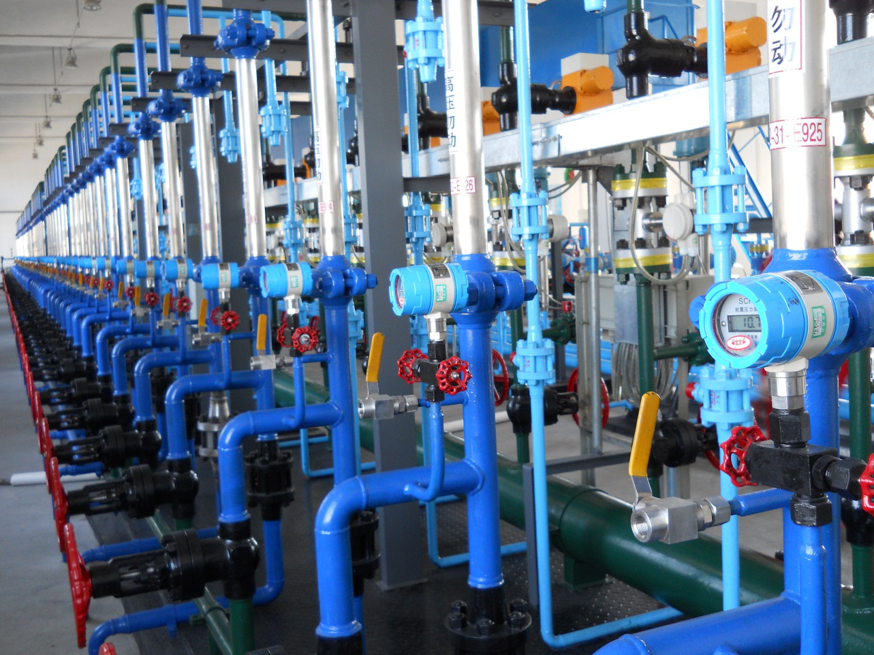
Key Applications in the Petrochemical Industry:
1.Separate-zone Production
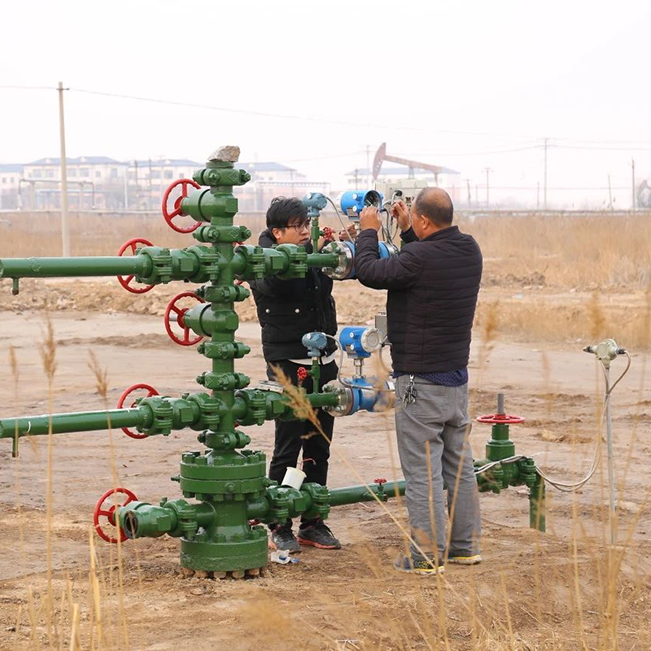
• High Precision and Long Stability: The YSB series pressure transmitter measures the pressure changes of underground fluids with a precision better than ±0.1%FS, reaching up to ±0.025%FS. It has a long-term stability of ±0.2%FS over 15 years and a response time of ≤100ms, enabling real-time monitoring of pressure changes in each layer.
• Multiple Diaphragm Options: The transmitter offers various diaphragm materials (e.g., SUS316L, Hastelloy, tantalum) to adapt to the complex chemical environment underground.
• Explosion-Proof and Protection: All series of transmitters have explosion-proof certifications and high-level protection ratings, resisting harsh weather and environments.
2.Compression Stations and Pressure Regulation Stations
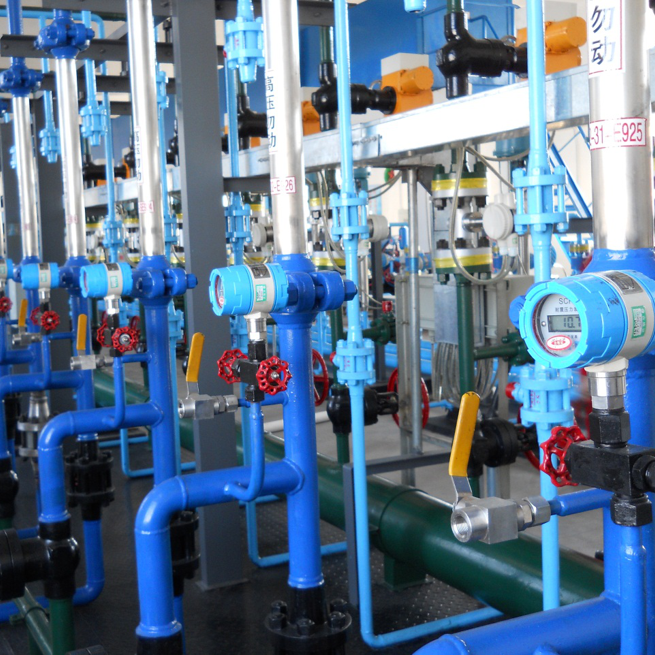
• Standardized Communication & Diagnostics:Transmitters (excluding wireless models) support industrial-standard communication interfaces (two-wire connection ports with M20×1.5 or 1/2 NPT internal threads) and protocols (e.g., 4–20mA DC + HART, RS485 Modbus RTU), featuring powerful online diagnostic that continuously monitor sensor, circuitry, and communication status for real-time fault reporting.
• Easy Installation and Maintenance: Standard interfaces (e.g., threads, flanges) are used, designed for convenient installation, disassembly, and maintenance.
3.Oil & Gas Storage and Transportation
• Environmental Adaptability: The transmitters we manufacture are engineered with an extensive operating temperature range and superior humidity tolerance, delivering uncompromised performance across extreme environments—from sub-zero field operations to harsh refinery heat, and from high-humidity downhole conditions to arid, dust-laden desert installations.
Technical Advantages:
|
Corrosion Resistance
|
Customizable wetted materials (SUS316L, Hastelloy, Tantalum, etc.) + housing (polyurethane-coated cast aluminum alloy, stainless steel).
|
|
High Environmental Adaptability
|
Operational under ambient humidity 5–100% RH @ 40°C and temperature -40 to 85°C (protection required beyond thresholds). Complies with IP65/66/67 protection and explosion-proof certifications (Pressure Transmitters: Ex d IIC T4~T6 Gd, Ex ia II C T6 Ga; Temperature Transmitters: Ex d IIC T4~T6 Gb)
|
|
High Media Adaptability
|
Suitable for liquids, gases, and steam.
|
|
Multiple Signal Outputs
|
4~20mA, 4~20mA+HART, RS485 (Modbus RTU),
|
|
Wireless Models: Zigbee (100-800m), LoRaWAN (1-5km), WirelessHART (50-200m), GPRS (network coverage areas), NB-IoT (network coverage areas), WIA-PA (100-800m).
|
|
Installation Flexibility
|
Employs standard process interfaces and communication interfaces.
|
Explore Our Solutions: Visit [www.sfhmeter.com] to learn about us. We offer customizable specifications, global certifications, and lifetime technical support.