
In industrial automation systems, pressure transmitters are indispensable core components. Whether in high-temperature reactors in the petrochemical industry, production lines in the food and pharmaceutical sectors, precision equipment in the aerospace field, or urban drainage networks, transmitters operate silently in these areas, converting intangible pressure into measurable signals to ensure production safety and efficiency.
This article comprehensively introduces the application scenarios, working principles, range selection, testing methods, and brand choices of pressure transmitters, helping industry practitioners accurately master this key equipment.
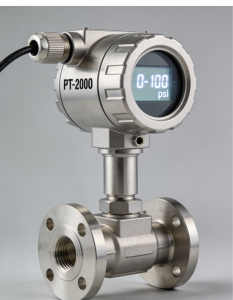
The core value of pressure transmitters lies in real-time monitoring, signal conversion, and remote transmission of pressure parameters. The use of pressure transmitters has penetrated various industrial fields, covering almost all industry branches, and plays an irreplaceable role in scenarios with extremely high requirements for pressure control accuracy.
Production environments in the petrochemical industry generally feature extreme working conditions such as high temperature, high pressure, and strong corrosion, and the stability of pressure transmitters directly affects production safety and product quality. In crude oil extraction, they are used to monitor bottom hole pressure and wellhead back pressure, providing real-time feedback on reservoir dynamics to help engineers optimize extraction parameters and improve crude oil recovery rate. In distillation towers and reactors of refineries, precise monitoring of medium pressure changes is required to prevent equipment overpressure explosion or insufficient reaction caused by abnormal pressure. For example, a large refining and chemical enterprise uses intelligent pressure transmitters for closed-loop control of regenerator pressure in catalytic cracking units, controlling the pressure fluctuation range within ±0.02MPa, which not only reduces energy consumption but also avoids major accidents caused by pressure imbalance. In addition, in oil and gas transmission pipelines, pressure transmitters can promptly detect pipeline leaks and trigger alarms through sudden pressure drop signals, gaining time for pipeline maintenance.
Pressure monitoring is an essential link throughout the entire water treatment process. From water source collection and water purification to final pipeline transportation, every step is inseparable from the use of pressure transmitters.
In sewage treatment plants, sedimentation tanks and filter tanks use pressure transmitters to real-time monitor the pressure difference between inlet and outlet water. Once the difference exceeds the preset range, the system will automatically start the backwashing process to ensure stable filtration efficiency. Pressure monitoring in aeration tanks is also crucial; precise control of aeration pressure can not only maintain the optimal purification activity of microorganisms but also reasonably control energy consumption, achieving a balance between sewage treatment effect and cost.
For special scenarios in industrial wastewater treatment, pressure transmitters made of corrosion-resistant materials can resist the erosion of acid-base water flow and real-time track pressure changes in reaction tanks to ensure the smooth progress of the entire treatment process.
The stable operation of municipal water supply pipe networks also relies on the use of pressure transmitters—real-time monitoring of pipe network pressure can prevent pipeline rupture due to excessive pressure and avoid water supply interruption caused by insufficient pressure, ensuring stable urban water supply.
The aerospace field has extremely strict requirements for pressure transmitters, and their accuracy, reliability, and anti-interference ability must reach the top level. In aircraft engines, they need to real-time monipressure transmitter manufacturerstor fuel pressure, intake pressure, and hydraulic system pressure, and can firmly ensure the stable operation of the engine even in extreme environments. In the cabin pressure control system, it is the core for precisely adjusting cabin pressure, safeguarding the comfort and safety of passengers and crew.
In the automotive industry, pressure transmitters are also indispensable “perception experts”. In traditional engine management systems, they monitor key parameters such as intake manifold pressure and fuel rail pressure, optimize fuel injection volume and ignition timing through precise data control, making the engine more powerful and fuel-efficient. In the battery cooling system of electric vehicles, it can closely monitor pressure changes in the cooling circuit to ensure normal circulation of the circuit, avoid battery overheating faults from the source, and ensure driving safety.
The production in the food and pharmaceutical industries demands extremely high standards of hygiene and process regulations. Every step must be carried out precisely. This requires pressure transmitters to not only measure accurately but also remain clean, achieving a balance between precision and hygiene.
In food processing, it can simultaneously monitor the pressure and temperature of packaging containers in sterilization tanks, ensuring that the sterilization effect meets standards and avoiding damage to the packaging due to improper pressure; in dairy fermentation tanks, it can precisely control the fermentation environment, maintaining the consistent taste and quality of dairy products.
The pharmaceutical industry also cannot do without it. For infusion bottle filling and vaccine production, it is necessary to precisely control the pressure from the source to prevent drug contamination and dosage deviations. Moreover, the pressure transmitters used in these scenarios are specially designed – using sterile materials, combined with easy-to-clean structures, strictly meeting GMP certification requirements, eliminating secondary pollution, and safeguarding the safety bottom line of food and drugs.
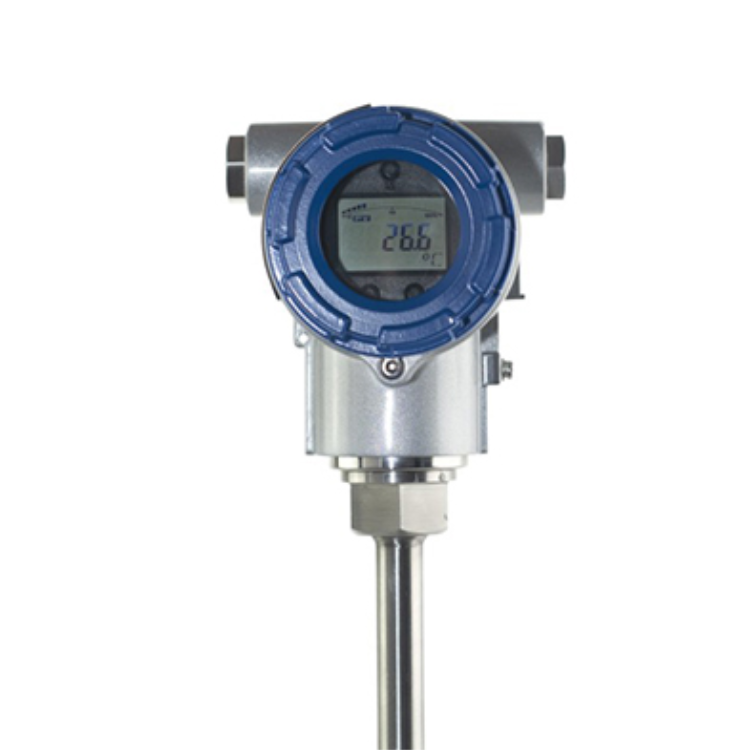
The working essence of pressure transmitters is the conversion process of “physical pressure → electrical signal”. Understanding the pressure transmitter working principle is crucial for the correct application and maintenance of equipment. To figure out how pressure transmitters work, we can start with their core components and step-by-step operation logic. Although the principles of different types of transmitters are slightly different, the core logic is consistent: capturing pressure changes through sensitive elements and outputting standard signals after circuit processing.
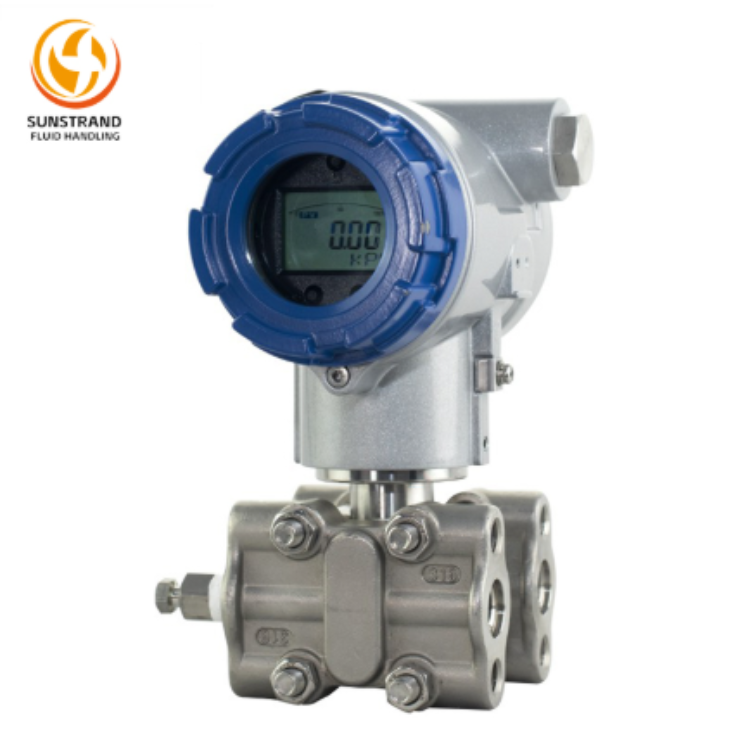
Regardless of the type, all pressure transmitters consist of four core components that work together to achieve pressure measurement and signal output:
Pressure Sensitive Element: Directly contacts the measured medium and is the core of sensing pressure changes. Common types include diaphragms, bellows, capacitor plates, diffused silicon chips, etc. Different materials and structures are suitable for different working conditions; for example, corrosion-resistant diaphragms are suitable for acid-base media, and high-precision silicon chips are suitable for precision measurement scenarios.
Conversion Circuit: Converts the physical deformation of the sensitive element (such as diaphragm bending, resistance change) into weak electrical signals. Common conversion methods include capacitive, piezoresistive, strain gauge, etc., corresponding to different types of sensitive elements.
Signal Processing Unit: Amplifies, filters, linearly corrects, and temperature-compensates weak electrical signals to eliminate interference factors and ensure stable and accurate output signals. Intelligent transmitters also integrate microprocessors to support data calculation and protocol conversion.
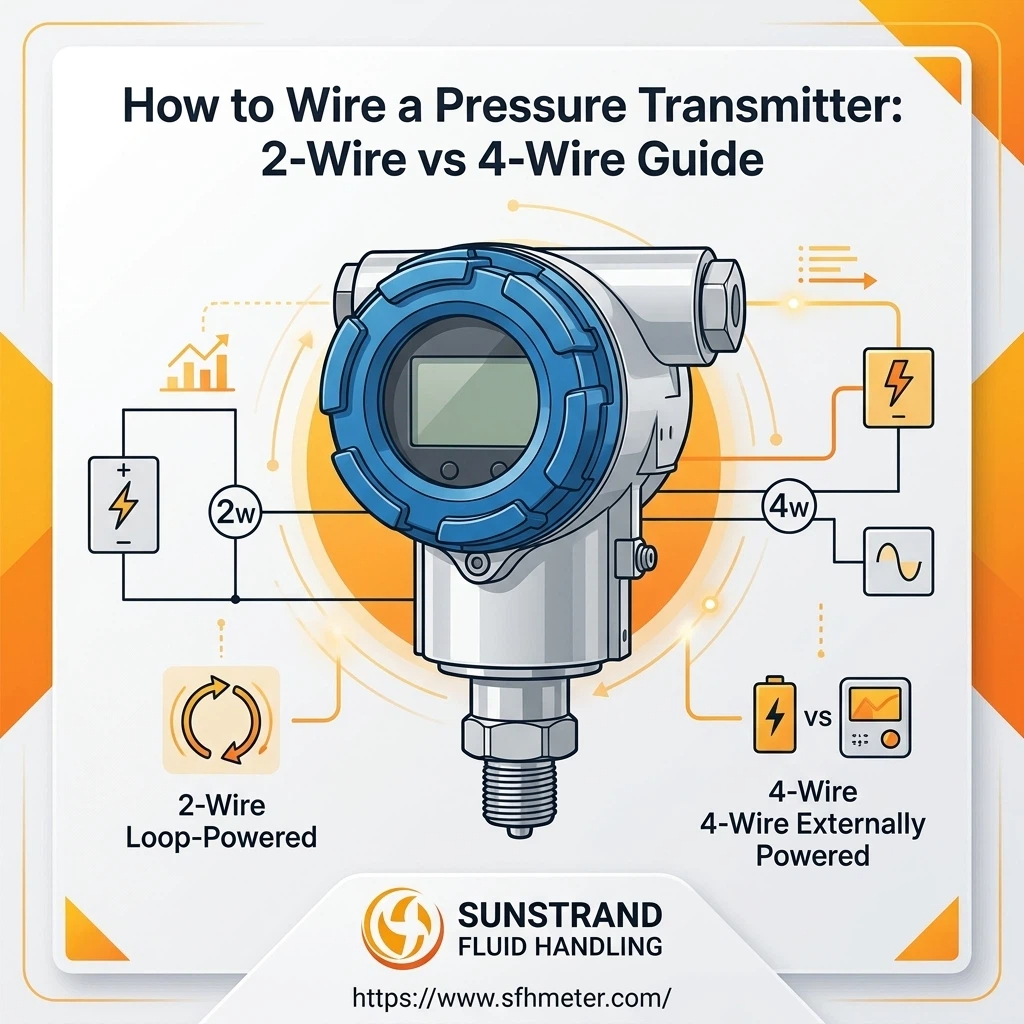
Housing and Interfaces: Protect internal components from environmental impacts and provide power supply interfaces and signal output interfaces. Common output interfaces support 4-20mA current signals, HART protocol, Modbus protocol, etc., which can be adapted to different industrial control systems.
To further clarify how pressure transmitters work, taking the most widely used capacitive and diffused silicon pressure transmitters as examples, their working process can be roughly divided into three key steps:
Pressure Sensing Stage: The pressure of the measured medium acts on the sensitive element, causing slight deformation of the sensitive element. This deformation is invisible to the naked eye but directly changes the physical parameters of the sensitive element (such as capacitance value, resistance value).
Signal Conversion Stage: Changes in the physical parameters of the sensitive element trigger the operation of the conversion circuit. In capacitive transmitters, diaphragm deformation changes the distance between the two electrode plates, resulting in changes in capacitance value. In diffused silicon transmitters, diaphragm deformation changes the resistance value of the resistor strip, breaking the balance of the Wheatstone bridge and outputting weak voltage signals.
Signal Output Stage: After being amplified and calibrated by the processing unit, the weak electrical signal is converted into a standard industrial signal, where 4mA corresponds to zero pressure and 20mA corresponds to full-scale pressure. These signals are transmitted to programmable logic controllers, dashboards, and other equipment through cables to realize visual monitoring and closed-loop control of pressure.
Pressure transmitter range is a core parameter of pressure transmitters, directly affecting measurement accuracy and equipment service life. Reasonable selection of pressure transmitter range needs to balance the actual working pressure and safety margin to avoid measurement distortion or equipment damage due to improper range.
Pressure transmitter range (measurement range) refers to the pressure interval that it can accurately measure, usually expressed as “lower limit – upper limit”. The range is divided into measurement range and span. The measurement range is the pressure interval detectable by the equipment, and the span is the difference between the upper limit and the lower limit. For example, a transmitter with a measurement range of 0-10MPa has a span of 10MPa. In addition, accuracy indicators are usually calculated based on the span, so the selection of pressure transmitter range directly affects the absolute measurement error.
To avoid blind selection, the selection of pressure transmitter range needs to comprehensively consider four core factors:
Pressure Fluctuation Characteristics: The actual working pressure may have steady-state, pulse, or random fluctuations, and the maximum peak pressure needs to be covered to prevent sensor damage due to excessive pressure.
Medium and Environmental Factors: High-temperature media may cause expansion of sensor materials, affecting the accuracy of pressure transmitter range; corrosive media require transmitters made of suitable materials, and the impact of medium density on pressure measurement also needs to be considered.
Accuracy Requirements: Under the same accuracy class, the smaller thepressure transmitter range, the smaller the absolute error. If the actual working pressure only accounts for a very small part of the large range, the measurement accuracy will decrease.
System Safety Factor: A certain safety margin needs to be reserved to cope with extreme working conditions such as pressure surges caused by equipment failures and operational errors. It is usually recommended that the pressure transmitter range be 1.5-2 times the actual maximum working pressure.
Scientific selection of pressure transmitter range needs to follow the principle of “clarify working conditions first, then precise calculation”. The core parameters and operation standards are summarized in the following table for quick reference:
|
Selection Link |
Key Parameters |
Calculation/Determination Standard |
Application Note |
|
Range Upper Limit Calculation |
Normal working pressure, maximum peak pressure |
1. ≥ Normal working pressure / 0.8; 2. ≥ Maximum peak pressure × 1.25; Take the maximum value |
Ensure normal pressure is in 60%-80% of the range (optimal accuracy interval) |
|
Range Lower Limit Determination |
Pressure type (gauge pressure/absolute pressure), minimum working pressure |
Gauge pressure: 0MPa (atmospheric pressure); Absolute pressure: Consider vacuum requirements |
Minimum working pressure must be higher than the lower limit to avoid measurement distortion |
|
Safety Factor Adjustment |
Pressure fluctuation type (steady-state/pulse/impact) |
General scenario: 1.5-2 times; Water hammer/impact scenario: 1.5 times |
Prevent sensor damage from extreme pressure surges |
|
Special Working Condition Adaptation |
Temperature, medium corrosiveness, viscosity |
Select models with temperature compensation or corrosion resistance; match isolation tanks for high-viscosity media |
Ensure range stability under extreme working conditions |
Regular testing and calibration are key to ensuring the accuracy of pressure transmitters. Mastering how to test pressure transmitters can effectively extend equipment service life and ensure measurement reliability. Testing must follow standard procedures, and adequate pre-test preparation and process control must be done to avoid affecting equipment performance due to improper operation.
Suitable tools and equipment must be prepared before testing to ensure testing accuracy and safety, laying the foundation for testing pressure transmitters:
Standard Pressure Source: Such as piston pressure gauges, air pumps, hydraulic pumps, etc. Its accuracy must be one level higher than that of the calibrated transmitter to ensure accurate calibration reference.
Signal Measurement Tools: Standard ammeters (accuracy ≥ 0.1 class), multimeters, used to monitor 4-20mA and other output signals; intelligent transmitters need to be equipped with HART communicators for digital calibration and parameter reading.
Auxiliary Tools: Pressure-resistant hoses, suitable connectors (such as M20×1.5, NPT1/2), screwdrivers, wrenches, insulating tape, etc., used for pipeline connection and equipment adjustment.
When performing operations on how to test pressure transmitters, strict compliance with safety specifications is required to avoid various risks: to prevent test signals from interfering with the normal operation of the system, the transmitter must be disconnected from the control system, leaving only the power supply; if the test environment contains toxic, corrosive, or high-temperature media, the isolation valve must be closed first, the pipeline medium must be drained, and nitrogen purging must be performed before disassembly.
The test environment must be kept clean and dry, with the temperature controlled within the range of 20±5℃, avoiding high temperature, high humidity, and strong electromagnetic interference that affect test accuracy.
Operators must wear protective equipment such as gloves and goggles. When applying pressure, it must be operated slowly from the pressure source to avoid sensor damage due to impact pressure.
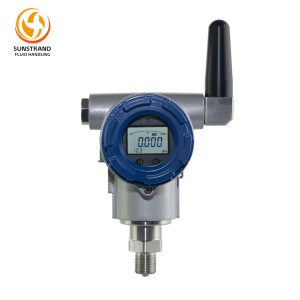
Zero-point calibration and range calibration are the basic steps for learning how to test pressure transmitters, following the principle of “calibrate zero first, then calibrate range”. The specific steps are as follows:
Zero-Point Calibration: Connect the pressure transmitter to the atmosphere through the vent hole (pressure = 0MPa); connect the absolute pressure transmitter to standard atmospheric pressure to ensure balanced pressure at both ends of the pressure transmitter. Measure the output value with a standard ammeter; the ideal value is 4.00mA. If the deviation exceeds the allowable error range (such as ±0.5%FS), adjust the “zero” knob or correct it through the HART communicator until the signal stabilizes at 4.00mA.
Range Calibration: Apply full-scale pressure through a standard pressure source and let the sensor fully respond for 3-5 minutes; the ideal output value is 20.00mA. If the output value exceeds the standard range, adjust the “range” knob or communication parameters to stabilize the output at 20.00mA. After completing the range adjustment, recheck the zero point and repeat the calibration process until both meet the requirements.
Linear accuracy testing is used to verify measurement accuracy across the full range and is an important part of how to test pressure transmitters. The steps are as follows: Select 2-3 intermediate points (such as 25%, 50%, 75% of the full range) between zero and full range, apply corresponding pressure in sequence, and record the output signal. If the deviation of each point is ≤ allowable error (such as ±0.25%FS), the linear accuracy is qualified; if the deviation exceeds the standard, re-calibrate or check for sensor faults (such as diaphragm damage, circuit drift). After testing, record the calibration data (date, ambient temperature, pressure points, output values) for filing and future reference.
Choosing reliable pressure transmitter manufacturers is key to ensuring the quality and service of pressure transmitters. Many pressure transmitter manufacturers focus on technological innovation and scenario customization to meet the diverse needs of various industries. A scientific selection standard must be established to balance product performance and long-term cooperation value.
Product quality is the core evaluation factor for selecting pressure transmitter manufacturers, mainly covering three aspects: first, key parameters such as accuracy, stability, and response time must meet working condition requirements; for example, high-precision scenarios require products with accuracy ≥ ±0.1%FS. Second, materials and craftsmanship: for corrosive environments, confirm that the diaphragm material is Hastelloy, tantalum, etc., and the housing protection level must reach IP65 or above. Third, technical certification: it must have explosion-proof certification (such as IECEx, ATEX), functional safety certification SIL3 (applicable to hazardous scenarios), GMP certification (applicable to the food and pharmaceutical industries), etc.
The after-sales service and technical support of industrial equipment will directly affect operation and maintenance efficiency, and are also key criteria for evaluating pressure transmitter manufacturers. High-quality manufacturers must provide: first, full-cycle services, including working condition diagnosis, customized solutions, on-site commissioning, regular calibration, etc. Second, rapid response capability: issue customized solutions for complex working conditions within 72 hours, and the fault repair response time ≤ 24 hours. Third, spare parts and training services: global spare parts warehouse coverage, providing operator training and technical manuals to ensure normal equipment operation.
Top pressure transmitter manufacturers generally have three core characteristics: first, technological innovation capability, such as developing AI adaptive compensation algorithms, wireless HART communication technology, and predictive maintenance functions, to improve equipment performance and intelligence level. Second, scenario-based customization capability: provide exclusive solutions for different industrial working conditions such as high temperature in petrochemical industry and cleanliness in pharmaceutical industry, rather than standardized products. Third, brand reputation and case accumulation: have mature application cases in various industries, with leading market share and customer satisfaction; brands such as Rosemount, E+H, and Sunstrand have formed brand barriers through long-term scenario verification.
As a well-known product in the field of industrial automation, Sunstrand pressure transmitters have become the first choice of many enterprises due to their high-precision measurement performance, flexible scenario adaptation capability, and perfect service system. Their core advantages are reflected in three aspects:
Excellent Performance and Reliability: Sunstrand pressure transmitters adopt high-precision diffused silicon and capacitive sensitive elements, with a measurement accuracy of up to ±0.075%FS and a turndown ratio of 100:1. They can operate stably in a wide temperature range of -40℃~85℃, equipped with advanced temperature and pressure compensation algorithms, and can maintain stable output even under extreme working conditions such as high temperature, corrosion, and vibration. The products have passed IECEx explosion-proof certification and SIL3 functional safety certification, and the diaphragm material can be selected from Hastelloy and 316L stainless steel, which can be widely used in various industries such as petrochemical, water treatment, and aerospace.
Scenario-Based Customization Capability: As a professional pressure transmitter manufacturer, Sunstrand can provide customized solutions for the needs of various industries. For example, develop high-temperature and high-pressure transmitters for the petrochemical industry to adapt to catalytic cracking units; provide sterile products that comply with GMP certification for the food and pharmaceutical industries; optimize corrosion-resistant structures for the water treatment industry to cope with acid-base wastewater monitoring. The equipment supports multiple communication protocols such as HART and Modbus, which can be seamlessly connected with existing industrial control systems to help intelligent upgrading.
Full-Lifecycle Technical Support: Sunstrand has a global technical service team, providing integrated services of “working condition diagnosis – solution design – on-site commissioning – regular calibration”. It can respond to customized needs for complex working conditions within 72 hours, and a 24-hour technical support hotline ensures rapid fault resolution. In addition, the product provides a 5-year warranty and lifelong maintenance services, and a global high-quality spare parts warehouse covers major industrial regions, which can significantly reduce user operation and maintenance costs. Whether it is a large refining and chemical project, a municipal water supply project, or precision aerospace equipment, Sunstrand pressure transmitters can ensure safe and efficient production with stable performance and professional services.
As the “perception core” of industrial automation, the application breadth and depth of pressure transmitters directly affect the stability, safety, and intelligence level of production processes. From the perspective of industrial applications, the use of pressure transmitters has penetrated into key links of various industries, becoming an indispensable monitoring equipment. From the technical level, mastering how pressure transmitters work and the pressure transmitter working principle, accurately selecting pressure transmitter range, and following the standardized process of how to test pressure transmitters are key to ensuring equipment performance. From the perspective of brand selection, choosing pressure transmitter manufacturers with excellent product quality, strong customization capabilities, and perfect after-sales services is the core consideration for long-term cooperation.
Under the wave of Industry 4.0, pressure transmitters are moving towards high precision, intelligence, and scenario-based development. High-quality pressure transmitter manufacturers such as Sunstrand continue to provide efficient solutions for various industries with technological innovation and service advantages. In the future, with the improvement of industrial automation level, pressure transmitters will play a role in more complex working conditions, becoming an important support for industrial intelligent transformation. Choosing a pressure transmitter that is suitable for working conditions and has reliable performance can not only reduce operation and maintenance costs but also inject strong momentum into the safe and efficient operation of enterprises.
Q1: What is the difference between a pressure transmitter and a pressure sensor?
A1: A pressure sensor is the core component that senses pressure changes and can only convert pressure into weak electrical signals. A pressure transmitter integrates sensors, conversion circuits, and signal processing units, which can process weak signals into standard industrial signals such as 4-20mA, with protection and interface functions, and can be directly adapted to industrial control systems. Simply put, a pressure sensor is a core component of a pressure transmitter.
Q2: How to determine the calibration cycle?
A2: The calibration cycle needs to be combined with working conditions and industry standards: 6-12 months for general industrial non-critical processes; 3-6 months for key processes such as chemical reactors and pharmaceutical production lines; 1-3 months for scenarios with high temperature, strong corrosion, and severe vibration; it can be extended to 12-24 months for clean and stable environments. In addition, calibration must be performed immediately after equipment maintenance or collision.
Q3: What are the advantages of 4-20mA signals?
A3: 4-20mA is a standard industrial current signal, with advantages including: strong anti-interference ability, suitable for long-distance transmission (up to kilometer level); supporting two-wire power supply, saving cable costs; 4mA corresponds to zero pressure, facilitating the distinction of equipment faults (such as 0mA when disconnected), and improving system reliability.
Q4: How to select pressure transmitters for corrosive media?
A4: Prioritize isolated pressure transmitters equipped with corrosion-resistant diaphragms such as Hastelloy, tantalum, and ceramics to avoid direct contact between the medium and the sensor; select housings with excellent sealing performance (protection level ≥ IP67); for high-viscosity and easy-crystallization media, match isolation tanks and filling fluids to prevent diaphragm blockage.
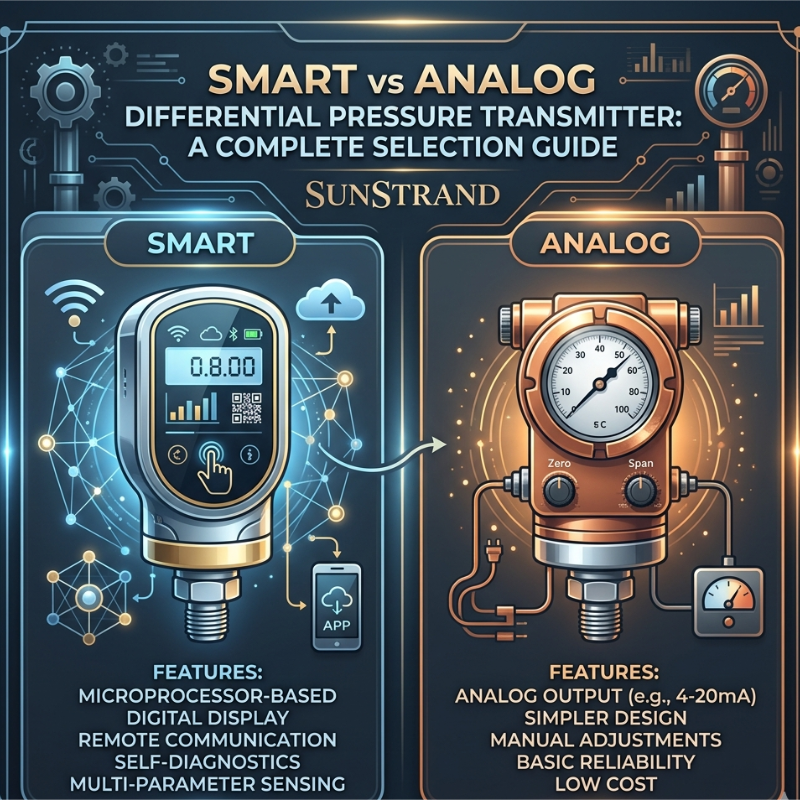
Q5: What is the core difference between intelligent and ordinary pressure transmitters?
A5: Intelligent pressure transmitters integrate microprocessors, support digital communication such as HART and Modbus, and can perform remote calibration, parameter setting, and fault diagnosis through communicators. They have self-compensation and self-diagnosis functions, can correct temperature and pressure drift, and have higher accuracy and stability. Some products also support wireless transmission and predictive maintenance, adapting to the needs of smart factories.