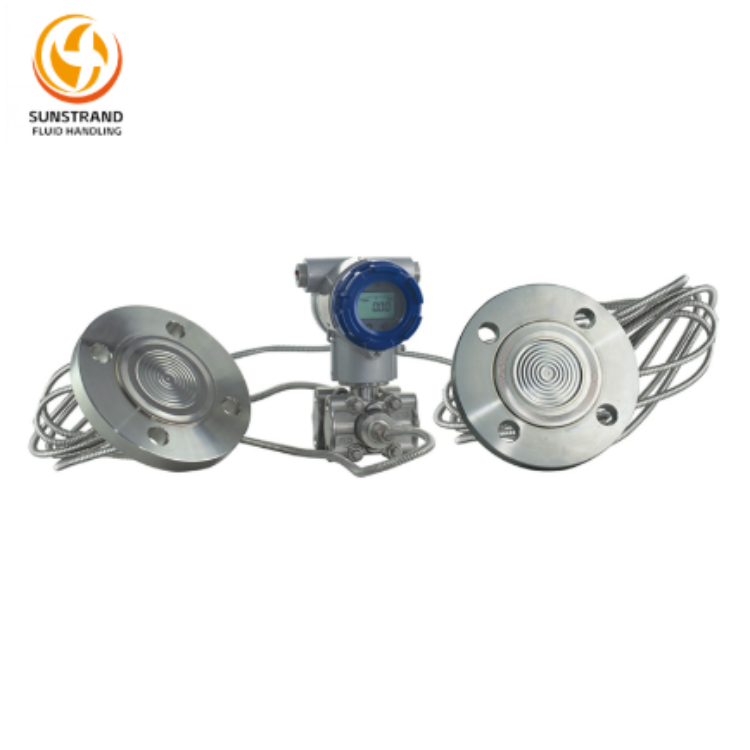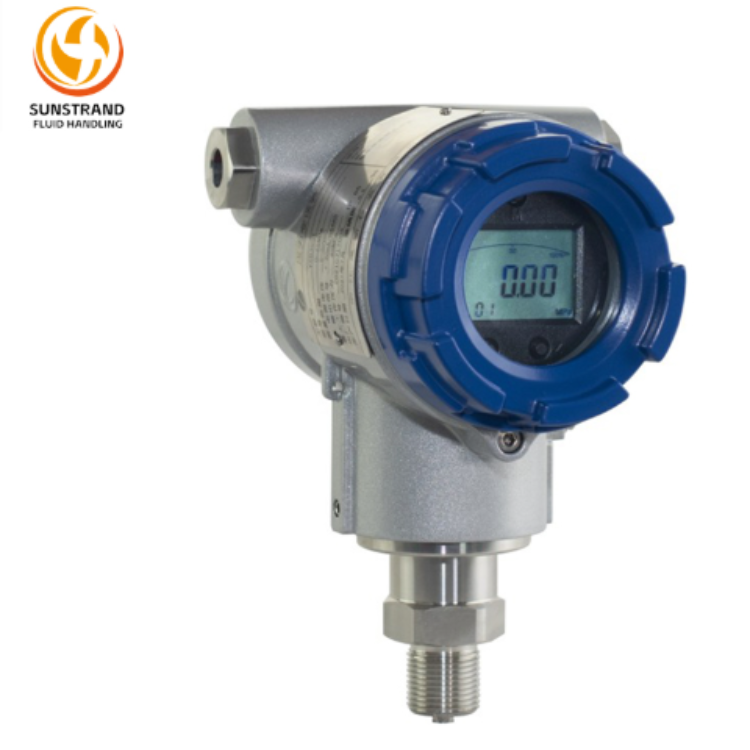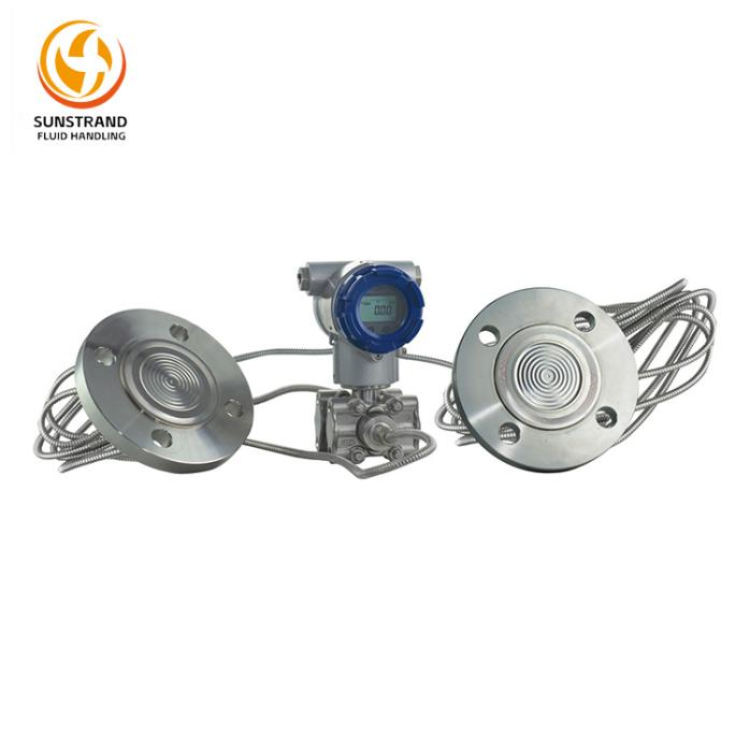

Pressure transmitters are critical components in industrial automation systems, responsible for converting pressure signals into measurable electrical signals for monitoring and control. The accuracy and reliability of a Pressure Transmitter largely depend on correct range selection. Choosing an inappropriate range can lead to inaccurate measurements, equipment damage, or even operational failures.
This guide serves as a pressure transmitter range selection guide, providing a detailed overview of how to select pressure transmitter range, focusing on liquids, gases, and steam—three of the most common media in industrial applications. It also includes supplementary tips and frequently asked questions to help engineers and technicians make informed decisions based on pressure transmitter selection criteria.
Before studying the selection of a specific medium, it is necessary to understand the basic principles of pressure balance selection. The main objective is to select the range, including the highest and lowest pressure levels of the transformer, to ensure the best target accuracy.
First, define the measured pressure range: They include normal operation, maximum pressure (maximum pressure) and minimum load (including vacuum, if any). Thermostats are typically measured at 1.2 to 1.5 times their maximum weight during operation. Taking into account unforeseen pressure fluctuations, this factor prevents the transformer from overloading.
Second, consider accuracy requirements: Most pressure transmitters have higher accuracy in the middle to upper portion of their range. Avoid selecting a range that is significantly larger than the actual operating pressure, as this will reduce measurement precision. For example, if the normal operating pressure is 50 bar, a range of 0–75 bar (1.5 times the maximum operating pressure) is more appropriate than 0–100 bar.
Third, understand pressure types and pressure transmitter types: Pressure sensors can measure gauge pressure, absolute pressure or differential pressure. The pressure difference is the difference between two pressure points relative to atmospheric pressure and absolute vacuum. Additionally, it’s essential to clarify pressure transmitter span vs range: the range refers to the entire measurement interval (e.g., 0–30 bar), while transmitter span is the difference between the upper and lower range values (e.g., 30 bar for a 0–30 bar range). The type of pressure being measured and the relationship between span and range directly influence range selection.
Liquids are nearly incompressible, so their pressure characteristics are primarily dominated by hydrostatic pressure. Hydrostatic pressure is the pressure exerted by a liquid due to its weight, calculated as P = ρgh, where ρ is the density of the liquid, g is the acceleration due to gravity, and h is the height of the liquid column. This means that the pressure at a certain point in a liquid system is directly proportional to the liquid height and density. For open tanks or vessels, the pressure at the bottom is determined by the liquid level, while for closed systems, additional pressure from pumps or other equipment must be considered.
Liquid pressure fluctuations usually occur due to changes in flow rate, the start/stop cycle of the pump, or the function of the valve. For instance, when a centrifugal pump is activated, there may be pressure fluctuations that temporarily exceed the normal working pressure. In addition, the agitation of liquids in the reservoir (especially during the filling or drainage process) can generate pressure peaks in the short term. When choosing the port of the transmitter, these fluctuations must be taken into account to avoid overload.
The range calculation for liquid applications focuses on hydrostatic pressure and any additional system pressure. Here is a step-by-step example:
Example: A closed tank contains water (density ρ = 1000 kg/m³) with a maximum liquid height of 5 meters. The tank is pressurized to 2 bar (gauge pressure) during operation. Calculate the required pressure transmitter range.
Step 1: Calculate hydrostatic pressure from the liquid column: P_hydro = ρgh = 1000 kg/m³ × 9.81 m/s² × 5 m = 49,050 Pa ≈ 0.49 bar.
Step 2: Add the system pressure: P_total_max = 2 bar + 0.49 bar = 2.49 bar.
Step 3: Apply a safety margin (1.2–1.5 times the maximum total pressure). Using a 1.3x margin: 2.49 bar × 1.3 ≈ 3.24 bar.
Conclusion: Select a gauge pressure transmitter with a range of 0–3.5 bar (rounding up to the nearest standard range). This example also provides a reference for level transmitter range calculation, as liquid level measurement via pressure transmitters relies on the same hydrostatic pressure principle.
Density change: Changes in temperature affect the density of a liquid, which in turn influences the hydrostatic pressure. When there is a large temperature variation, the calculation of density must be corrected.
Viscosity: High-viscosity liquids adhere to the transmitter sensor, affecting the accuracy of the measurement. Select a transmitter with a sensor design suitable for viscous liquids and ensure that the range takes into account any pressure loss caused by viscosity.
Corrosion: Corrosive liquids can damage the transmitter sensor. Configure the transmitter with corrosion-resistant materials (such as Harther alloy, physical materials), and recognize that the conveyor belt is not biodegradable.
Unlike liquids, gases are highly compressible. This means that gas pressure is strongly influenced by changes in volume, temperature, and number of moles (per the ideal gas law: PV = nRT). For example, compressing a gas into a smaller volume increases its pressure, while heating a gas in a closed volume also raises its pressure. This compressibility makes gas pressure more dynamic than liquid pressure, requiring careful consideration of operating conditions during range selection.
Gas pressure fluctuations are very common in systems such as pipelines, compressors and reactors. Compressor surge, valve opening and closing, and changes in gas flow can cause sudden increases or decreases in pressure. In addition, changes in atmospheric pressure may affect the measurement of open gas systems. These dynamic changes must cover the entire spectrum to ensure that the translator can handle the maximum load.
For gas applications, the range calculation must account for compressibility, temperature, and pressure fluctuations. Here is a typical example:
Example: The gas pipeline conveys nitrogen (ideal gas) at a normal working pressure of 8bar (gauge). The maximum pressure when the compressor is running is 10bar, and when it stops, it is 0bar. Operating temperature: 10℃ to 40℃. Calculate the required intervals.
Step 1: Identify the maximum operating pressure: 10 bar (gauge).
Step 2: Apply a safety margin (1.2–1.5 times). Using 1.4x: 10 bar × 1.4 = 14 bar.
Step 3: Consider the temperature effect: The ideal gas law indicates that pressure increases with temperature. However, since the maximum pressure is measured at the working temperature, no additional correction is required if the safety range includes temperature fluctuations.
Conclusion: Select a gauge pressure transmitter with a range of 0–15 bar (standard range) to cover the peak pressure and safety margin. When selecting such a Pressure Transmitter, it’s also important to consider the what is turndown ratio in pressure transmitter—the turndown ratio is the ratio of the maximum measurable flow (or pressure) to the minimum measurable flow (or pressure) at a specified accuracy, which affects the transmitter’s adaptability to varying operating conditions.
Compressibility coefficient: For non-ideal gases (such as under high or low pressure conditions), the calculation of the required gas is corrected by the pressure coefficient (Z), so that the estimated distance is accurately measured.
Humidity: Moisture in the gas condenses in the transmitter sensor, causing corrosion or measurement errors. Choose a device with a moisture-proof sensor. If necessary, please consider the pressure drop caused by condensation.
Gas composition: Toxic or explosive gases require appropriate safety permits (such as ATEX, IECEx). This range is not affected by the chemical properties of the gas.
Steam has a unique pressure-temperature relationship: for saturated steam, pressure and temperature are directly proportional (e.g., 1 bar saturated steam has a temperature of 100°C, 10 bar saturated steam has a temperature of 180°C). Superheated steam above the saturation temperature is hotter than saturated steam at the same pressure. This relationship is crucial because changes in vapor pressure are often accompanied by changes in temperature, which may affect the performance of the transmitter.
Due to changes in load, variations in boiler flame or valve operation often lead to very rapid changes in pressure. For instance, when the load of a steam turbine suddenly increases, the steam pressure will drop sharply, while a sudden reduction in load will cause a pressure peak. To avoid such rapid changes, some discharge valves need sufficient margin.
Range calculation for steam must consider the pressure-temperature relationship and instantaneous fluctuations. Example:
Example: A boiler generates saturated steam with a normal operating pressure of 15 bar. The maximum pressure during peak load is 18 bar, and the minimum pressure during startup is 2 bar. Calculate the required range.
Step 1: Identify the maximum operating pressure: 18 bar (gauge).
Step 2: Apply a safety margin (1.3–1.6 times for steam, due to rapid fluctuations). Using 1.5x: 18 bar × 1.5 = 27 bar.
Step 3: Confirm temperature compatibility: Ensure the transmitter can withstand the temperature corresponding to the maximum pressure (18 bar saturated steam ≈ 207°C). The range is not directly affected by temperature, but the transmitter’s temperature rating must match the operating conditions.
Conclusion: Select a gauge pressure transmitter with a range of 0–30 bar (standard range) to cover the peak pressure and safety margin.
Steam type: Saturated steam condensate water, generating water hammer and pressure peaks. It requires the transmitter to be able to withstand high temperatures.
Pressure-temperature compensation: To achieve precise measurements, some thermal sensors require pressure-temperature compensation. Select a transmitter that can integrate a balanced system and ensure that the range account compensates for the pressure value
Corrosion and fouling: Steam impurities may contain impurities, which can cause corrosion or scaling of the transmitter. Regular maintenance of transmitters with stainless steel or chromium-nickel-iron alloy sensors should be carried out to prevent corrosion.
This section focuses on how to select differential pressure transmitter range. Differential pressure (DP) transmitters measure the difference between two pressure points, commonly used in flow measurement (via orifices, Venturis) or level measurement in closed tanks. When selecting the range for DP transmitters:
Calculate the maximum differential pressure: This is the difference between the high-pressure and low-pressure sides during normal operation. For flow measurement, the DP is proportional to the square of the flow rate (Q ∝ √ΔP), so the range must cover the maximum flow rate’s corresponding DP.
Consider the static pressure: The static pressure (the pressure without flow on both sides) should be within the rated static pressure range of the transmitter. Make sure the range does not include static pressure, as the DP transmitter measures the difference, not absolute pressure.
Adjust to zero: For liquid measurement, the zero point of the sensor may need to be adjusted to take into account the static pressure of the fluid being measured.
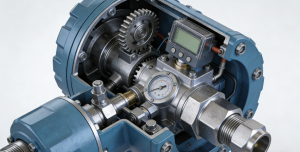
Selecting the right transmitter type for the media is as important as range selection. The following table summarizes the key matches between media types and pressure transmitters:
|
Media Type |
Suitable Transmitter Types |
Material Requirements |
Key Notes |
|
Liquids |
Gauge pressure transmitter, Differential pressure transmitter |
Liquid-tight sensors; Corrosion-resistant materials (e.g., Hastelloy, PTFE) for corrosive liquids; Isolated sensors for viscous liquids |
Account for hydrostatic pressure and density changes due to temperature |
|
Gases |
Gauge pressure transmitter, Absolute pressure transmitter |
Moisture-resistant sensors; Explosion-proof materials for flammable gases |
Consider compressibility and temperature-induced pressure changes |
|
Steam |
High-temperature gauge pressure transmitter, High-temperature differential pressure transmitter |
High-temperature resistant materials (e.g., stainless steel, Inconel); Corrosion-resistant seals |
Ensure temperature rating matches maximum steam temperature; Account for pressure-temperature relationship |
Correct pressure transmitter range selection is a critical step in ensuring reliable and accurate industrial process monitoring. By understanding the pressure characteristics of different media (liquids, gases, steam), performing accurate range calculations (including level transmitter range calculation) with appropriate safety margins, clarifying concepts like pressure transmitter span vs range and what is turndown ratio in pressure transmitter, and considering media-specific factors (density, compressibility, temperature), engineers can effectively implement how to select pressure transmitter range and how to select differential pressure transmitter range. Additionally, matching the pressure transmitter types to the media and following differential pressure transmitter best practices further enhances performance. This pressure transmitter range selection guide provides a comprehensive framework for range selection based on pressure transmitter selection criteria, helping to avoid common pitfalls and ensure operational efficiency of Pressure Transmitter.
For more professional solutions and high-quality pressure transmitters, you can visit Sunstrand’s official website:https://www.sfhmeter.com/.
Q1: What happens if the pressure transmitter range is too large?
A: If the range is too large, the measurement accuracy of the transmitter will decrease, especially under low working pressure. The transmitter may fail to detect even minor pressure changes, resulting in poor process control. Furthermore, for a larger scope, the cost may be higher than necessary.
Q2: How to determine the safety margin for pressure transmitter range selection?
A: The safety margin typically ranges from 1.2 to 1.6 times the maximum operating pressure. For stable liquid systems, 1.2–1.3x is sufficient. For gas or steam systems with frequent fluctuations, 1.4–1.6x is recommended. Adjust the margin based on the system’s historical pressure data and operational risks.
Q3: Do I need to consider temperature when selecting the range for gas applications?
A: Yes. Gas pressure is directly related to temperature (according to the ideal gas law). When there is a significant change in working temperature, calculate the pressure at the highest temperature to ensure that the expected maximum parameter exists. For non-ideal gases, coefficients are used to change the calculation.
Q4: Can a differential pressure transmitter be used for liquid level measurement?
A: Yes. DP transmitters are commonly used for liquid level measurement in closed tanks. The differential pressure is proportional to the liquid height (hydrostatic pressure). The range is calculated based on the maximum liquid height and density, and the zero point is adjusted to account for any reference pressure (e.g., gas pressure above the liquid).
Q5: What material considerations are important for steam pressure transmitters?
A: Steam transmitters require materials that can withstand high temperatures and pressure. Stainless steel, Inconel, and Hastelloy are common choices for sensors. Avoid materials that are prone to corrosion or scaling (e.g., carbon steel) to ensure long-term reliability. Additionally, the transmitter’s seal material must be compatible with steam to prevent leaks.