
Whether it is industrial production processes, HVAC systems, or daily equipment like water heaters, pressure measurement is a key link to ensure the safe, efficient and stable operation of the system. Among the commonly used equipment for pressure monitoring, pressure indicators and pressure transmitters occupy a core position. However, many industry practitioners and project decision-makers often confuse the differences between the two, ultimately leading to a mismatch between equipment selection and actual needs. This not only causes a waste of resources but also affects the overall performance of the system.
So, in the face of specific application scenarios, can a simple-structured pressure indicator meet the requirements, or is it necessary to rely on the advanced functions of a pressure transmitter? The key to the answer lies in clarifying their core functions, key differences and practical application scenarios. Moreover, for some special scenarios that require both on-site display and signal transmission, the pressure indicator transmitter, which integrates the advantages of both, has become a popular choice. In this blog post, we will comprehensively break down the relevant knowledge of pressure indicators and pressure transmitters for you—from basic definitions to real industry cases, and then to a step-by-step selection framework, helping you thoroughly understand these two types of equipment, as well as the practical value of the pressure indicator transmitter. We will also focus on explaining the absolute pressure transmitter, a high-performance type of pressure transmitter, and deeply analyze the difference between pressure indicator and pressure transmitter, so that you can easily distinguish the pressure indicator vs pressure transmitter in actual selection.
A passive or semi-passive device, the pressure indicator’s primary role is to intuitively display pressure readings. It needs no external power or connection to control systems, allowing on-site staff to view real-time values instantly.
It has two main types: mechanical (common Bourdon tube, diaphragm, or bellows models that deform with pressure to drive a pointer) and simple electronic (converting pressure to weak electrical signals for digital display without external transmission).
Advantages: Simple structure, low cost, easy operation, minimal maintenance, and quick installation. Ideal for scenarios requiring only on-site manual monitoring without automatic control integration.
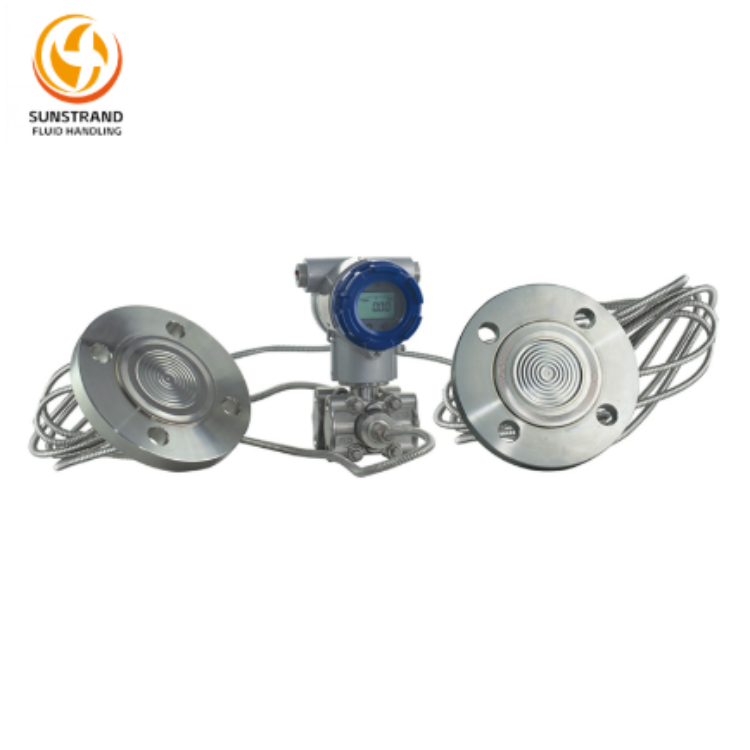
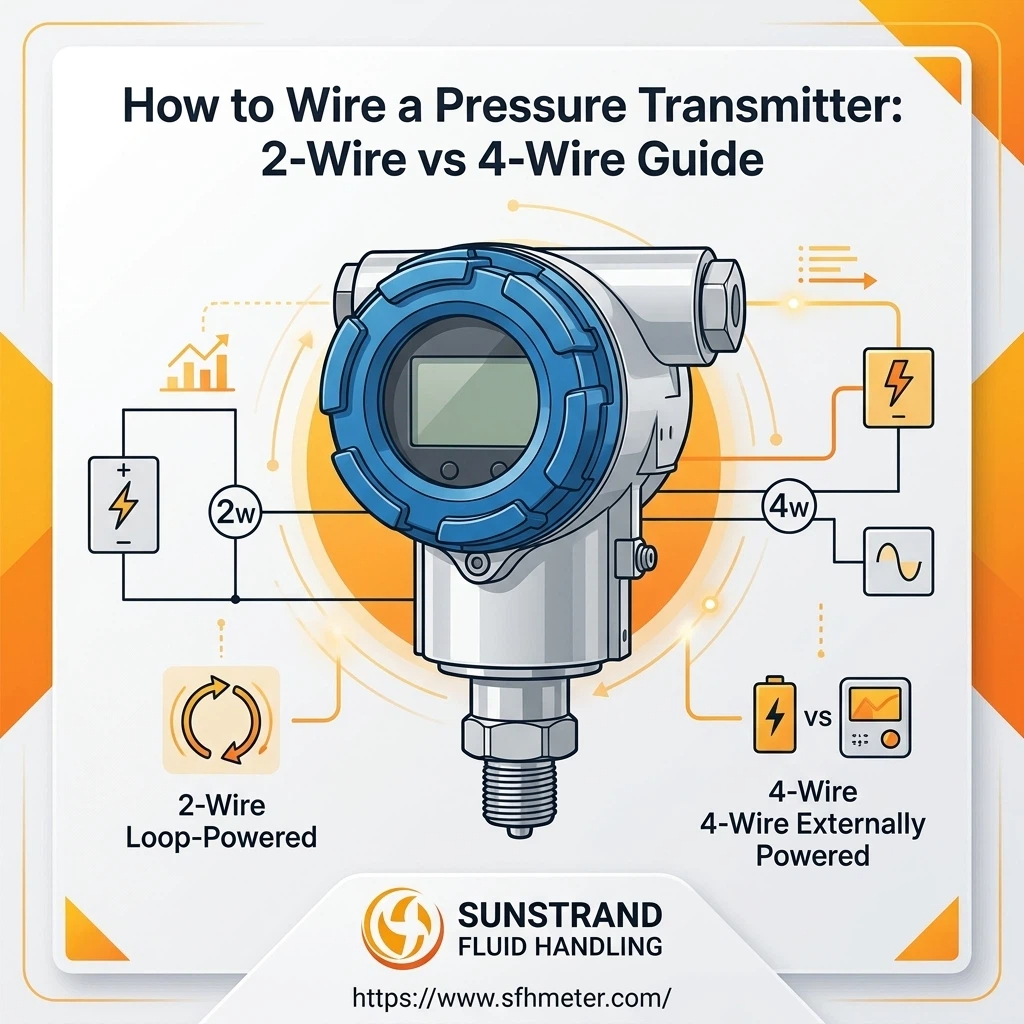
An active electronic device, it measures pressure and converts data into standardized electrical/digital signals for transmission to remote control platforms (PLC, DCS, SCADA). Beyond local display, it enables automatic control, remote monitoring, and data recording.
Core components: Pressure sensor, signal regulator, transmission circuit. Advanced models add temperature compensation, self-diagnosis, and wireless communication. The absolute pressure transmitter (a high-performance variant) uses absolute vacuum as the reference, suitable for precise gas or closed-system pressure measurement (e.g., aerospace testing, vacuum workshops) with high accuracy in extreme conditions.
Designed for integration into industrial systems, it requires external power but maintains reading accuracy during long-distance transmission—essential for processes needing automatic parameter adjustment and centralized control.
In fact, the core difference between a pressure indicator and a pressure transmitter lies in their different design intentions. The objective of the pressure indicator is very simple: to present the current pressure value directly to the staff on site, allowing everyone to see it clearly at a glance. However, pressure transmitters are different. They shoulder a dual mission – they not only need to accurately collect pressure data but also transmit these data to the remote control system. It is precisely because of this transmission function that subsequent automated operations such as automatic valve adjustment, alarm triggering, and data analysis can be realized.
As for the pressure indicator transmitter, it is more like a “combination expert”, integrating the functions of the previous two: it can not only directly display the pressure value on site, but also transmit signals to the remote system. In this way, it precisely makes up for the deficiency of using only a pressure indicator or only a pressure transmitter in some scenarios. For instance, in those small and medium-sized production lines, it is necessary for staff to conduct on-site inspections to check pressure and also adjust parameters in real time through remote control. In such scenarios that require both on-site monitoring and remote control, it is most suitable to use it.
The pressure indicator does not have a signal output function—whether it is a mechanical model that indicates the value by a pointer or a digital model that displays the reading on the screen, it can only be viewed on-site and cannot transmit the data.
However, pressure transmitters are different. They can generate standardized analog or digital signals. Among them, analog signals are particularly widely used in industrial scenarios. The reason is simple: they have strong resistance to electronic interference and can be transmitted over long distances. Digital signals have more advantages, supporting two-way communication and enabling easy remote configuration and fault diagnosis. The pressure indicator transmitter also has signal output capability, and its signal types are basically consistent with those of pressure transmitters, which can meet the needs of remote communication and system linkage.
Pressure indicators are suitable for simple and low-cost scenarios where on-site direct reading is sufficient, such as pressure monitoring of small storage tanks, household HVAC systems, hand tools, and independent water pumps. It can also serve as a backup display for the pressure transmitter system, providing local intuitive references.
The pressure transmitter is suitable for complex automated processes and specializes in remote control/monitoring scenarios, such as pressure monitoring and control in fields like chemical engineering, power plants, wastewater treatment, oil and gas pipelines, and pharmaceuticals. It is indispensable when long-term data recording and analysis are required. Among them, high-precision absolute pressure transmitters are widely used in special fields such as aerospace and semiconductor manufacturing.
The pressure indicator transmitter is suitable for scenarios that require both on-site observation and remote management (such as small chemical workshops and food processing lines), meeting the dual demands of on-site operation pressure checking and remote monitoring and process adjustment.
Compared with high-precision mechanical models, the accuracy of common mechanical pressure indicators on the market is generally medium, basically ranging from ±1% to ±2.5% of the full scale. The electronic type has a higher precision, reaching ±0.5% to ±1%, but in terms of accuracy, it still cannot compare with the pressure transmitter.
The core advantages of pressure transmitters lie in their high precision and long-term stability, with the accuracy remaining stable within ±0.1% to ±0.5% of the full scale. Moreover, it comes with a built-in temperature compensation function, which can minimize measurement errors caused by changes in environmental temperature to the greatest extent. High-end models like the absolute pressure transmitter can achieve an accuracy of ±0.05% of the full scale, specifically designed for scenarios with particularly demanding measurement requirements. As for the pressure indicator transmitter, its accuracy lies precisely between that of a pure indicator and a transmitter, with a full-scale error ranging from ±0.3% to ±0.8%, which is sufficient to meet the demands of most conventional industrial scenarios.
Therefore, pressure transmitters, especially absolute pressure transmitters, are particularly suitable for critical process flows where measurement accuracy is strictly required and no error can be tolerated at all.
The pressure indicator has particularly high requirements for installation flexibility. It can be directly installed on pipelines, storage tanks or pump bodies, and the installation can be completed in just a few steps. What’s more convenient is that it doesn’t require any wires or electricity at all. Even in remote and inaccessible areas without power supply, it can be installed without any pressure.
In contrast, installing a pressure transmitter requires a bit more thought. It not only needs to be connected to the power supply, but also has to lay communication lines – whether wired or wireless. This leads to many restrictions on its installation location in areas without supporting infrastructure. Fortunately, with the advent of wireless transmitters, especially the more advanced absolute pressure transmitters, these installation limitations have been directly broken through. Even in remote areas, they can be smoothly installed and used.
As for the pressure indicator transmitter, its installation is slightly more complicated than that of a simple pressure indicator, after all, it needs to be connected to power supply and communication lines. However, compared with individual pressure transmitters, its integrated design can save a lot of trouble and is very suitable for scenarios such as workshops and production lines where infrastructure is complete and there are basic power supply and communication conditions.
The mechanical pressure indicator does not require an external power supply at all. It can operate and work solely by the pressure of the medium being measured itself.
The electronic indicator does require a bit of power support—such as installing a battery or connecting a 12V DC power supply. However, this electricity is only used to light up the digital display screen and has nothing to do with the pressure measurement itself.
In contrast, pressure transmitters are active devices that must rely on an external power supply to operate. For instance, the common 4-20mA type transmitter needs to be used in conjunction with a 24V DC power supply. If a wireless transmitter is used, it is usually powered by batteries or solar energy. However, how long the battery can last depends on the frequency of signal transmission. Regular charging or battery replacement is often required in the future. The absolute pressure transmitter has the same power supply requirements as ordinary pressure transmitters, and wireless models also need to be maintained regularly for power supply.
The pressure indicator transmitter, as an integrated device, requires an external power supply (usually 24V DC) to support both on-site display and signal transmission functions. Some models also have battery-powered options, which are suitable for scenarios where wired power supply is inconvenient.
The pressure indicator is a complete “lone ranger” and simply cannot be connected to any industrial control system. Neither PLC nor DCS can be connected. Even if you occasionally come across digital models with serial ports, those ports can only be used for local data recording. There is no way to achieve real-time system interconnection.
The core advantage of pressure transmitters lies precisely in system integration. The standardized analog or digital signals it outputs can be perfectly compatible with the vast majority of PLCS and DCS on the market. It not only enables real-time data sharing but also directly supports the operation of the automated control process. Even more impressive is that high-end models like absolute pressure transmitters can also be connected to the Internet of Things platform, helping enterprises achieve cloud monitoring and predictive maintenance, which is both worry-free and efficient.
There is also a pressure indicator transmitter, and its system integration capability is also very strong. The output signal can be directly connected to industrial control systems such as PLC and DCS. It can not only display data on-site but also achieve real-time interaction of remote control. For small and medium-sized enterprises that want to build a simple automation control system, it is a cost-effective choice without any problem.
Ordinary pressure indicators do not have an alarm function—it is only when the staff stare at the dial that they can detect any abnormality in the pressure value. Even some advanced digital indicators that can be equipped with sound and light alarms can only issue on-site reminders and cannot trigger remote interlocking operations.
However, pressure transmitters are different. They can be directly connected to the alarm system. Once the pressure value exceeds the preset threshold, a remote alert can be automatically triggered, such as sending an email, text message, or popping up a warning on the SCADA system. More importantly, it can also initiate automated safety operations. Actions such as shutting down the pump body and opening the safety valve can all be completed automatically, thus preventing accidents from happening. This point is of vital importance for high-risk operation scenarios such as chemical engineering and oil refining. The pressure indicator transmitter is equipped with both on-site sound and light alarm functions and remote alarm signal output capabilities. When the pressure is abnormal, it can not only remind on-site operators in a timely manner but also send alarm signals to the remote control system, triggering corresponding safety measures. It is suitable for scenarios with moderate safety risks, such as general chemical production workshops and food processing lines.
The pressure indicator has a significant drawback—it cannot automatically record data. All readings have to be manually copied by hand, which not only takes a lot of time but also is prone to recording errors. Even digital indicators may have some basic data storage functions, allowing readings to be stored in local memory cards, but this is not their core purpose at all.
In contrast, pressure transmitters are much more professional in data management. It can achieve automatic data recording and trend analysis. The output signals can be directly connected to PLC, DCS or cloud control systems. In this way, users can easily track the pressure variation curve over time, promptly identify the operational trend, and thereby optimize the entire process flow. This data-driven monitoring capability is an indispensable key support for quality control, compliance review, and predictive maintenance of equipment. The absolute pressure transmitter can also record pressure data with high precision for a long time, providing reliable data support for the optimization and improvement of special processes.
The pressure indicator transmitter can automatically record pressure data and upload it to the remote system, and can also display historical data trends on the on-site screen. It is convenient for on-site operators to check the recent pressure changes and helps managers conduct remote data analysis.
The maintenance requirements for pressure indicators are particularly low—for mechanical models, it is only necessary to clean the dial occasionally and replace the aged seals. The maintenance of the electronic model is simpler, nothing more than replacing the battery regularly. Moreover, its calibration operation is not complicated. It can be completed on site with basic tools. Generally, calibration once every 6 to 12 months is sufficient.
In contrast, the maintenance work for pressure transmitters is much more frequent and complex. To ensure measurement accuracy, it needs to be calibrated more frequently, especially in critical application scenarios, where calibration is required every 3 to 6 months. In addition, the electronic components such as sensors and circuits inside it may also need to be replaced after long-term use. Although some high-end transmitters (including absolute pressure transmitters) are equipped with self-diagnostic functions, which can promptly alert users to potential faults and reduce downtime, this also significantly increases the structural and operational complexity of the equipment itself.
The maintenance and calibration frequency of the pressure indicator transmitter is between that of a pressure indicator and a pressure transmitter. Generally, calibration is required every 4 to 8 months. Its maintenance work mainly includes checking the display screen, replacing the power supply (if battery-powered), and testing the signal transmission function. The maintenance difficulty is moderate, and general technical personnel can complete it after simple training.
Most pressure indicators on the market are either purely analog mechanical models or simple ones with only basic digital display functions. They cannot be integrated with digital control systems or Internet of Things platforms, and thus are not suitable for use in scenarios like smart factories.
However, pressure transmitters are a completely different story. They have strong compatibility with various digital systems. Digital transmitters that support HART, Modbus protocols, or have wireless Internet of Things (IoT) capabilities can directly establish data links with intelligent controllers, cloud platforms, and data analysis software. This powerful interconnection capability is precisely the core and essential need of the Industry 4.0 project—after all, within the framework of intelligent manufacturing, device networking and data-driven decision-making are the key points. The absolute pressure transmitter, as a high-end product, also supports various mainstream digital communication protocols and can be seamlessly integrated into smart factory systems to provide high-precision pressure data for intelligent decision-making.
The pressure indicator transmitter also has good digital system compatibility. It supports common industrial communication protocols and can be connected to IoT platforms and data analysis software. It is suitable for small and medium-sized smart factories or intelligent transformation projects that need to realize basic equipment networking and data collection.
Pressure indicators are highly cost-effective: mechanical models cost $20–$50, electronic ones $100–$300, with long service lives (5–10 years for mechanical types), ideal for simple monitoring.
Pressure transmitters cost more: basic analog models $200–$500, digital/wireless versions over $1,000, and absolute types $800–$2,000. Their value lies in automated control, eliminating manual logging and reducing downtime/safety risks, with solid ROI for complex processes.
Pressure indicator transmitters, priced $300–$800, integrate dual functions, cutting equipment and installation costs—perfect for budget-limited SMEs needing both on-site display and remote control.
|
Dimension |
Pressure Indicator |
Pressure Transmitter |
Pressure Indicator Transmitter |
|
Basic Function |
Local display only |
Measure + remote signal |
Local display + remote signal |
|
Output Signal |
None |
Analog/digital |
Analog/digital |
|
Power Requirement |
None (mech); battery (digital) |
24V DC/wireless (battery/solar) |
24V DC/battery |
|
Accuracy |
±1%–±2.5% (mech); ±0.5%–±1% (elec) |
±0.1%–±0.5%; absolute ±0.05% |
±0.3%–±0.8% |
|
System Integration |
None |
PLC/DCS/IoT-compatible |
PLC/DCS/IoT-compatible |
|
Alarm Function |
Basic on-site (optional) |
Remote + automated actions |
On-site + remote alerts |
|
Data Recording |
Manual/basic local |
Automated remote + trend analysis |
Automated local/remote + basic trends |
|
Upfront Cost |
300 |
1,000+; absolute 2,000 |
800 |
A small agricultural cooperative uses mechanical pressure indicators on 500-gallon diesel tanks to monitor fuel levels. Daily checks and scheduled refueling meet simple needs at low cost ($50 each) with minimal maintenance.
A pharmaceutical manufacturer uses a high-precision pressure transmitter (reactor) and absolute pressure transmitter (vacuum drying) linked to DCS. Real-time monitoring, automatic adjustments, and cloud data logging ensure ±0.1 bar accuracy, regulatory compliance, and reduced errors.
A small bottled juice factory needs to monitor its filling machine’s pressure for accurate fill volumes, while the manager requires remote access to pressure data for timely process adjustments. Tight on budget, the factory avoided buying separate pressure indicators and transmitters.
Solution:The factory installed a pressure indicator transmitter on the filling machine. This device provides real-time on-site pressure readings for operators to adjust filling speeds promptly, and transmits digital pressure data to the factory’s basic control system. Managers can view real-time data and historical trends via office computers. On pressure anomalies, the device triggers local audible and visual alarms and sends alerts to the manager’s mobile phone.
Why It Works:Combining on-site display and remote signal transmission in one unit, the pressure indicator transmitter perfectly fits the factory’s needs. It costs less than two separate devices, and is easier to install and maintain. For budget-constrained small businesses with basic automation needs, it is a highly cost-effective option.
On-site viewing only: Pressure indicator.
Remote transmission/automation: Pressure transmitter.
Both + cost savings: Pressure indicator transmitter.
Power: Mechanical indicator (no power); wireless models (remote areas).
Accuracy: Transmitter (±0.5%+); indicator transmitter (±0.3%–±0.8%); indicator (non-critical).
Safety: Transmitter (high risk); indicator transmitter (moderate risk).
Simple applications: Pressure indicator (low cost/maintenance).
Complex/high-precision: Pressure transmitter (reduces labor/downtime).
Budget-constrained SMEs (dual needs): Pressure indicator transmitter (balanced cost/performance).
Pressure indicators, pressure transmitters, and pressure indicator transmitters are all important equipment for pressure monitoring, but they serve distinct purposes. A pressure indicator is a simple, low-cost solution for on-site visual monitoring, ideal for small-scale or non-critical applications. A pressure transmitter is a powerful tool for automated control, remote monitoring, and data analysis, making it indispensable for complex industrial processes and smart systems. The pressure indicator transmitter integrates the advantages of both, providing a cost-effective choice for small and medium-sized enterprises that need both on-site display and remote control.
The key to choosing the right device is to clarify your data needs, evaluate your scenario constraints, and balance upfront costs with long-term value. By understanding the difference between pressure indicator and pressure transmitter, as well as the characteristics of the pressure indicator transmitter, you can select a pressure measurement device that enhances safety, improves efficiency, and aligns with your budget and goals. For more professional solutions and products related to pressure indicator, pressure transmitter, and pressure indicator transmitter, you can visit Sunstrand‘s official website: https://www.sfhmeter.com/.
Q1: Can a pressure indicator back up a transmitter?
Yes—industrial systems often use indicators as backups if transmitters/control systems fail, ensuring reliable monitoring.
Q2: Wireless vs. wired transmitters?
Wireless: Flexible for remote install but higher upfront cost and battery maintenance. Wired: More reliable for critical use with lower long-term maintenance. Wireless absolute transmitters work for difficult wired installations (note power upkeep).
Q3: Calibration frequency?
Mechanical indicator: 6-12 months; electronic indicator: 6 months.
Pressure transmitter: 3-6 months (critical); 12 months (non-critical).
Absolute transmitter: 3 months (critical).
Pressure indicator transmitter: 4-8 months. Follow manufacturer guidelines.
Q4: Can transmitters display locally?
Many modern transmitters have local digital displays, but pressure indicator transmitters are better for intuitive on-site display and independent signal transmission in some scenarios.