
In the industrial production process, whether it is the piping system or the hydraulic system, precise monitoring of pressure is of vital importance for ensuring safety, improving efficiency, and guaranteeing the reliability of equipment operation. Pressure transducer and transmitters usually play a key role in this field. Although their names are often used interchangeably, their functions are different and they are specifically designed to meet various industrial needs. Confusing the two could lead to incorrect selection, not only resulting in high costs and downtime, but even potentially causing potential safety risks.
This article, through a real case of the Sunstrand brand, explains the basic definitions, main differences, and practical applications of pressure sensors and transmitters, and provides a simple three-step guide to help you select the appropriate equipment for industrial facilities. Whether you are responsible for the piping system, the optimization of hydraulic equipment, or the modernization of the factory pressure monitoring system, understanding the differences between the two is crucial for making wise decisions.
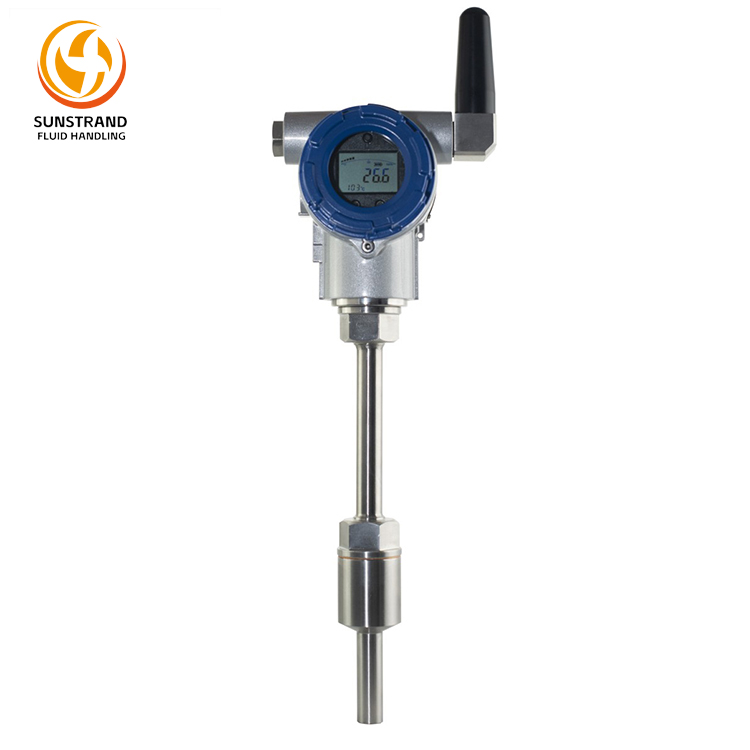
The pressure transmitter is an advanced industrial instrument used for measuring pressure, converting the measured value into standardized electrical signals, and transmitting them to the control system or remote control device. Many industry professionals often ask: “What is a pressure transmitter?” In simple terms, it is a “pressure transmitter” that not only detects pressure changes but also ensures the reliable long-distance transmission of these data to central control panels, programmable logic controllers, or SCADA systems and other devices. Currently, there are various types of pressure transmitters, each designed for specific industrial needs.
Unlike basic pressure measurement equipment, pressure transmitters are specifically designed for industrial environments and possess extremely high durability. This product integrates signal amplification and regulation functions, capable of receiving raw pressure data and converting it into industry-standard signals – typically 4-20 milliamps or 0-10 volts – with outstanding anti-interference and attenuation capabilities. This standardized design makes it almost compatible with all industrial control systems, facilitating integration into complex production processes.
Sunstrand’s pressure transmitters are specially designed for demanding industrial environments. They feature a stainless steel structure, with a protection level of IP67/IP68, and have a wide operating temperature range. Additionally, the sensors are equipped with advanced overpressure protection and automatic self-diagnosis functions. Even in situations with relatively small pressure fluctuations, they can ensure stable and reliable operation in critical applications, effectively preventing major failures.
A pressure transducer is a more basic pressure-sensing device whose primary function is to convert pressure into an electrical signal—without the built-in transmission or signal conditioning capabilities of a transmitter. For those wondering “what is a transducer” in the context of industrial sensing, a pressure transducer is a common example, acting as the “sensing core” that detects pressure changes but relies on external equipment to process, amplify, or transmit the signal. It’s important to note that while a pressure transducer is a type of transducer, other variants exist—for example, a current transducer meaning a device that converts current into a measurable electrical signal, distinct from pressure-focused models.
The transducer technology employed is similar to that of the transmitter, but the output signal is usually lower and non-standardized – for example, the millivolt-level signal generated by strain gauges. This means they are more suitable for short-distance applications, where the signal does not need to be transmitted over long distances or where external processing equipment is available.
Due to their simple structure, pressure transducers are often smaller, more compact, and less costly than transmitters. Sunstrand’s pressure transducers are particularly suitable for detection applications in hydraulic systems, where space is limited and only the transmission of pressure data to a local display device or nearby controller is required. These transducers have high accuracy, can meet basic measurement needs, are easy to maintain, have a sturdy and durable design, and can withstand vibrations and corrosion caused by hydraulic media.
The main difference between the two lies in their primary functions: The sole purpose of a pressure transducer is to convert mechanical pressure into an electrical signal. It does not process, amplify or transmit signals; its function is limited to detection and conversion. Generally, “converter” refers to a device that can transform one form of energy into another, while a pressure transmitter is specifically designed to convert pressure into an electrical signal. Additionally, pressure transmitters also have additional functions such as detection, conversion, regulation, and transmission of pressure signals to remote control or monitoring systems. The main purpose is to ensure that pressure data can be accurately and reliably transmitted to industrial control systems.
In summary, all transmitters contain transducers, but not all transducers are transmitters. Besides the detection function of the basic sensor, transmitters also have the ability to transmit signals and regulate.
Pressure transducers typically produce low-level, unstandardized output signals, such as millivolt signals from strain gauges or small voltage signals. These signals are vulnerable to electrical interference and degrade quickly over long distances, which limits their use to short-range applications. The working principle is simple: When pressure is applied to the sensing element , it deforms, causing a change in electrical resistance or capacitance, which is converted into a small electrical signal.
Pressure transmitters, on the other hand, produce standardized, amplified output signals that are industry-wide compatible. The most common are 4-20mA and 0-10V , with 4-20mA being preferred for industrial use due to its resistance to interference and ability to travel long distances. Transmitters include a signal conditioner that amplifies the low-level transducer signal, filters out noise, and converts it into the standardized output. Some advanced Sunstrand transmitters also offer digital outputs for seamless integration with smart industrial systems.
Pressure transducers perform particularly well in simple, short-distance and low-cost scenarios, where the pressure data can be directly utilized without the need to transmit it to a remote system. Unlike pressure transducers specifically designed for long-distance communication, these transducers are more suitable for local configuration. Common application scenarios include hydraulic and pneumatic systems, small industrial equipment, local pressure control, and automotive applications.
The pressure transmitter is specifically designed for complex and large-scale industrial applications that require remote monitoring and control. Typical application areas include oil pipelines and natural gas pipelines, chemical plants, water treatment and sewer sites, power plants, and large manufacturing facilities.
The pressure transducer itself does not have the ability to process signals. The original output signal from it needs to be processed by external equipment or integrated modules within the control system. This means it is only applicable to systems with simple signal processing conditions. Without additional hardware support, it cannot be directly connected to SCADA systems, IoT platforms, or remote control panels.
On the other hand, pressure transmitters possess advanced signal processing and integration capabilities. Their signal controller can filter out noise, correct temperature drift, and amplify the signal to a standard format. Most industrial transmitters can be integrated with programmable logic controllers (PLC), SCADA systems, and Internet of Things platforms through analog or digital output interfaces. Some intelligent transmitters also have built-in HART communication functions, facilitating remote configuration, calibration, and fault diagnosis, thereby reducing on-site maintenance requirements and improving operational efficiency.
Pressure transducers usually require an external power supply only when using active sensing elements. Passive transducers, on the other hand, may not need an external power source because the signal they generate is relatively small when pressure is applied. When power is needed, a low-voltage direct current power supply is generally used, which is convenient for powering through small batteries or local power sources.
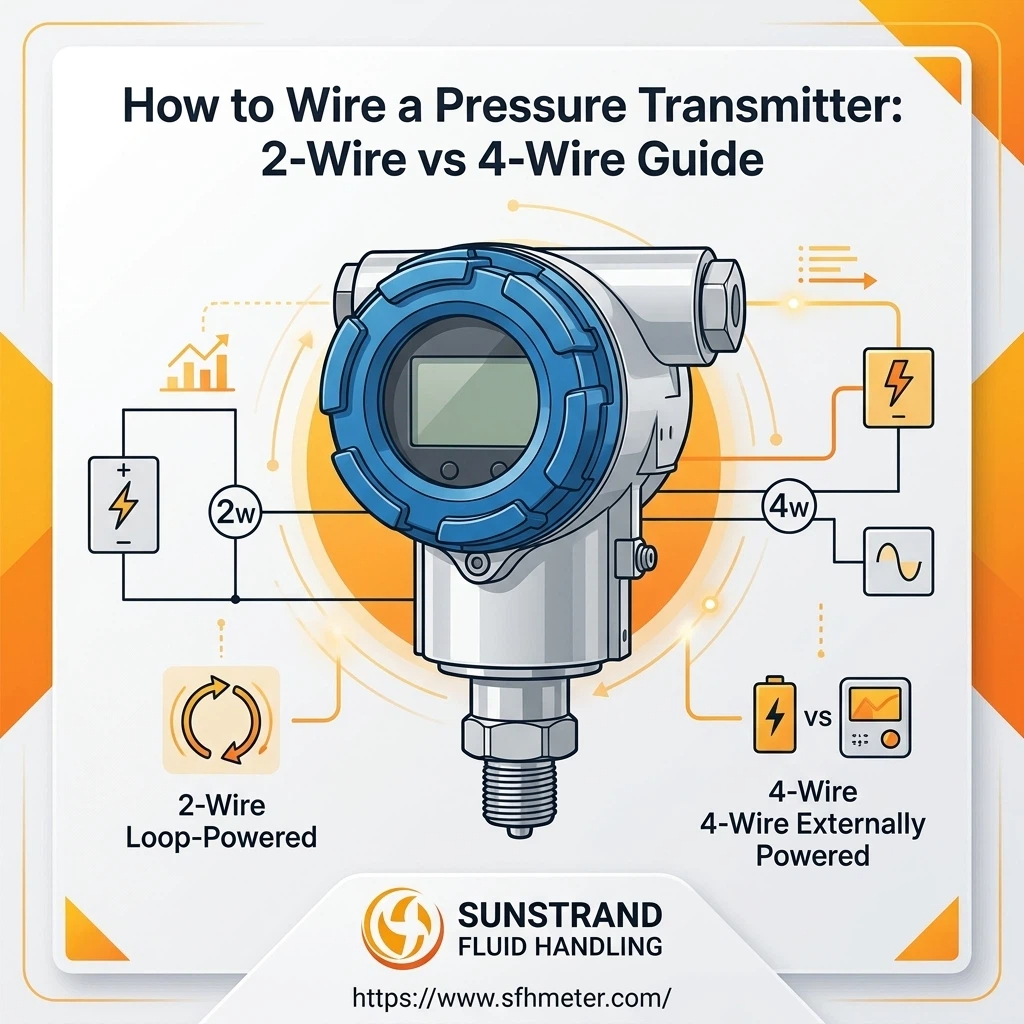
Pressure transmitters require a stable external power supply to drive their signal conditioning and transmission circuits. Most industrial transmitters use a 24-volt direct current power supply, which is usually provided by the connected control system. The 4-20 milliampere current loop signal has extremely high efficiency, capable of transmitting both energy and data – this means that the transmitter can be powered using the same wires for signal transmission, thereby reducing cable costs and simplifying industrial configuration.
Pressure transducers usually do not have built-in safety or alarm functions. They are merely basic detection devices and cannot monitor abnormal pressure conditions or trigger alarms. All safety or alarm functions need to be achieved through external devices.
On the other hand, pressure transmitters usually have over pressure protection and built-in alarm functions. For instance, the industrial pressure transmitters produced by Sunstrand feature overpressure protection, thermal compensation, and configurable alarm output functions. These features are particularly important in high-risk fields such as oil and gas or chemical industries, as abnormal pressure can lead to leaks, explosions, or environmental damage.
Pressure transducers do not have built-in data recording capabilities. They output a real-time signal, but they cannot store pressure data for later analysis. Any data recording must be done by external equipment that captures and stores the transducer’s output signal over time.
Many pressure transmitters, particularly smart models, include built-in data recording and real-time monitoring features. Sunstrand’s smart transmitters can log pressure data over time and transmit this data to a remote dashboard for analysis. This allows industrial operators to track pressure trends, identify anomalies, and optimize processes based on historical data. Some transmitters also offer self-diagnostic features, which monitor the device’s performance and alert operators to potential issues before they cause downtime.
Pressure transducers are compact, lightweight, and easy to install. Their simple design means they require minimal wiring (often just two wires for power and signal) and can be mounted in tight spaces. They are also highly flexible in terms of mounting orientation and can be used with a wide range of pressure ranges.
Pressure transmitters are larger and more complex than transducers, so they require more careful installation and wiring. They often need to be mounted in accessible locations for maintenance and calibration, and the wiring must be shielded to prevent electrical interference . However, they offer greater flexibility in terms of long-distance installation—they can be mounted miles away from the control system, as their standardized signals resist degradation. Sunstrand’s transmitters also feature adjustable mounting brackets and a variety of process connections to fit different industrial setups.
Pressure transducers require minimal maintenance and calibration. Their simple design has fewer moving parts, reducing the risk of failure. Calibration is only needed periodically (every 1-2 years) to ensure accuracy, and it can often be done on-site with basic calibration tools. Since they are often used in non-critical applications, downtime for maintenance is less impactful and costly.
Pressure transmitters require more frequent maintenance and calibration due to their complex design (sensing element, signal conditioner, transmission circuit). Calibration is typically needed every 6-12 months to maintain accuracy, especially in harsh industrial environments where temperature, vibration, or chemical exposure can affect performance. However, smart transmitters offer remote calibration capabilities, allowing operators to calibrate the device without visiting the installation site—reducing downtime and maintenance costs.
Pressure transducers have a lower upfront cost than transmitters, with prices ranging from $50 to $300 (depending on pressure range, accuracy, and material). Their minimal maintenance requirements and long lifespan (5-7 years) make them cost-effective for simple, non-critical applications where basic pressure sensing is sufficient. The long-term value comes from their affordability and reliability in low-complexity setups.
Pressure transmitters have a higher upfront cost, ranging from $200 to $1,500+ (for industrial-grade, smart models). However, their advanced features (signal conditioning, remote transmission, safety alarms, smart integration) deliver greater long-term value for critical industrial applications. The standardized signals, seamless system integration, and remote monitoring capabilities reduce operational costs, minimize downtime, and improve safety—offsetting the higher upfront investment. Sunstrand’s transmitters, for example, help oil & gas companies reduce pipeline monitoring costs by 20% via remote diagnostics and reduced maintenance needs, delivering a positive ROI within 1-2 years.
|
Comparison Aspect |
Pressure Transmitter |
Pressure Transducer |
|
Core Function |
Sense, convert, condition, and transmit pressure signals to remote systems |
Only sense and convert pressure into an electrical signal (no transmission/conditioning) |
|
Output Signal |
Standardized (4-20mA, 0-10V) or digital (HART, Modbus); interference-resistant |
Unstandardized (mV, 0-5V); low-level, vulnerable to interference |
|
Typical Applications |
Oil & gas pipelines, chemical plants, power generation, long-distance monitoring |
Hydraulic/pneumatic systems, local monitoring, small-scale manufacturing |
|
Signal Processing |
Built-in signal conditioning, amplification, and noise filtering |
No built-in processing; requires external equipment |
|
Power Supply |
Requires 24V DC power (often via 4-20mA current loop) |
Passive (no power) or low-voltage DC (5V/12V) if active |
|
Safety/Alarms |
Built-in overpressure protection, configurable alarms, self-diagnostics |
No built-in safety/alarms; requires external equipment |
|
Data Recording |
Smart models have built-in data logging and remote monitoring |
No built-in data recording; requires external data loggers |
|
Installation |
Larger, requires shielded wiring; suitable for long-distance mounting |
Compact, easy to install; ideal for tight spaces and short distances |
|
Maintenance/Calibration |
More frequent (6-12 months); smart models offer remote calibration |
Less frequent (1-2 years); simple on-site calibration |
|
Cost & Long-Term Value |
Higher upfront cost; greater long-term value for critical applications |
Lower upfront cost; cost-effective for simple, non-critical use cases |
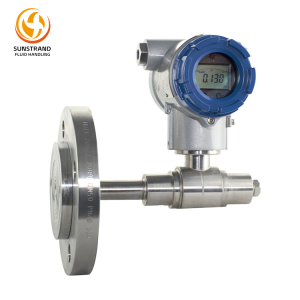
A leading oil & gas company operating a 300-mile pipeline network in the Gulf Coast needed a reliable pressure monitoring solution to detect leaks, pressure spikes, and flow anomalies—critical for preventing environmental damage and ensuring regulatory compliance. The company faced challenges with its existing system: inconsistent signal transmission over long distances, frequent calibration downtime, and limited remote monitoring capabilities.
Sunstrand recommended its ST-PT100 industrial pressure transmitters, which feature 4-20mA current loop output (resistant to interference over long distances), IP68 protection (to withstand harsh outdoor conditions), and HART communication for remote calibration and diagnostics. The transmitters were installed at 50-mile intervals along the pipeline, each monitoring pressure in real time and transmitting data to a central SCADA system.
The results were transformative: The company reduced calibration downtime by 60% via remote calibration, detected 3 potential leaks early (preventing costly spills), and improved regulatory compliance by maintaining accurate pressure records. The ST-PT100’s over pressure protection also prevented transmitter damage during a sudden pressure spike, saving the company $50,000 in replacement costs. After one year of use, the company reported a 20% reduction in overall pipeline monitoring costs.
A construction equipment manufacturer specializing in hydraulic excavators needed a compact, cost-effective pressure sensing solution for its new line of mid-sized excavators. The key requirements were: small form factor (to fit inside the hydraulic cylinder), high accuracy (to monitor cylinder pressure for optimal performance), and durability (to withstand vibration and hydraulic fluid exposure).
Sunstrand’s ST-PD50 pressure transducers were the ideal fit: They are compact (1.5 inches in diameter), feature a stainless steel housing (resistant to hydraulic fluid corrosion), and offer ±0.5% accuracy—meeting the manufacturer’s performance requirements. This pressure transducer model is a prime example of how a Transducer can deliver reliable sensing without the added complexity of transmission. The transducers were mounted inside the hydraulic cylinders, where they detect pressure changes during excavation operations and send a 0-5V signal to a local display in the excavator’s cab.
The implementation resulted in improved equipment performance: Operators could now monitor hydraulic pressure in real time, adjusting their operations to reduce wear and tear on the cylinders. The compact design eliminated the need for costly modifications to the excavator’s hydraulic system, and the low upfront cost of the transducers reduced the manufacturer’s per-unit production costs by $80. The ST-PD50’s durability also reduced warranty claims by 30%, as the transducers withstood the harsh vibration and environmental conditions of construction sites.
The first step is to define your core need: Do you need to transmit pressure data to a remote control or monitoring system? If yes, Pressure Transmitters are the right choice—their standardized signal and transmission capabilities ensure reliable long-distance data delivery, with different pressure transmitter types available to match your setup (analog for basic needs, digital for smart integration). If you only need to sense pressure and output a basic signal for local use, a pressure transducer will suffice and be more cost-effective, as a Transducer focuses solely on conversion without extra features.
Ask yourself: Will the pressure data be used for remote control, process optimization, or regulatory compliance? If so, a transmitter is necessary. If it’s just for basic monitoring or local feedback, a transducer is likely sufficient.
Next, assess the environmental and operational constraints of your application:
Environment: Is the device exposed to harsh conditions? Industrial transmitters offer higher protection ratings and durable materials for harsh environments. Transducers can also be ruggedized but may not offer the same level of protection.Distance: How far does the signal need to travel? If it’s more than 50 feet, a transmitter’s 4-20mA signal is resistant to interference and degradation, while a transducer’s low-level signal will likely fail.Pressure Range: What is the operating pressure range? Ensure the device’s pressure range matches your application—both transmitters and transducers are available in a wide range of pressure ratings.Power Availability: Is 24V DC power available? If power is limited, a passive transducer may be a better choice.Integration: What system will the device connect to? Transmitters offer standardized outputs (4-20mA, HART) for seamless integration, while transducers may require additional equipment.
Finally, balance upfront cost with long-term value: Transducers have lower upfront costs, but they may require additional equipment (amplifiers, converters, data loggers) to meet your needs—adding to the total cost over time. Transmitters have higher upfront costs but include built-in features (signal conditioning, remote calibration, safety alarms) that reduce operational and maintenance costs in the long run.
For critical applications, the long-term value of a transmitter—reduced downtime, improved safety, and regulatory compliance—far outweighs the higher upfront cost. For non-critical applications, a transducer offers the best cost-to-value ratio. Sunstrand’s team of experts can help you evaluate your options and select the device that fits your budget and performance needs.
Pressure transmitters and pressure transducers are both essential for industrial pressure monitoring, but their roles are distinct: Transducers are basic sensing devices that convert pressure into an electrical signal, while transmitters add signal conditioning, transmission, and advanced features to enable remote monitoring and control. Understanding the key differences—from output signals and applications to cost and maintenance— is critical to selecting the right device for your industrial setup.
Sunstrand’s pressure transmitters and transducers are engineered to meet the unique needs of industrial applications, from oil & gas pipelines to hydraulic systems. Our ST-PT100 transmitters deliver reliable remote monitoring and advanced safety features, while our ST-PD50 transducers offer compact, cost-effective sensing for simple applications. By following the 3-step selection guide—clarifying your needs, evaluating constraints, and balancing cost and value—you can choose the right pressure device to optimize safety, efficiency, and reliability in your operations.
Ready to upgrade your pressure monitoring system? Contact Sunstrand’s team of industrial experts for personalized recommendations tailored to your industry, application, and budget.
Q1: Are pressure transmitters and pressure transducers the same thing?
A1: No. All transmitters contain a transducer (the sensing element), but transmitters add signal conditioning and transmission capabilities to send standardized signals to remote systems. Transducers only convert pressure into a low-level electrical signal with no transmission or processing.
Q2: Which output signal is better for industrial applications: 4-20mA or 0-10V?
A2: 4-20mA is preferred for industrial use. It is resistant to electrical interference, can travel longer distances (up to 1,000 feet), and can carry both power and data—reducing wiring costs. 0-10V is suitable for short-range applications but is more vulnerable to interference.
Q3: Can a pressure transducer be used in long-distance applications?
A3: Generally, no. Transducers produce low-level, unstandardized signals that degrade quickly over long distances and are vulnerable to interference. For long-distance applications, a pressure transmitter with a 4-20mA signal is recommended.
Q4: How often do Sunstrand pressure transmitters and transducers need calibration?
A4: Sunstrand pressure transducers require calibration every 1-2 years. Sunstrand pressure transmitters require calibration every 6-12 months, but smart models (with HART communication) offer remote calibration to reduce downtime.
Q5: Do pressure transmitters require external power?
A5: Yes. Most industrial pressure transmitters use 24V DC power, which is often supplied by the control system they are connected to. The 4-20mA current loop signal can carry both power and data, simplifying wiring.
Q6: Can Sunstrand pressure transducers be used in hydraulic systems?
A6: Yes. Sunstrand’s ST-PD50 pressure transducers are designed for hydraulic systems, featuring a compact design, stainless steel housing (resistant to hydraulic fluid), and high accuracy—ideal for monitoring cylinder pressure in construction equipment or manufacturing machinery.
Q7: What safety features do Sunstrand pressure transmitters offer?
A7: Sunstrand industrial pressure transmitters include over pressure protection (to prevent damage from spikes), temperature compensation (for accuracy in extreme temps), and configurable alarm outputs (to trigger alerts for abnormal pressure). Smart models also offer self-diagnostics to detect issues early.
Q8: Can pressure transmitters integrate with IoT platforms?
A8: Yes. Sunstrand’s smart pressure transmitters support digital outputs that allow seamless integration with IoT platforms, SCADA systems, and remote dashboards—enabling real-time monitoring and data analysis.
Q9: Which is more cost-effective: a pressure transmitter or a transducer?
A9: Transducers have lower upfront costs and are more cost-effective for simple, non-critical applications. Transmitters have higher upfront costs but deliver greater long-term value for critical applications by reducing maintenance and downtime.
Q10: Can I use a pressure transmitter for local monitoring only?
A10: Yes, but it may be overkill. While transmitters can be used for local monitoring, their advanced features (transmission, signal conditioning) are unnecessary for simple local use—making a transducer a more cost-effective choice.
Q11: What is the difference between analog and digital pressure transmitters?
A11: Analog transmitters output standardized analog signals (4-20mA, 0-10V). Digital transmitters output digital signals and offer additional features like remote configuration, data logging, and self-diagnostics—ideal for smart industrial systems.
Q12: How do I choose between a Sunstrand pressure transmitter and transducer for my application?
A12: Start by clarifying your needs: If you need remote transmission or integration with control systems, choose the ST-PT100 transmitter. If you only need basic local sensing, choose the ST-PD50 transducer. Sunstrand’s experts can also provide personalized recommendations based on your specific scenario.