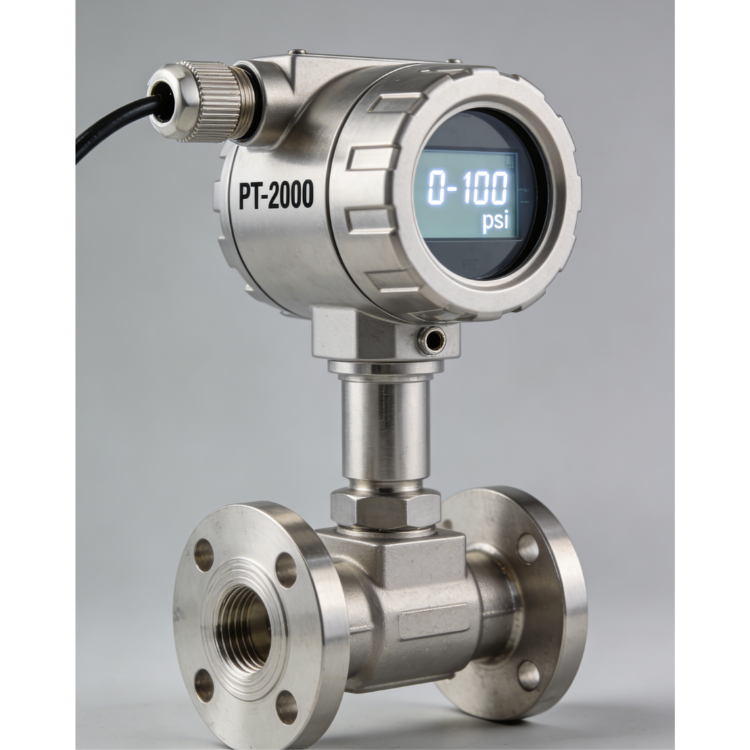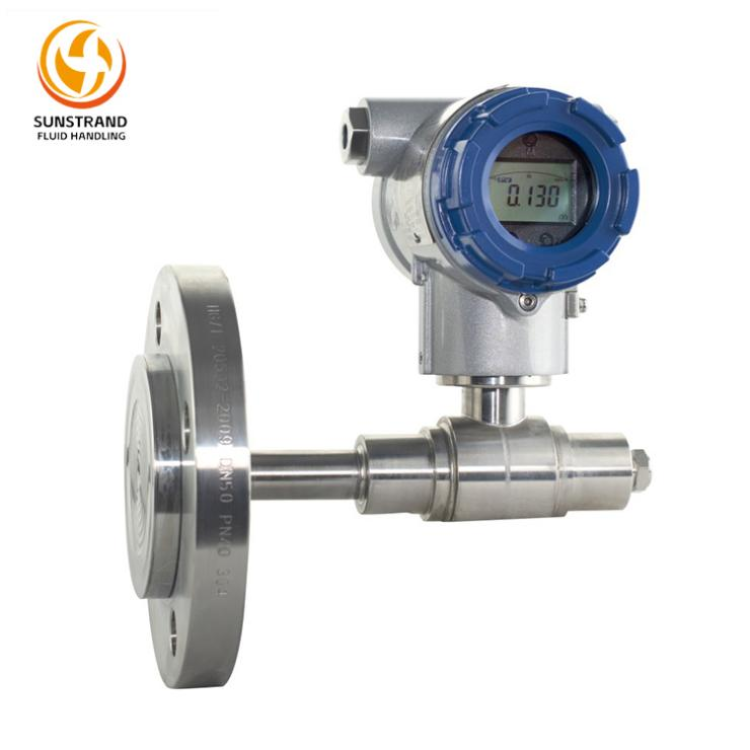

In modern industrial systems, temperature measurement plays a key role in ensuring efficiency, product quality, and safety. Among the many devices used for this purpose, the temperature sensor and temperature transmitter are often mentioned together—but they serve different roles.Sunstrand provides reliable temperature and pressure measurement solutions for various industries, including petroleum, chemical, and environmental protection. Its high-performance products, such as the Sunstrand Temperature Transmitter, are known for accuracy, stability, and seamless integration with automation and temperature indicator systems.
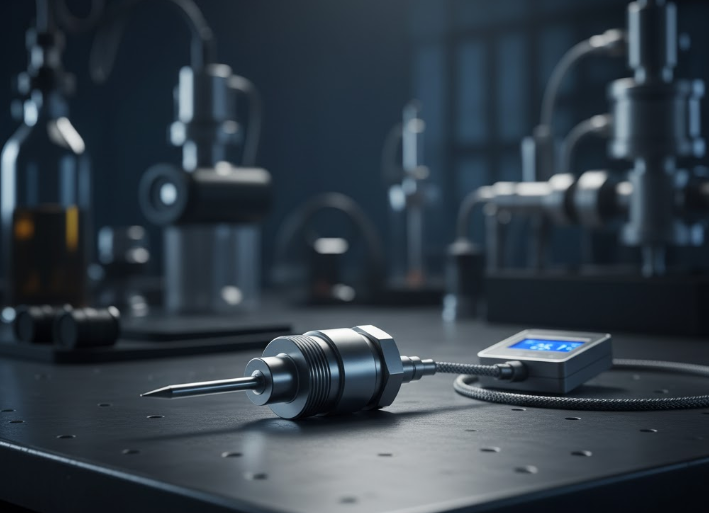
A Temperature Sensor is a device designed to detect changes in temperature and convert them into an electrical signal. It’s the first step in any temperature measurement system. Common types include:
RTD (Resistance Temperature Detector) – Uses changes in electrical resistance to measure temperature.
Thermocouple – Generates a small voltage based on the difference between two metals.
Thermistor – Varies its resistance with temperature changes, suitable for precise, narrow-range measurements.
The use of temperature sensor extends across factory automation, HVAC systems, laboratory instruments, and equipment matching. It’s ideal for applications that require direct and localized temperature detection.
However, a temperature sensor’s signal is often weak and sensitive to interference, meaning it cannot travel long distances without distortion or signal loss.
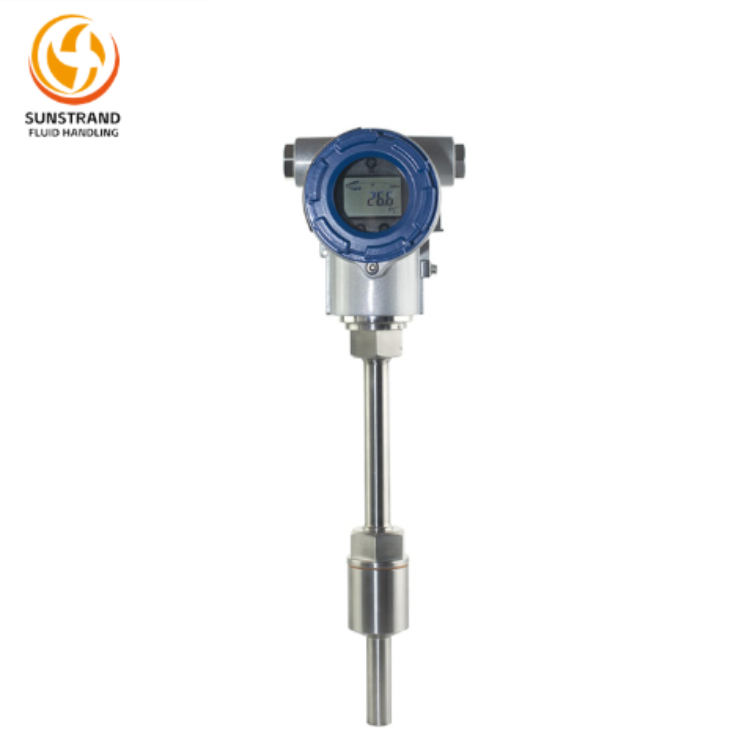
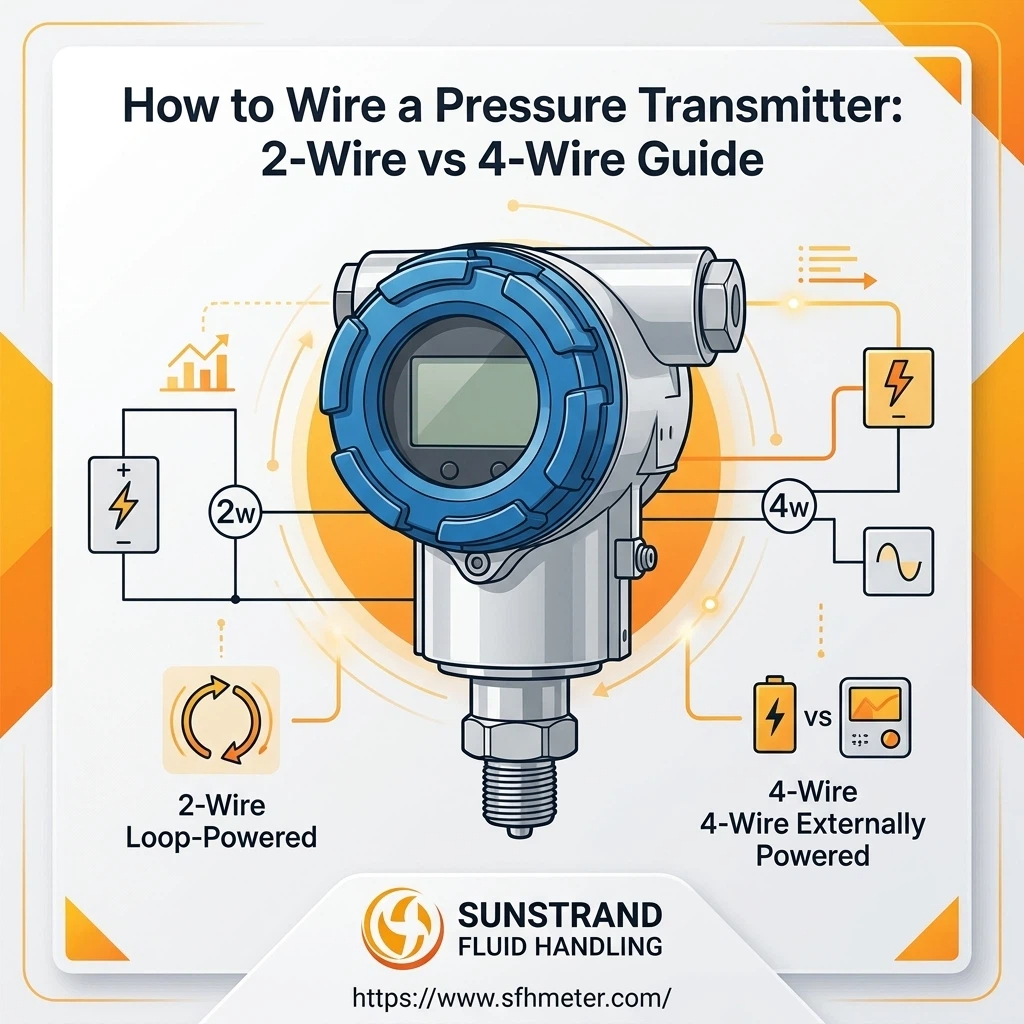
A Temperature Transmitter is an advanced instrument that receives a signal from a temperature sensor and converts it into a standardized output such as 4–20 mA, 0–10 V, or a digital protocol (HART, Modbus, etc.).
By amplifying and conditioning the signal, the transmitter allows for long-distance, noise-resistant data transmission, making it suitable for integration with PLCs, DCSs, or temperature indicators.
For example, the Sunstrand Temperature Transmitter is designed with precision circuitry and robust protection, ensuring consistent and accurate temperature readings even in harsh industrial environments.
It acts as the bridge between raw temperature sensing and reliable process control.
Temperature Sensor: Detects and measures the actual temperature of gases, liquids, or solids.
Temperature Transmitter: Converts and transmits that raw measurement into a usable, standardized signal for process control.
In short, the sensor measures, and the transmitter communicates.
Sensor Output: Produces millivolt-level or resistance-based signals that are weak and prone to noise.
Transmitter Output: Provides strong, standardized signals (4–20 mA, 0–10 V, or digital output) that ensure better stability and accuracy.
This conversion allows a Temperature Transmitter to be easily integrated with other devices like a pressure transmitter or flow controller within complex systems.
Temperature Sensor: Can only transmit signals over short distances due to its weak output.
Temperature Transmitter: Allows long-distance transmission (hundreds of meters) without loss or interference, ideal for industrial plants or remote monitoring.
Temperature Sensor: Provides accurate readings locally, but may lose precision when used in electrically noisy environments.
Temperature Transmitter: Improves accuracy through signal amplification, compensation, and linearization, ensuring stable measurement across varying conditions.
Temperature Sensor: Easy to install but requires direct wiring to the control system.
Temperature Transmitter: Offers flexible mounting options — such as head-mounted, rail-mounted, or field-mounted designs — to simplify integration and maintenance.
Transmitters like the Sunstrand Temperature Transmitter are often modular, allowing for quick replacement or configuration adjustments in the field.
Sensor: Generates unconditioned, low-level signals that need further processing.
Transmitter: Delivers ready-to-use output, compatible with industrial control systems, PLCs, and temperature indicators, saving time and reducing the need for extra converters.
While a Temperature Sensor has a lower initial cost, it can incur higher system expenses due to wiring complexity and noise compensation requirements.
A Temperature Transmitter may cost more upfront but delivers long-term value through reduced maintenance, enhanced reliability, and simplified setup — a true cost-efficient solution for industrial applications.
Temperature Sensor: Commonly used in local systems, laboratory testing, or small-scale setups where the sensor connects directly to a monitoring device.
Temperature Transmitter: Preferred in large industrial systems — including chemical plants, petroleum refineries, and environmental protection facilities — where accuracy and long-distance data transmission are critical.
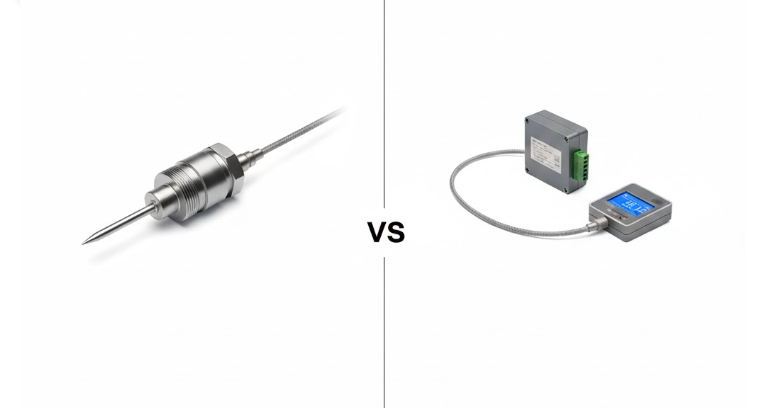
| Comparison Aspect | Temperature Sensor | Temperature Transmitter |
|---|---|---|
| Primary Function | Detects and measures the actual temperature of gases, liquids, or solids. Converts thermal energy into an electrical signal. | Receives signals from the temperature sensor and converts them into standardized output signals for monitoring and control. |
| Signal Type | Produces low-level signals such as resistance (RTD, thermistor) or millivolt (thermocouple). | Converts weak sensor signals into strong, standardized signals like 4–20 mA, 0–10 V, or digital signals (HART, Modbus, etc.). |
| Signal Strength | Weak signal output, easily affected by electromagnetic interference (EMI) or long cable runs. | Strong and stable signal output, resistant to interference, suitable for long-distance transmission. |
| Transmission Distance | Typically limited to short distances (a few meters) due to signal degradation. | Supports long-distance transmission (hundreds of meters) without signal loss or distortion. |
| Accuracy & Stability | Accurate for short distances but may fluctuate with noise, cable resistance, or ambient conditions. | High accuracy and long-term stability; compensates for temperature drift and wiring resistance. |
| Response Time | Very fast due to direct temperature contact and simple circuitry. | Slightly slower due to signal processing and conditioning, but ensures reliable output. |
| Output Compatibility | Raw signal requires signal conditioning or converters before connecting to PLCs or temperature indicators. | Provides ready-to-use standardized output that can directly interface with PLCs, DCSs, or temperature monitoring systems. |
| Installation Method | Installed directly at the measurement point; simple structure, limited integration options. | Can be head-mounted, rail-mounted, or field-mounted, allowing flexible installation and system integration. |
| Power Requirement | Does not require power (passive element). | Requires external or loop power (active device). |
| Maintenance | Easy to maintain and replace; no calibration electronics. | Requires occasional calibration or configuration to maintain accuracy. |
| Environmental Resistance | Sensitive to harsh environments, high vibration, or moisture unless properly shielded. | Rugged design; suitable for industrial environments with vibration, humidity, or electrical noise. |
| Cost | Lower initial cost; cost-effective for small or local systems. | Higher initial cost but reduces long-term maintenance and wiring expenses. |
| System Complexity | Requires external converters or amplifiers for integration with control systems. | Simplifies wiring and system setup by providing direct signal compatibility. |
| Applications | Ideal for local temperature monitoring, lab instruments, and small equipment. | Ideal for large-scale industrial systems, automation, and remote monitoring (e.g., chemical, petroleum, environmental protection industries). |
| Example Device | RTD probe, thermocouple sensor, thermistor element. | Sunstrand Temperature Transmitter, head-mounted transmitter, or smart transmitter module. |
| Best Use Case | When measurement distance is short and the signal will be processed nearby. | When signal must travel long distances or connect to control/monitoring systems with high accuracy and stability. |
Both the temperature sensor and the temperature transmitter are essential for achieving accurate and reliable temperature measurement. The sensor captures real-time data, while the transmitter ensures that data is stable and easy to monitor over long distances. If you’re looking for dependable solutions for industrial temperature and pressure measurement, Sunstrand offers a range of high-quality products designed for precision and durability. The Sunstrand Temperature Transmitter provides accurate readings, stable performance, and seamless integration with automation systems—helping you improve process efficiency and reliability.