
In industrial production, temperature plays a decisive role in the quality, efficiency and safety of products. Even the slightest change can lead to serious problems. Traditional temperature sensors often lack the accuracy and integration required for industrial applications. At this time, temperature transmitters with data transmission functions can play a beneficial role.
These temperature transmitters convert the initial signal from the sensor into standardized output signals, ensuring reliable measurement, remote monitoring and system integration, and effectively solving industrial problems such as interference and complex usage environments. This paper introduces the main advantages of thermometers, application examples of Sunstrand, and suggestions for selecting the appropriate thermometer.
A temperature transmitter is an industrial device designed to receive raw temperature data from a sensing element , process and condition that signal, and convert it into a standardized electrical signal that can be easily integrated with PLCs, SCADA systems, data loggers, and other industrial control equipment. Its core function is to bridge the gap between temperature sensors and the control systems that rely on accurate, consistent data to make critical operational decisions.
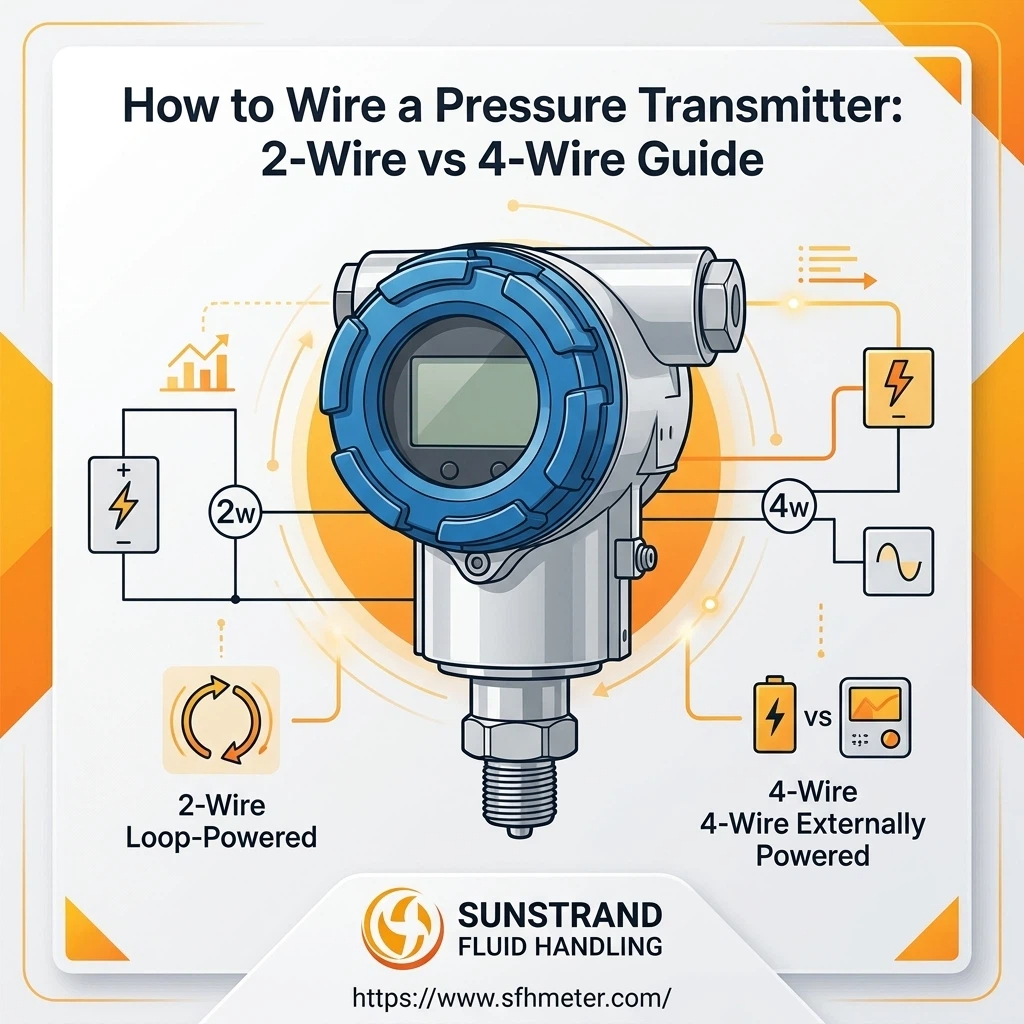
Essentially, a temperature transmitter is mainly composed of three key components: the input module, the signal processing board, and the output module. The most common output signals of a temperature transmitter are 4-20mA current circuit and 0-10V voltage signal. Particularly, due to its electromagnetic stability and remote signal transmission capability, the 4-20mA current circuit is widely used in industrial applications.
Unlike existing temperature sensors, a temperature transmitter provides advanced functions such as thermal correction, calibration, and comprehensive diagnosis, ensuring high accuracy even under environmental changes. It can be set to different temperature ranges, sensor types, and data output formats, and is widely used in many industrial applications. In any field such as refrigeration chambers in the food industry, high-temperature ovens in manufacturing engineering, and HVAC systems in intelligent buildings, a temperature transmitter can ensure the reliability and accuracy required for industrial engineering.
Temperature Transmitters have become indispensable in modern industrial settings, thanks to a suite of advantages that address the limitations of basic temperature sensors and drive operational efficiency, safety, and cost savings. Below are the five key industrial advantages of using Temperature Transmitters, each explained in detail.
One of the most critical advantages of temperature transmitters is their ability to deliver superior measurement accuracy and long-term stability—a requirement for industries where even small temperature deviations can have significant consequences. Basic temperature sensors output weak, raw signals that are prone to noise, drift, and interference from electrical equipment, leading to inaccurate readings.
This problem can be solved by amplifying the original signal of the sensor, filtering out the noise electrically, and linearizing the signal to correct the non-linear deviation of the sensor output. Additionally, many transmitters have a temperature correction function, which can adjust the sensor performance according to the influence of the surrounding temperature. For example, the transmitters used in chemical factories can maintain an accuracy of ±0.1°C even if the ambient temperature changes by more than 20°C.
Another important advantage is long-term stability. Temperature transmitters can maintain correct corrections for a long time, reducing the need for frequent corrections and ensuring stable performance. This is particularly important in industries such as pharmaceuticals and food and beverage, where strict compliance with regulations requires precise temperature control to ensure product quality and safety.
Industrial control systems rely on standardized signals to process and interpret data from multiple sensors and devices. Basic temperature sensors output a wide range of raw signals, which are not compatible with most control systems without additional signal conversion.
Temperature transmitters eliminate this compatibility issue by converting raw sensor signals into industry-standard output signals—most commonly 4–20mA current loops or 0–10V voltage signals. These standardized signals are usually accepted by industrial control systems, allowing us to easily integrate temperature transmitters into existing systems without the need for costly modifications. For instance, within the range of 4mA (lower limit) and 20mA (upper limit), you can use the 4-20mA signal.
Moreover, this standardization is also beneficial for system expansion. To add a new temperature sensor to an existing control system, simply setting the minimum limit is sufficient, as the standardized signals can be recognized. This flexibility is particularly important for the continuous development and modernization of industrial engineering.
In large industrial facilities—such as manufacturing plants, refineries, or warehouses—temperature monitoring points are often located in remote, hard-to-reach areas. Manual temperature checks in these areas are time-consuming, costly, and often unsafe.
Temperature transmitters enable remote monitoring and real-time data accessibility, allowing operators to track temperature levels from a centralized control room or even via mobile devices. Most modern temperature transmitters support wired or wireless communication protocols and can transmit temperature data to a centralized automated panel or cloud platform.
This remote monitoring function not only improves operational efficiency but also reduces the number of times workers need to approach dangerous areas, enhancing safety. For instance, workers can remotely confirm the temperature indicators of a high-temperature furnace, avoiding direct contact with excessive heat, and can immediately access the data and make quick decisions. If a temperature difference is sensed, workers can immediately take measures to solve the problem, preventing production damage and equipment failures.
Industrial environments are often harsh, characterized by extreme temperatures, humidity, dust, vibration, corrosive chemicals, and electromagnetic interference. Basic temperature sensors are often not designed to withstand these conditions, leading to frequent failure, inaccurate readings, and costly replacements.
Temperature transmitters are engineered for durability in harsh industrial environments, with rugged enclosures that protect internal components from dust, moisture, and physical damage. It can also withstand extreme temperature conditions, ranging from the refrigeration facility at -40°C to the high-temperature industrial engineering at over 200°C. It can also resist corrosion from chemicals and strong gases.
Many temperature transmitters have the function of blocking electromagnetic interference to prevent signal interference caused by adjacent power devices (EMI). This durability ensures that the temperature transmitter operates stably and reliably under the most complex industrial conditions, reduces idle time and replacement costs.
Unplanned downtime due to equipment failure is a major cost driver in industrial operations, often resulting in lost production, costly repairs, and missed deadlines. Temperature transmitters help reduce these costs by enabling predictive maintenance—a proactive approach to maintenance that uses real-time data to identify potential equipment issues before they lead to failure.
The temperature transmitter continuously monitors the temperature level and, by analyzing this information, transmits the data in real time to the control system to detect abnormal temperature changes. Early detection of this trend enables operators to precisely plan maintenance and warranty work, preventing equipment failures, reducing unexpected downtime, and extending equipment lifespan.
Moreover, the temperature transmitter requires considerable effort, reducing the possibility of human error in manual inspections. The automated temperature control system can lower the costs of the enterprise and improve the accuracy of data. Over time, these savings accumulate, and the temperature transmitter becomes a beneficial investment for industrial production.
|
Key Advantage |
Core Benefit |
Typical Application |
|
Enhanced Measurement Accuracy & Stability |
Minimizes temperature deviations, ensures regulatory compliance, and maintains consistent performance |
Pharmaceuticals, food & beverage |
|
Standardized Signal Output |
Seamless integration with industrial control systems (PLC, SCADA), simplifies system expansion |
All industrial sectors |
|
Remote Monitoring & Data Accessibility |
Improves operational efficiency, enhances safety by reducing hazardous on-site checks |
High-temperature furnaces, remote storage |
|
Durability in Harsh Environments |
Reduces downtime and replacement costs, withstands extreme conditions |
Manufacturing, chemical plants |
|
Cost Savings Through Predictive Maintenance |
Prevents unplanned downtime, extends equipment lifespan, reduces labor costs |
HVAC, industrial machinery |
The practical value of temperature transmitters can be clearly demonstrated by studying the solutions in three cases of Sunstrand. These sensors are used to address specific issues in the industry and to achieve the key advantages mentioned above.
A global food and beverage manufacturer specializing in perishable products (e.g., dairy, meat, and produce) faced challenges in maintaining consistent temperature and humidity levels across its cold chain—from production facilities to distribution centers and retail stores. Inconsistent temperatures were leading to product spoilage, regulatory non-compliance, and significant financial losses.
Sunstrand recommended its temperature and humidity transmitter, which are specifically designed for cold chain monitoring. These transmitters integrate temperature and humidity sensors, signal conditioning circuitry, and wireless communication capabilities, enabling real-time remote monitoring of cold storage units, refrigerated trucks, and retail display cases. The temperature and humidity transmitter deliver accurate temperature readings and humidity readings, with built-in alarms that trigger alerts if temperature or humidity levels deviate from set thresholds.
The result: The manufacturer was able to monitor its entire cold chain in real time, ensuring consistent temperature and humidity levels. Product spoilage was reduced by 40%, regulatory compliance was simplified, and labor costs were reduced by eliminating manual temperature checks. The remote monitoring capability also allowed the manufacturer to quickly address issues before they led to product loss.
A metal manufacturing plant relied on high-temperature furnaces to melt and shape metal components. The plant faced challenges in maintaining precise temperature control in the furnaces—fluctuations in temperature were leading to inconsistent product quality, increased energy consumption, and premature furnace wear. Additionally, the harsh high-temperature environment made it difficult to maintain reliable temperature measurement.
Sunstrand supplied its high temperature pressure transmitter, which are engineered to withstand extreme temperatures and harsh industrial conditions. These high temperature pressure transmitter feature a rugged, heat-resistant enclosure and a high-temperature sensor, with built-in signal conditioning to ensure accurate temperature readings even in the presence of EMI and vibration. The high temperature pressure transmitter output a 4–20mA signal, which is integrated with the plant’s PLC system to automatically adjust furnace temperature based on real-time data.
The result: The plant achieved precise temperature control, leading to a 25% improvement in product quality and a 15% reduction in energy consumption. The durability of the transmitters reduced downtime due to measurement failure by 60%, and the automated temperature control eliminated human error, further improving operational efficiency.
A commercial real estate company managing a portfolio of smart buildings wanted to optimize energy consumption and improve tenant comfort by upgrading its HVAC systems. The existing temperature monitoring system relied on basic sensors, which provided inaccurate readings and did not integrate with the building’s smart control system, leading to inefficient energy use and tenant complaints.
Sunstrand recommended itstemperature indicator transmitter, which combine accurate temperature measurement with a built-in digital display and smart integration capabilities. These temperature indicator transmitter connect to the building’s HVAC control system via Modbus protocol, enabling real-time temperature monitoring and automated adjustment of heating, ventilation, and air conditioning systems. The built-in display allows maintenance staff to quickly check temperature levels on-site, while remote monitoring capabilities enable facility managers to track energy usage and tenant comfort from a central dashboard.
The result: The commercial real estate company reduced HVAC energy consumption by 20%, thanks to optimized temperature control and reduced waste. Tenant comfort scores improved by 30%, and maintenance costs were reduced by 15% due to the transmitters’ durability and self-diagnostic features. The integration with the smart building system also simplified facility management, allowing for centralized control of multiple buildings.
With a wide range of temperature transmitters available on the market, selecting the right one for your application requires careful consideration of your specific needs, environmental conditions, and long-term goals. Follow these three steps to choose the right temperature transmitter for your industrial operation.
The first step in choosing a temperature transmitter is to match the type of transmitter to your application needs. Temperature transmitters are available in several types, each designed for specific use cases:
Temperature & Humidity Transmitters: Ideal for applications where both temperature and humidity need to be monitored.
High Temperature Transmitters: Designed for extreme temperature environments where temperatures exceed 500°C.
Temperature Indicator Transmitters: Include a built-in display for on-site temperature monitoring, making them ideal for HVAC, commercial buildings, and maintenance applications.
Dual-Input Transmitters: Can connect to two temperature sensors, making them suitable for applications where multiple temperature points need to be monitored.
Additionally, consider the type of temperature sensor the transmitter will connect to, as some transmitters are optimized for specific sensor types—this is where a temperature sensor transmitter excels, as it is specifically calibrated to work seamlessly with corresponding sensing elements. For example, RTD temperature sensor transmitter are ideal for high-precision applications, while thermocouple temperature sensor transmitter are better suited for high-temperature environments.
Next, evaluate the environmental conditions and precision requirements of your application, as these will determine the durability and accuracy specifications of the transmitter:
Environmental Conditions: Consider factors such as temperature range, humidity, dust, vibration, corrosion, and EMI. Choose a transmitter with a rugged enclosure for harsh environments, and EMI shielding if the transmitter will be located near electrical equipment.
Precision Requirements: Determine the level of accuracy you need. Higher precision transmitters will have advanced signal conditioning and calibration features, but may come at a higher cost.
Signal Type: Choose between 4–20mA and 0–10V based on your control system’s requirements.
Finally, prioritize integration capabilities and long-term value when selecting a temperature transmitter. A transmitter that integrates seamlessly with your existing control system will reduce installation costs and simplify operation. Look for transmitters that support standard communication protocols and are compatible with your PLC, SCADA, or cloud-based monitoring platform.
Consider the total cost of ownership, not just the upfront cost. A higher-quality transmitter may have a higher initial cost but will deliver long-term value through improved durability, reduced maintenance, and energy savings. Look for transmitters with long calibration intervals and built-in diagnostics, which reduce maintenance costs and downtime.
Additionally, choose a manufacturer with a strong reputation for reliability and customer support, such as Sunstrand. A reputable manufacturer will provide technical support, calibration services, and replacement parts, ensuring that your temperature transmitters continue to perform optimally for years to come.
Temperature transmitters are essential tools for modern industrial operations, delivering enhanced accuracy, standardized integration, remote monitoring, durability, and cost savings through predictive maintenance. Unlike basic temperature sensors, they address the unique challenges of industrial environments, providing reliable, actionable temperature data that drives operational excellence, regulatory compliance, and cost efficiency.
Sunstrand’s case studies demonstrate how temperature transmitters deliver real-world value across diverse industries—from cold chain monitoring in food & beverage to high-temperature furnace control in manufacturing and HVAC optimization in smart buildings. By choosing the right temperature transmitter—matching type to application needs, evaluating environmental and precision requirements, and prioritizing integration and long-term value—industrial operators can unlock these advantages and gain a competitive edge.
As industrial operations continue to embrace automation, digitalization, and sustainability, the role of temperature transmitters will only grow. They are not just measurement devices—they are critical components of a smart, efficient, and safe industrial ecosystem, helping organizations optimize performance, reduce costs, and achieve their operational goals.
Q1: What is the difference between a temperature sensor and a temperature transmitter?
A1: A temperature sensor detects temperature changes and outputs a raw, unprocessed signal. A temperature transmitter receives this raw signal, conditions it, and converts it into a standardized signal for integration with industrial control systems.
Q2: Why is a 4–20mA signal preferred for industrial temperature transmitters?
A2: A 4–20mA current loop is preferred because it is resistant to electrical interference, can transmit signals over long distances, and provides a fail-safe.
Q3: Can temperature transmitters be used in high-temperature environments?
A3: Yes, high temperature transmitters are specifically designed to withstand extreme temperatures and are used in applications such as furnaces, foundries, and industrial ovens.
Q4: What is a temperature & humidity transmitter, and where is it used?
A4: A temperature & humidity transmitter monitors both temperature and humidity levels, converting both signals into standardized outputs. It is commonly used in cold chain monitoring, food storage, HVAC, and pharmaceutical manufacturing.
Q5: How often do temperature transmitters need calibration?
A5: Most temperature transmitters require calibration every 1–2 years to maintain accuracy. However, calibration frequency may vary based on the application.
Q6: Can temperature transmitters be used for remote monitoring?
A6: Yes, modern temperature transmitters support wired or wireless communication, enabling remote monitoring from a centralized control room or mobile device.
Q7: What environmental factors affect temperature transmitter performance?
A7: Key factors include extreme temperatures, humidity, dust, vibration, corrosion, and electromagnetic interference. Choose a transmitter with a rugged enclosure and EMI shielding to withstand these conditions.
Q8: How do temperature transmitters help with predictive maintenance?
A8: Temperature transmitters send real-time temperature data to control systems, which analyze the data to detect abnormal trends. This allows operators to schedule maintenance before equipment fails, reducing unplanned downtime.
Q9: What is a temperature indicator transmitter?
A9: A temperature indicator transmitter includes a built-in digital display for on-site temperature monitoring, in addition to converting the signal into a standardized output for integration with control systems. It is ideal for HVAC and commercial building applications.
Q10: How do I choose between a thermocouple and RTD temperature transmitter?
A10: Choose a thermocouple transmitter for high-temperature applications and lower cost. Choose an RTD transmitter for high-precision applications and stable performance over time.
Q11: Can temperature transmitters be integrated with smart building systems?
A11: Yes, temperature transmitters with Modbus, LoRaWAN, or NB-IoT connectivity can be integrated with smart building systems, enabling automated HVAC control, energy optimization, and remote monitoring.
Q12: What is the typical lifespan of a temperature transmitter?
A12: A high-quality temperature transmitter has a typical lifespan of 5–10 years, depending on the application and environmental conditions. Regular calibration and maintenance can extend its lifespan further.