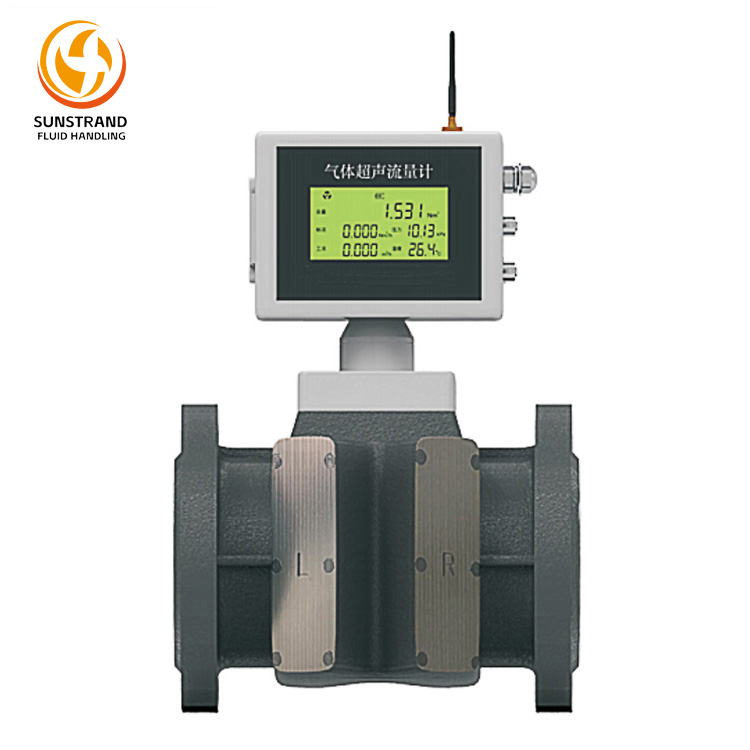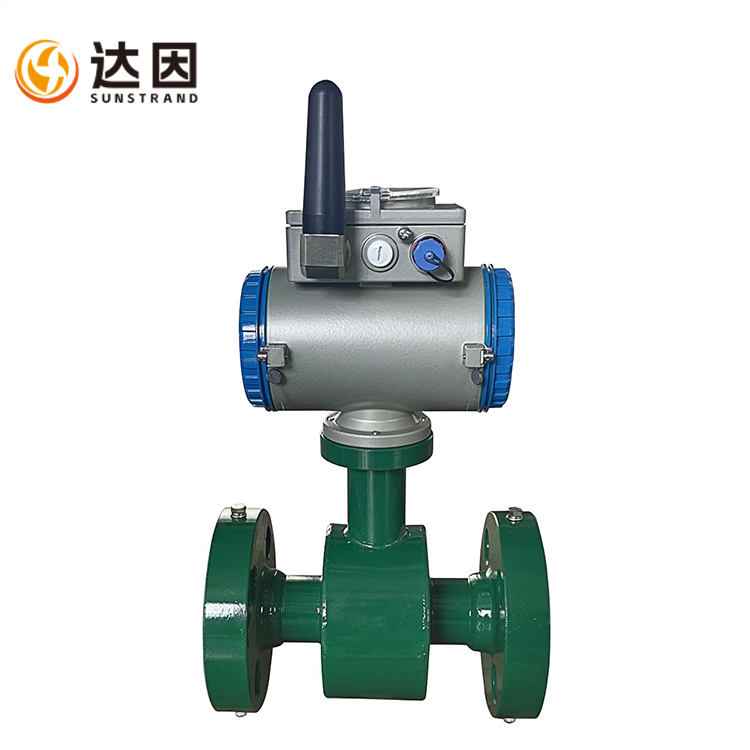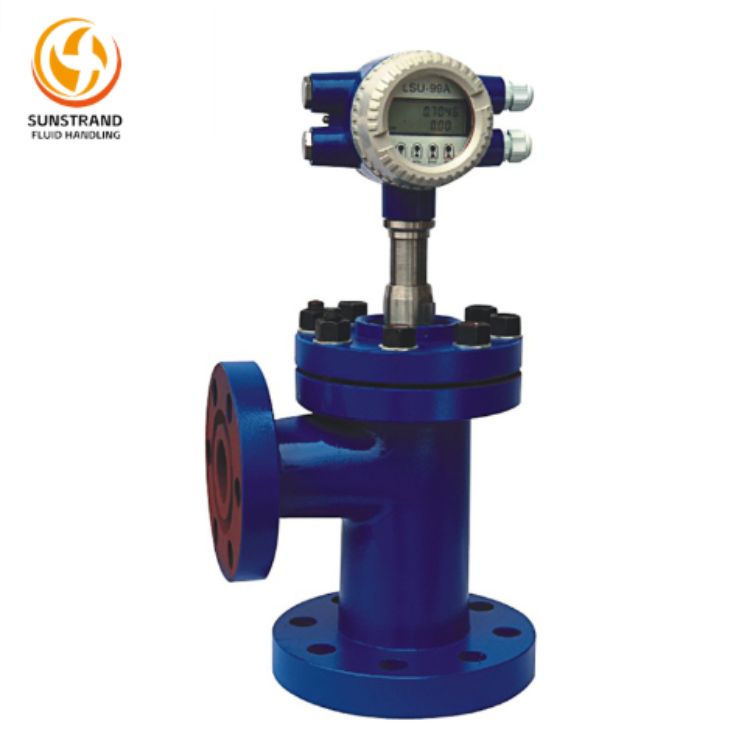

In fields such as industrial production, intelligent skills, and medical equipment, the control and monitoring of temperature have become crucial for the stable operation of systems. Temperature transmitters and thermostats are two common temperature-related devices, but they differ fundamentally in terms of functions, working principles, and applications. Temperature transmitters play the role of a “signal bridge” in industrial automation, while thermostats act as a “temperature manager” in daily use and small control systems.
This article will thoroughly analyze the main differences between the two, explain their application logic through practical cases, and propose a three-stage selection method. At the same time, it will introduce the core advantages of the Sunstrand brand in this field.
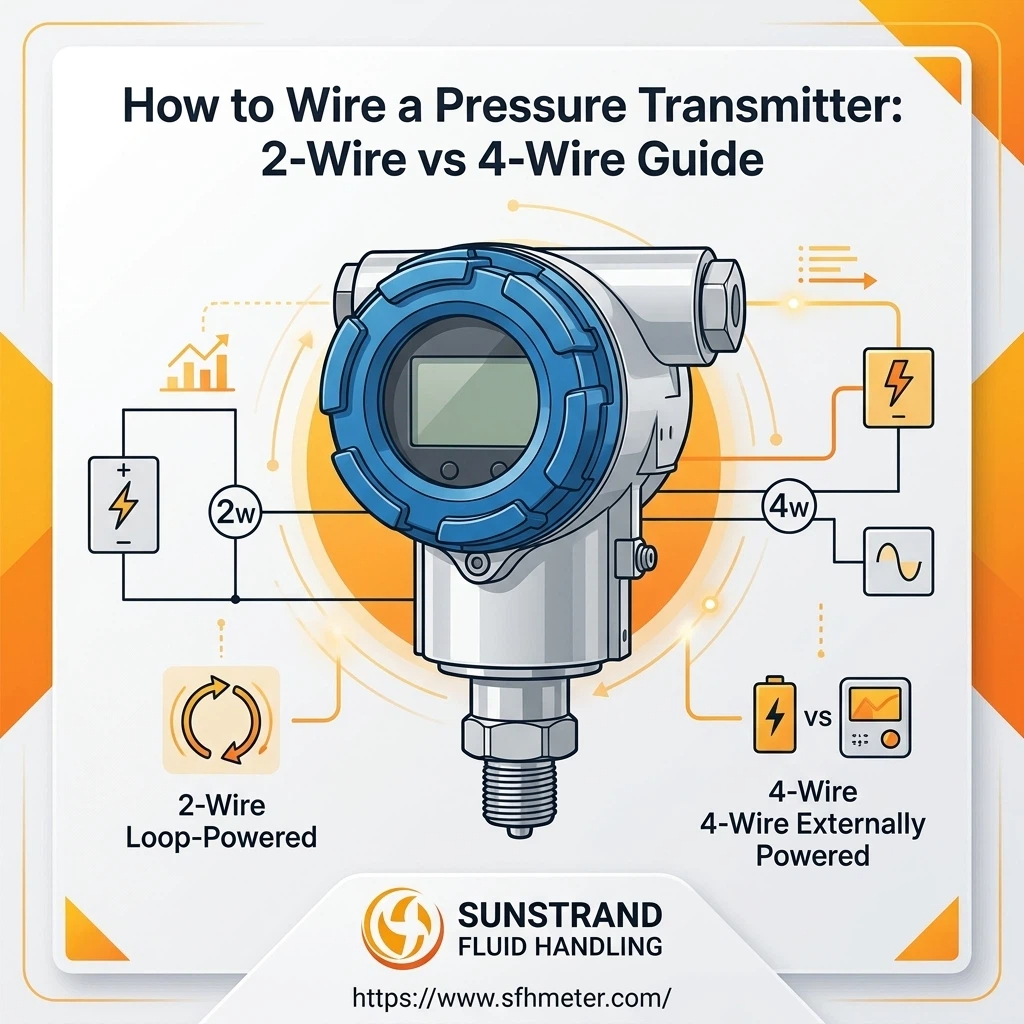
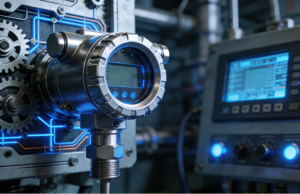
A temperature transmitter is an industrial device used for signal conversion and transmission. Its main function is to amplify and linearize the weak non-linear electrical signals collected by temperature sensors (such as thermocouples or thermistors), converting these signals into standard industrial signals, such as 4 to 20 milliampere current signals, 0 to 10 volt voltage signals, or RS485 digital signals, and then transmitting them in a stable manner to programmable automatic control devices (PLC), distributed control systems (DCS), industrial control systems, or data acquisition terminals.
Special versions, such as high-temperature pressure transmitters, also have the functions of temperature and pressure measurement. They are suitable for harsh industrial environments that require the simultaneous monitoring of these two parameters, such as high-temperature pipelines in petrochemical plants or pressurized containers in power plants. Well-known models like the Romann temperature transmitter are highly regarded for their high precision and reliability in critical industrial processes. Temperature transmitters mainly focus on the precise conversion and long-distance transmission of signals, without direct control functions. These transmitters can withstand electromagnetic interference and voltage fluctuations in industrial environments and are widely used in applications such as chemical reactors, boilers, and metallurgical furnaces.
A thermostat is a terminal device that integrates temperature detection, evaluation and control functions. Its main purpose is to maintain the temperature of a specific space or equipment within the preset value. This device is equipped with a temperature sensor and can also be connected to simple external sensors to monitor the environmental temperature in real time. When it detects a deviation from the set temperature, it can automatically trigger the activation or deactivation of heating equipment, without the need for a complex external control system.
To ensure the correct installation of the thermostat, it is recommended to refer to the wiring diagram to distinguish between power lines, signal lines and load lines, thereby avoiding short circuits or equipment failures. If there are operation problems, such as inaccurate display of temperature, the user can press a specific combination key or use the reset button to restart the thermostat, and the original parameters can be restored.
The thermostat is easy to operate and highly integrated, equipped with an internal control panel, which can adjust the temperature and switch the equipment. Some models also have timer functions and energy-saving features. It is widely used in small residential and commercial places, such as home central air conditioning, floor heating systems, temperature control of refrigeration rooms, small laboratory incubators, and heating of aquariums, etc.
Temperature Transmitter: Its main function is to convert and transmit signals. It only collects and transmits temperature or temperature-pressure data in a standardized form and does not participate in the control decision-making process.
Thermostat: The main function is closed-loop temperature control. It directly regulates the load equipment according to the set value to maintain stable temperature.
Temperature Transmitter: Inputs non-linear signals from sensors, outputs standard industrial signals. Its working principle is signal amplification → linear correction → anti-interference processing → standardized output.
Thermostat: Inputs temperature signals from built-in or external sensors, outputs switching signals or simple analog signals. Its working principle is temperature detection → comparison with set values → triggering control actions.
Temperature Transmitter: In industrial automation scenarios, such as chemical production monitoring, electrical equipment temperature measurement, or data collection from pharmaceutical reaction vessels, it is necessary to achieve long-distance transmission and connect to the central control system.
Thermostat: Civil and small-scale commercial scenarios such as home floor heating control, laboratory incubator temperature regulation and refrigerator temperature management, pursuing plug-and-play convenience.
Temperature Transmitter: No independent control capability; control actions need to be instructed by backend PLC/DCS systems.
Thermostat: Has independent control capability, can directly drive loads like heaters and compressors, and supports switching control or proportional adjustment.
Temperature Transmitter: High compatibility, supports connection with various industrial control systems, and follows industrial standard protocols like Modbus and HART.
Thermostat: Low compatibility, mostly works independently; a few smart models support Wi-Fi/Bluetooth connection to smart home systems, but not industrial-grade linkage.
Temperature Transmitter: Adopts 24V DC power supply, compatible with industrial switching power supplies; some support two-wire systems with low power consumption.
Thermostat: Adopts 220V AC power supply for civilian use; some small products support 12V/24V DC power supply, with power consumption related to load driving capacity.
Temperature Transmitter: Weak safety protection, only some high-end models have signal abnormality alarms like sensor disconnection prompts, without load protection capability.
Thermostat: Comprehensive safety functions, generally equipped with over-temperature alarm, overload protection and dry-burning protection, and some support alarm signal output.
Temperature Transmitter: No local data recording function, relies on backend systems for data storage and query, and supports real-time data upload.
Thermostat: Some smart models have local data recording and remote monitoring functions via mobile APPs, but with limited storage capacity.
Temperature Transmitter: Requires professional installation and wiring with sensors, some need on-site calibration, and supports long-distance installation with signal transmission up to hundreds of meters.
Thermostat: Simple installation, mostly wall-mounted or embedded, with simple wiring; users can install it independently by following the thermostat wiring diagram, with sensor wire length usually less than 10 meters.
Temperature Transmitter: Needs regular calibration 1-2 times a year to ensure signal accuracy, requiring professional equipment and with high maintenance costs.
Thermostat: Low calibration demand; daily maintenance only needs sensor cleaning and contact oxidation checking, with simple operation and low costs.
Temperature Transmitter: High unit price, ranging from hundreds to thousands of yuan; specialized models are more expensive, and their long-term value lies in ensuring stable industrial system operation through accurate data transmission.
Thermostat: Low unit price, ranging from tens to hundreds of yuan; its long-term value lies in convenient control, reducing manual operation costs in small scenarios.
|
Comparison Dimension |
Temperature Transmitter (Including High Temperature Pressure Transmitter, Rosemount Temperature Transmitter) |
Thermostat (Including Considerations for Wiring Diagram and Reset Operation) |
|
Core Function |
Signal conversion and transmission (some integrate temperature-pressure measurement) |
Closed-loop temperature control; requires thermostat wiring diagram for installation and reset knowledge for troubleshooting |
|
Output Signal |
4-20mA/0-10V/RS485 (standard industrial signals) |
Switching signals/simple analog signals |
|
Control Capability |
None |
Independently control load start/stop/adjustment |
|
Application Scenarios |
Industrial automation (chemical, power, metallurgy, etc.); specialized models for high-temperature/pressure environments |
Civil/small-scale commercial (home, laboratory, etc.); plug-and-play with self-installation via wiring diagram |
|
System Linkage |
Supports connection with industrial control systems; high compatibility |
Mostly works independently; a few support smart home linkage |
|
Power Supply Mode |
24V DC (industrial standard) |
220V AC (civilian standard); wiring diagram specifies power requirements |
|
Maintenance Cost |
High (regular calibration required for precision) |
Low (simple cleaning; reset operation resolves minor issues) |
|
Unit Price |
Hundreds – thousands of yuan (higher for specialized models) |
Tens – hundreds of yuan |
|
Practical Operations |
Professional installation and calibration |
Self-installation via wiring diagram; reset via simple steps |
A northern family installed a water floor heating system with a smart thermostat as the control core. The user connected the thermostat to the boiler, power supply and floor heating sensor according to the wiring diagram, and set the target temperature to 22℃. When the indoor temperature was lower than 22℃, the thermostat automatically turned on the boiler; when it reached 22℃, the boiler was turned off.
When the thermostat failed to respond to adjustments, the user restored it to normal by holding the “set” and “power” buttons for 5 seconds to reset. The thermostat also supported remote adjustment via mobile APP and had an over-temperature alarm function, ensuring comfort and energy savings. Using a temperature transmitter in this scenario would require additional PLC and control panels, resulting in high costs and complex operations.
A chemical enterprise needed to monitor the temperature (0-300℃) and pressure (0-1.6MPa) of a high-temperature reaction kettle and transmit data to the central DCS system. It selected a high temperature pressure transmitter paired with a K-type thermocouple sensor. The sensor collected signals inside the kettle, and the transmitter converted them into 4-20mA standard signals for transmission to the DCS system over a 200-meter distance via shielded cables.
To ensure data accuracy with an error ≤0.1℃, the enterprise chose a high-precision model similar to the Rosemount temperature transmitter. The transmitter’s anti-interference design guaranteed stable data transmission in the high-electromagnetic-interference industrial site, providing a reliable basis for production process adjustment. A thermostat could not meet the long-distance transmission and DCS linkage needs in this scenario.
Choose a thermostat if you need direct temperature control for equipment, without external complex systems, and prioritize plug-and-play convenience. Ensure the product is equipped with a clear wiring diagram and reset instructions.
Choose a temperature transmitter if you need to collect temperature or temperature-pressure data for long-distance transmission to an industrial control system, without direct control needs. For harsh industrial environments, select specialized models like high temperature pressure transmitters or high-precision models like Rosemount temperature transmitters.
Environmental Conditions: For high-temperature, high-pressure and high-interference industrial scenarios, choose a temperature transmitter; for normal-temperature, low-interference civil scenarios, choose a thermostat.
Precision Requirements: For industrial production requiring precision ±0.1℃-±0.5℃, choose a high-precision temperature transmitter; for civil scenarios requiring precision ±0.5℃-±1℃, an ordinary thermostat is sufficient.
Installation Distance: If the sensor and control terminal distance exceeds 10 meters, choose a temperature transmitter; if it is less than 10 meters, a thermostat is suitable.
For simple scenarios with limited budgets such as home temperature control, choose a cost-effective thermostat with low installation and maintenance costs.
For industrial production requiring system linkage and data monitoring, invest in a high-quality temperature transmitter. Although the upfront cost is high, it can reduce long-term production risks through accurate data transmission.
Sunstrand is a professional brand with over 20 years of industry experience, providing full-scenario products including thermostats and temperature transmitters. Its products compete with models like Rosemount temperature transmitters in terms of precision and durability.
Sunstrand thermostats are equipped with clear wiring diagrams and simple reset instructions for easy use. Its temperature transmitters support multiple sensor types and standard industrial signals, with strong anti-interference capabilities. The products have obtained ISO, CE, SIL and other international certifications, with IP67 protection grade suitable for harsh environments, and provide a 2-year warranty and 7×24 professional technical support.
As a first-class supplier for major energy corporations, Sunstrand integrates R&D, production and sales, with a professional R&D team of more than 20 people and annual R&D investment accounting for 5%-7% of operating income. Its products are widely used in petroleum, chemical and environmental protection industries, providing reliable solutions for industrial precision monitoring and civil convenient control.
Temperature transmitters and thermostats have completely different functional positioning. Temperature transmitters are “data bridges” for industrial systems, focusing on accurate signal transmission; thermostats are “temperature managers” for terminal scenarios, focusing on independent control. When selecting products, users should first clarify core demands, then comprehensively judge based on scenario conditions, precision requirements and cost budgets.
Sunstrand‘s full-scenario product layout, core technical advantages and comprehensive service guarantees can meet the needs of both industrial automation precision monitoring and civil scenario convenient control.
Q1: Can a temperature transmitter replace a thermostat to achieve temperature control?
A: No. A temperature transmitter only outputs signals and needs to be paired with PLCs and relays for control, which is complex and costly. A thermostat can directly control loads without additional equipment, and is equipped with wiring diagrams and how to reset thermostat in easy way..
Q2: Can a thermostat be used in industrial scenarios?
A: It is only suitable for small and simple industrial auxiliary equipment like small ovens, not for core production processes with high temperature, high pressure and high interference. Industrial core scenarios require temperature transmitters paired with control systems.
Q3: Do temperature transmitters need regular calibration?
A: It is recommended to calibrate them 1-2 times a year. Electromagnetic interference and sensor aging can affect measurement accuracy. High temperature pressure transmitters need calibration for both temperature and pressure sensors, while premium models like Rosemount temperature transmitters have longer calibration intervals.
Q4: How do smart thermostats achieve remote control?
A: Smart thermostats supporting Wi-Fi/Bluetooth can be paired with mobile APPs for remote temperature setting and equipment control. If remote control fails, check the wiring according to the wiring diagram first, then reset the thermostat to re-establish the connection.
Q5: What are the advantages of the 4-20mA signal of temperature transmitters?
A: The 4-20mA current signal has strong anti-interference ability and long transmission distance up to hundreds of meters. It can judge line disconnection through 0mA signals, making it the most commonly used standard signal in industrial scenarios.
Q6: Can temperature transmitters work normally in high-humidity environments?
A: It depends on the protection level. Industrial-grade transmitters with IP67 or higher protection level have sealed structures, suitable for high-humidity scenarios like chemical workshops. Ordinary models may have signal drift or component damage in high-humidity environments.
Q7: Can thermostats achieve precise temperature control for laboratory equipment?
A: Yes, but high-precision commercial thermostats are required. Ordinary civil thermostats cannot meet the precision requirements of laboratory equipment. Sunstrand‘s high-precision commercial thermostats with PID algorithms can achieve control accuracy ≤0.3℃, suitable for small incubators and constant temperature water baths.
Q8: What should I do if the temperature transmitter has no output signal?
A: First check the 24V DC power supply and wiring, then check the sensor connection. For specialized models like high temperature pressure transmitters or Rosemount temperature transmitters, contact professional technical personnel for troubleshooting if necessary.
Q9: Can smart thermostats be linked with other smart home devices?
A: Most smart thermostats have limited linkage capabilities. Some high-end models supporting mainstream protocols like Matter can be linked with devices in the same ecosystem. If linkage fails, reset the thermostat and reconfigure the connection.
Q10: What is the maximum transmission distance of temperature transmitters?
A: It depends on the signal type: 4-20mA signals can transmit up to 1000 meters with shielded cables; 0-10V signals are usually within 100 meters; RS485 signals can transmit up to 500 meters, and extended to 1000 meters with repeaters.
Q11: Do thermostats have energy-saving functions? How to achieve energy saving?
A: Yes. Common energy-saving methods include timing mode, adaptive adjustment and power-off memory. PID adjustment thermostats can avoid frequent equipment start/stop to save energy. If energy-saving functions fail, reset the thermostat and reconfigure the settings.
Q12: Can temperature transmitters be used with multiple sensors at the same time?
A: Most standard transmitters only support single-sensor input. For multi-point monitoring, select multi-channel temperature transmitters. High temperature pressure transmitters are typically single-channel devices focusing on integrated temperature and pressure measurement at a single point.