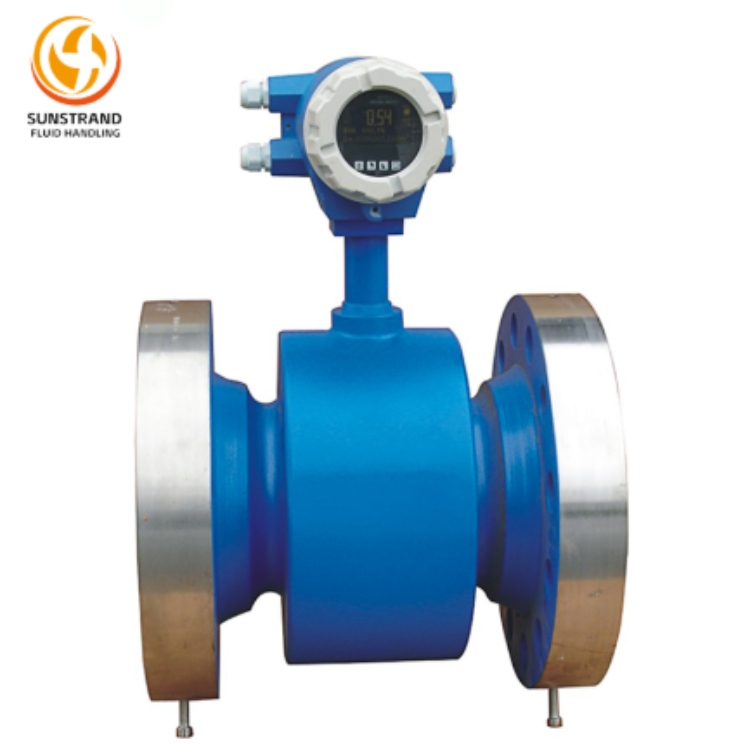

Natural gas is an indispensable energy source for key infrastructure such as residential buildings, industrial processes, urban pipelines, liquefied natural gas terminals, etc. Accurate measurement of natural gas flow is crucial for transparency in bills, safe operation, compliance with regulations, and energy efficiency, especially in 2026 – when technological advancements and changes in industry demands make choosing the appropriate flow metering equipment more important than ever before.
There are various types of flow meters available in the market, each with its own unique advantages and applicable scenarios. If not selected appropriately, it may lead to high downtime costs, inaccurate readings, frequent violations, and the missed opportunity to utilize the most advanced technologies in 2026.
This 2026 guide simplifies the selection process, covering the basics of natural gas flow meters, common types, main evaluation factors, emerging trends, Sunstrand case studies, and step-by-step selection methods, helping you make informed decisions, whether for urban pipelines, industrial boilers, or liquefied natural gas terminals.
A natural gas flow meter is a specialized instrument designed tomeasure the volume, mass, or velocity of natural gas passing through a pipeline or system. Unlike a generic gas flow meter or flow meter for gas used for other gases, natural gas flow meters are engineered to handle the unique properties of natural gas—including its low viscosity, compressibility, and varying composition—while delivering accurate, reliable readings in diverse environments.
The core purpose of a natural gas flow meter is to provide actionable data: accurate billing for utilities, fuel optimization for industrial facilities, and safe cargo tracking for LNG terminals. In 2026, modern models integrate IoT, support remote monitoring, and use AI for predictive maintenance to cut costs and downtime.
Sunstrand’s natural gas flow meters address 2026 demands with accuracy, durability, and smart functionality, calibrated for natural gas’s unique properties and global industry standards, performing reliably in all challenging applications.
Not all gas flow meters are exactly the same. Under the same conditions, they may be applicable to different types of natural gas flow meters. Each type employs specific technologies to measure flow, and thus is more suitable for specific application scenarios, specific flow rates, and specific environmental conditions. Here are the four main types of gas flow sensors in 2026, including their working principles, advantages, limitations, and ideal application scenarios.
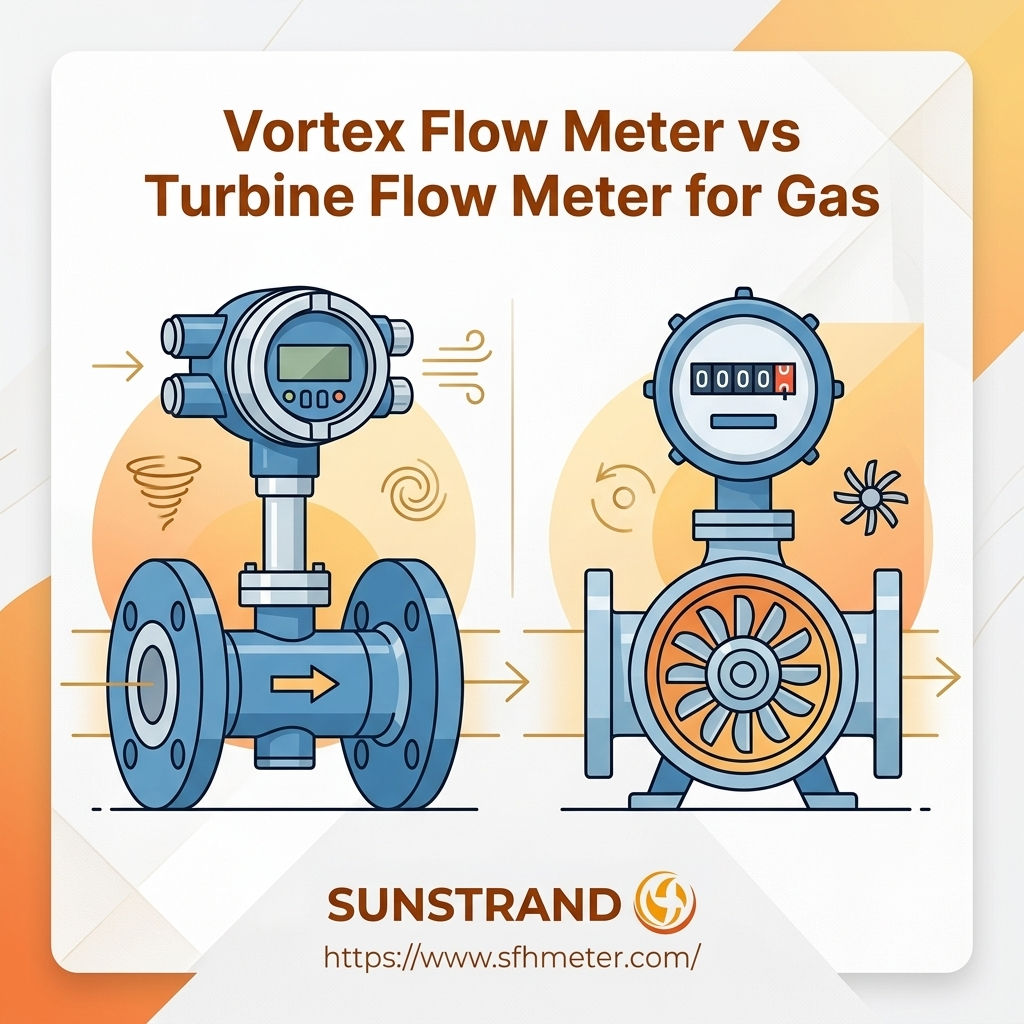
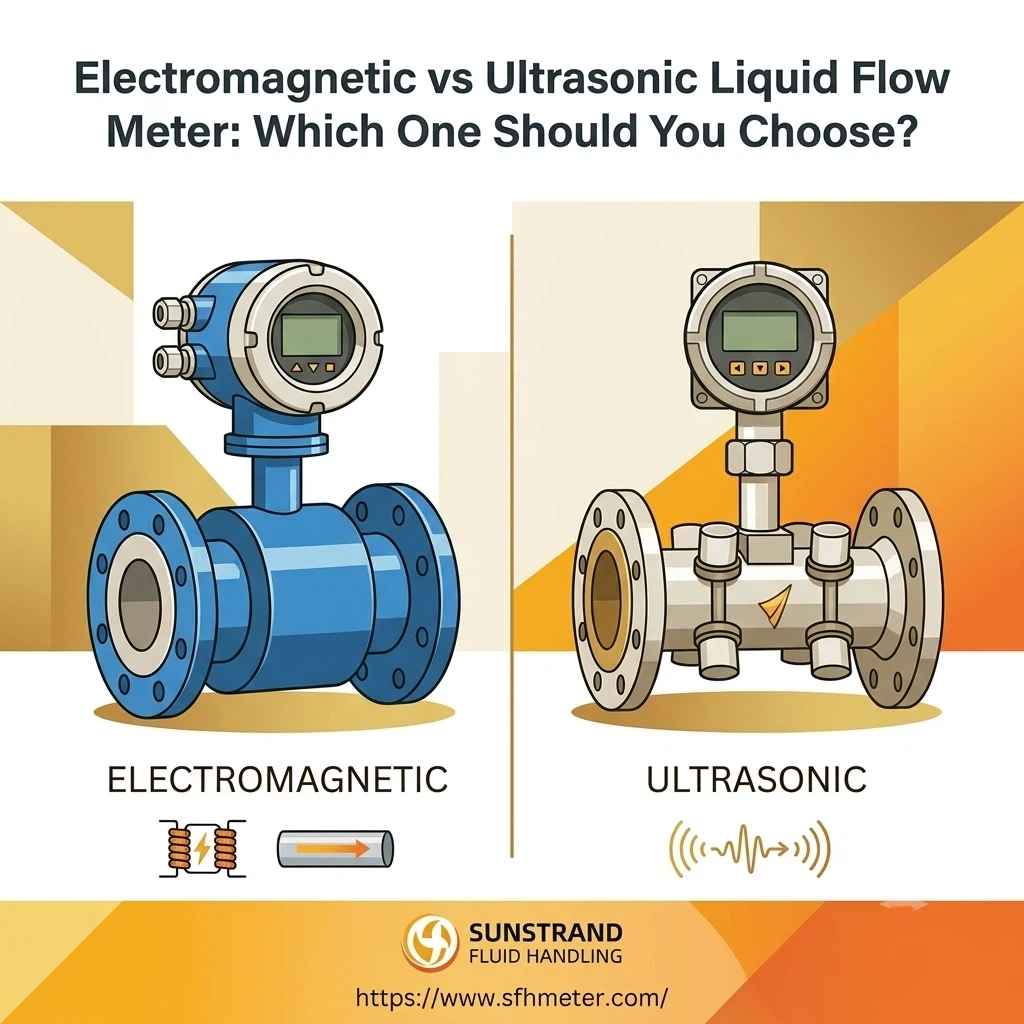
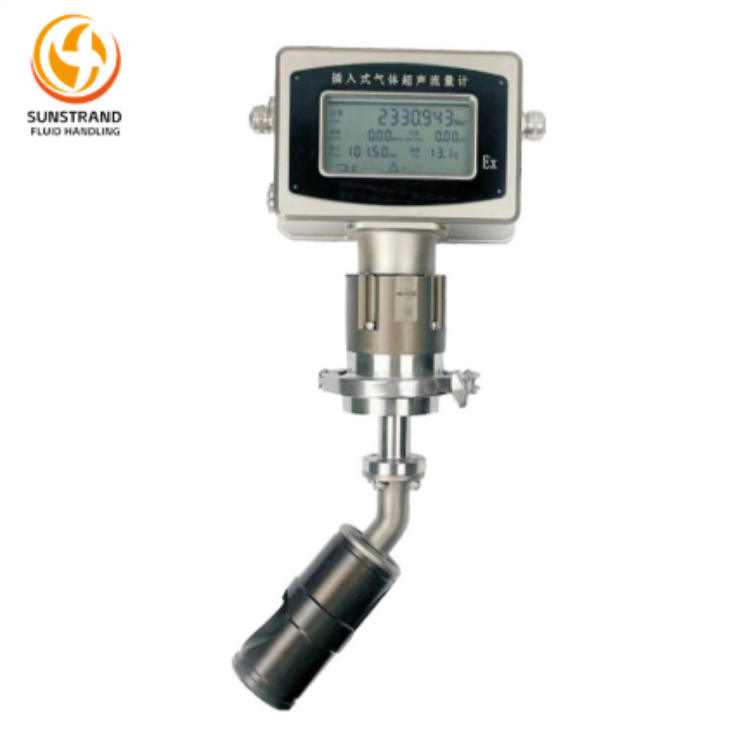
In 2026, the widely popular gas flowmeter – ultrasonic flowmeter – will be widely applied. It calculates the flow by emitting ultrasonic waves into the gas and measuring the propagation time of the waves in the upstream and downstream. Two models are available: built-in type and clamp type.
Advantages: High accuracy, no moving parts, suitable for large-diameter hoses, and can adapt to various working conditions with different gas compositions.
Disadvantages: Initial cost is high; the clamp type model may lead to a decrease in the accuracy of the pipeline due to corrosion; a straight pipe section needs to be installed.
Ideal application scenarios: urban natural gas distribution, large industrial pipelines. As of 2026, Sunstrand ultrasonic natural gas flow meters have been widely used in urban pipeline systems that combine Internet of Things technology with remote monitoring.
A cost-effective and high-performance gas flow meter – the turbine flow meter – operates by driving an internal rotor to rotate through the flow of natural gas. The rotational speed is directly proportional to the flow rate. It is suitable for small and medium-sized pipelines as well as basic monitoring scenarios.
Advantages: Low initial cost, compact structure, easy installation, and high accuracy in large flow measurement.
Disadvantages: Moving parts are prone to wear or damage, lower accuracy for small flow measurement, and shorter service life in harsh environments.
Ideal application scenarios: Residential/commercial gas metering and small industrial boilers. Thanks to its efficient and reliable performance, Sunstrand gas turbine flowmeters have become an ideal choice for both household and commercial applications since 2026.
The high-accuracy gold standard among natural gas flow meter types, Coriolis meters use the Coriolis effect—gas flowing through a vibrating tube alters vibration, which sensors convert to mass flow readings.
Strengths: Exceptional accuracy, direct mass flow measurement, no moving parts, measures density/temperature. Limitations: Highest upfront cost, larger size, higher pressure drop, unsuitable for very large pipelines.
Ideal Use Cases: LNG terminals, chemical plants, critical high-accuracy applications. Sunstrand’s Coriolis natural gas flow meter leads 2026 LNG operations with robust construction and IoT integration.
A key category of gas flow meter types, digital natural gas flow meters use DSP and smart electronics to enhance accuracy, integrating IoT, remote calibration, and data logging.
Strengths: Advanced data processing, seamless IoT/SCADA integration, remote monitoring, customizable for smart industrial use. Limitations: Higher cost than analog meters, needs stable power/connectivity, steeper learning curve.
Ideal Use Cases: Industrial boiler monitoring, smart gas grids. Sunstrand’s digital natural gas flow meter (model ST-DG300) is a 2026 top pick for boilers, with AI-enhanced accuracy and real-time insights.
|
Meter Type |
Accuracy Range |
Key Strengths |
Main Limitations |
Ideal Use Cases |
|
Ultrasonic |
±0.5% to ±1% of reading |
No moving parts, non-invasive option, compatible with large pipelines |
Higher upfront cost, requires straight pipeline runs |
Urban gas distribution, large industrial pipelines |
|
Turbine |
±0.5% to ±2% of reading |
Low upfront cost, compact, easy to install |
Moving parts (high maintenance), less accurate at low flow |
Residential/commercial use, small industrial boilers |
|
Coriolis |
±0.1% to ±0.5% of reading |
Direct mass flow, unaffected by gas properties, high accuracy |
Highest upfront cost, larger size, higher pressure drop |
LNG terminals, chemical plants, critical high-accuracy applications |
|
Digital |
Depends on base technology (±0.5% to ±1%) |
IoT integration, remote monitoring, advanced data processing |
Higher cost than analog, needs stable power/connectivity |
Industrial boiler monitoring, smart gas grids |
Choosing the right natural gas flow meter in 2026 requires more than just selecting a type—it requires evaluating your specific application needs, operational constraints, and long-term goals. This is true whether you’re selecting a basic flow meter for gas or a specialized natural gas flow meter. Below are six critical factors to consider to ensure you choose a gas flow meter that delivers accuracy, reliability, and value.
Accuracy is the most fundamental factor—even a small error can lead to significant financial losses (for billing) or operational inefficiencies (for industrial processes). Evaluate the meter’s accuracy rating and ensure it meets your application’s requirements: residential billing may tolerate ±2% accuracy, while LNG terminals require ±0.1%.
Stability is equally important: the meter should maintain its accuracy over time, even in harsh environments. Look for meters with temperature compensation and drift-resistant sensors—key features in 2026 models. Sunstrand’s natural gas flow meters are calibrated to maintain accuracy for 1-2 years and offer remote calibration to ensure long-term stability.
Natural gas flow rates vary widely—from low flow in residential lines (0.1 to 10 m³/h) to high flow in LNG terminals. Choose a meter with a flow range that matches your application: a meter designed for high flow will be inaccurate at low flow, and vice versa. Look for meters with a wide turndown ratio (the ratio of maximum to minimum measurable flow)—a higher turndown ratio offers greater flexibility.
Medium compatibility is also critical: natural gas may contain moisture, debris, or contaminants, and some meters are more resistant to these than others. For example, Coriolis meters handle dirty gas better than turbine meters. Also, ensure the meter is compatible with natural gas’s compressibility and varying composition—especially if you’re measuring mass flow.
The installation cost and complexity will significantly increase the total cost of ownership of the equipment. Factors such as pipe size, required straight pipe length, and installation method need to be comprehensively considered. The clamp-fixed ultrasonic flow meter is highly suitable for the 2026 update project as it does not require downtime operations.
The maintenance requirements also affect the long-term cost: instruments without moving parts require less maintenance than those with moving parts. It is recommended to choose the 2026 model with self-diagnostic functions and remote maintenance capabilities; these features can reduce downtime and lower on-site service costs. The design of Sunstrand instruments is conducive to maintenance: ultrasonic and Coriolis models only need to be inspected once a year, while turbine models require maintenance once every two years.
In 2026, industrial IoT (IIoT) integration is no longer a luxury—it’s a necessity for optimizing operations. Choose a natural gas flow meter that integrates seamlessly with your existing IoT platform, SCADA system, or cloud-based monitoring tools. Look for features like wireless connectivity, digital outputs, and real-time data transmission.
Smart meters with IoT integration allow you to monitor flow rates remotely, set up alerts for abnormal readings, and analyze historical data to identify efficiency trends. Sunstrand’s 2026 natural gas flow meters all offer IoT compatibility, with cloud-based dashboards that let operators access data from anywhere—reducing the need for on-site monitoring and improving response times to issues.
Natural gas is flammable and potentially hazardous, so safety is non-negotiable. Choose a meter that meets global safety standards and features built-in safety mechanisms. In 2026, many meters also offer emergency shutoff capabilities, which can be triggered remotely if abnormal flow is detected.
Compliance with industry regulations is also critical—especially for utilities and industrial facilities. Ensure the meter meets local and international standards for natural gas measurement to avoid fines and ensure billing transparency. Sunstrand’s natural gas flow meters are certified to meet all major global standards, making them a compliant choice for 2026.
Don’t focus solely on upfront cost—total cost of ownership (TCO) includes installation, maintenance, calibration, replacement parts, and energy costs over the meter’s lifespan. A cheaper turbine meter may have a lower upfront cost but higher maintenance costs and a shorter lifespan, while a more expensive Coriolis meter may have a higher upfront cost but lower long-term costs and greater accuracy.
In 2026, many organizations are prioritizing TCO over upfront cost—opting for smart meters with IoT integration and predictive maintenance features, which reduce downtime and maintenance costs. Sunstrand’s meters are designed to deliver low TCO, with durable construction, minimal maintenance requirements, and energy-efficient designs.
2026 is a pivotal year for natural gas flow meter technology, with advancements focused on smart connectivity, efficiency, and predictive maintenance. These trends are transforming how organizations measure and manage natural gas flow, making all gas flow meter types more reliable, cost-effective, and integrated into smart industrial ecosystems—especially digital natural gas flow meters. Below are the top four 2026 trends to watch.
AI-driven predictive maintenance is one of the biggest 2026 trends, replacing reactive maintenance with proactive monitoring. Natural gas flow meters equipped with AI algorithms analyze real-time data to detect anomalies that indicate potential failures—such as sensor drift, wear, or blockages.
These AI-enabled meters send alerts to operators before a failure occurs, allowing for scheduled maintenance and reducing unplanned downtime. Sunstrand’s 2026 smart meters use machine learning algorithms to learn normal operating patterns and predict maintenance needs—cutting maintenance costs by 30% and reducing downtime by 40% for customers.
Wireless connectivity is becoming more advanced in 2026, with meters supporting 5G, LoRaWAN, and satellite connectivity—eliminating the need for costly wired infrastructure, especially in remote locations. 5G connectivity offers high-speed, low-latency data transmission, making it ideal for real-time monitoring of critical applications.
LoRaWAN is also gaining traction for low-power, long-range applications—allowing meters to transmit data over miles with minimal power consumption. Sunstrand’s 2026 meters offer multi-protocol wireless connectivity, letting customers choose the best option for their location and needs, and supporting seamless integration with existing IoT networks.
With a growing focus on sustainability and remote operations, low-power and energy-harvesting designs are a key 2026 trend. Many natural gas flow meters are installed in remote locations with no access to grid power, so battery-powered models with long lifespans (5-10 years) are in high demand. Energy-harvesting technology—using solar, thermal, or vibration energy to power the meter—eliminates the need for battery replacements entirely.
Sunstrand’s 2026 low-power meters use advanced battery technology and energy-harvesting features to reduce energy consumption by 50% compared to 2025 models—lowering operational costs and reducing environmental impact.
Advanced digital signal processing (DSP) is improving measurement accuracy in 2026 by filtering out noise and correcting for interference—such as pipeline vibration, temperature fluctuations, and gas composition changes. DSP technology allows meters to adjust their measurements in real time, ensuring accuracy even in harsh environments.
For example, Sunstrand’s ultrasonic meters use DSP to filter out noise from industrial machinery, while Coriolis meters use DSP to correct for temperature-induced tube vibration—improving accuracy by 20% compared to previous models. DSP also enables meters to process and transmit data faster, supporting real-time decision-making in 2026’s fast-paced industrial environments.
Theory and trends are important, but real-world performance is what matters most. Below are three 2026 Sunstrand customer case studies, showcasing how our natural gas flow meters are solving problems and delivering value across diverse applications.
A European utility upgraded its urban gas grid, replacing high-maintenance turbine meters with Sunstrand’s ST-UG100 ultrasonic meters at 200 junctions.
Sunstrand recommended its ST-UG100 ultrasonic natural gas flow meters, which offer non-invasive clamp-on installation, high accuracy (±0.5% of reading), and seamless IoT integration. The meters were installed at 200 distribution junctions across the city, transmitting real-time flow data to the utility’s cloud-based dashboard.
Results: 80% fewer billing errors, 35% lower maintenance costs, early detection of 5 leaks, 12% less gas waste, and improved customer satisfaction, plus reduced energy use for remote monitoring.
A U.S. manufacturing facility used Sunstrand’s ST-DG300 digital meters to monitor boiler gas flow, optimize efficiency, cut fuel costs, and meet environmental compliance.
Sunstrand installed its ST-DG300 digital natural gas flow meters, which feature advanced DSP for high accuracy, real-time data logging, and integration with the facility’s IoT platform. The meters monitor natural gas flow to each boiler, providing insights into fuel usage and efficiency, and setting up alerts for abnormal flow.
Results: 15% lower natural gas use, simplified compliance reporting, and 30% less downtime via early malfunction alerts.
An Asian LNG terminal needed high-accuracy meters for cargo measurement; Sunstrand’s ST-CG200 Coriolis meters (±0.1% accuracy, direct mass flow) solved inaccuracy and compliance issues.
Sunstrand supplied its ST-CG200 Coriolis natural gas flow meters, which offer exceptional accuracy, direct mass flow measurement, and robust construction to withstand harsh LNG terminal conditions. The meters were installed in the terminal’s transfer lines, integrating with the terminal’s SCADA system for real-time monitoring.
Results: No more cargo disputes, optimized transfer times, and 40% lower maintenance costs due to durable, no-moving-part design.
With so many gas flow meter types and 2026’s technological advancements, choosing the best natural gas flow meter can feel overwhelming. Whether you need a basic flow meter for gas or a high-performance digital natural gas flow meter, follow this simple 3-step guide to narrow down your options and select a meter that meets your application needs, budget, and long-term goals.
Define core needs to eliminate unsuitable options: flow rate range, volume/mass/velocity measurement, accuracy requirements, gas cleanliness, environment harshness, and need for remote monitoring/IoT.
For example, if you’re measuring LNG transfer, a Coriolis meter is the best choice. If you’re upgrading a residential gas grid (low cost, non-invasive installation, IoT integration), an ultrasonic meter is ideal.
Match meter types to constraints: pipeline size, installation space, power availability, and maintenance capacity—Sunstrand experts can help align your needs with the right meter.
Sunstrand’s team of experts can help you match your constraints to the right meter type—ensuring you don’t overpay for features you don’t need or choose a meter that can’t handle your operational conditions.
Evaluate total cost of ownership (TCO): upfront, installation, maintenance, energy, and replacement costs—smart meters often have lower long-term TCO despite higher upfront costs.
A more expensive smart meter with IoT integration and predictive maintenance may have a higher upfront cost but lower TCO over time—saving you money on maintenance, downtime, and energy. In 2026, many organizations are choosing this long-term value approach, as it aligns with their sustainability and efficiency goals.
Choosing the best natural gas flow meter in 2026 requires a clear understanding of your application needs, operational constraints, and the latest technological trends. From ultrasonic and turbine gas flow meter types to advanced Coriolis and digital natural gas flow meters, each type has unique strengths—what matters most is finding the one that aligns with your goals for accuracy, reliability, IoT integration, and total cost of ownership, whether you’re looking for a simple flow meter for gas or a specialized solution.
2026’s trends—AI-driven predictive maintenance, enhanced wireless connectivity, low-power designs, and advanced DSP—are making natural gas flow meters smarter, more efficient, and more integrated than ever before. By leveraging these trends, organizations can optimize natural gas usage, reduce costs, improve safety, and comply with evolving regulations.
Sunstrand’s meters embrace 2026 trends, with ultrasonic, turbine, Coriolis, and digital models trusted worldwide for accuracy, durability, and smart functionality in all applications.
Contact Sunstrand’s experts for personalized recommendations to choose the best natural gas flow meter for your 2026 needs.
Q1: Which natural gas flow meter type is most accurate in 2026?
A1: Coriolis natural gas flow meters are the most accurate, with accuracy ratings of ±0.1% to ±0.5% of reading. They measure mass flow directly, making them ideal for critical applications like LNG terminals.
Q2: How to choose the right natural gas flow meter for my application?
A2: Start by defining your flow rate range, accuracy needs, gas cleanliness, and whether you need IoT integration. Match these to meter strengths: Coriolis for high accuracy, ultrasonic for large pipelines/retrofits, turbine for cost-effective residential use, and digital for smart industrial setups.
Q3: Do 2026 natural gas flow meters require internet for IoT integration?
A3: No. While many support Wi-Fi/5G, low-power models use LoRaWAN or satellite connectivity for remote locations. Sunstrand’s meters offer multi-protocol connectivity to fit different location needs.
Q4: How often do natural gas flow meters need calibration in 2026?
A4: Calibration depends on the type: Coriolis/ultrasonic meters every 1-2 years, turbine meters every 6-12 months. Sunstrand’s smart meters support remote calibration to reduce downtime.
Q5: What is the lifespan of a 2026 natural gas flow meter?
A5: Lifespan varies by type: Coriolis/ultrasonic (10-15 years), digital (8-12 years), turbine (5-7 years). Sunstrand’s meters are durable, with extended lifespans in harsh environments.