
In industrial engineering and energy consumption management, precise operation of natural gas is essential. Controlling the natural gas consumption in industrial sites, for special natural gas production in semiconductor manufacturing, optimizing fuel flow within boilers, etc., appropriate gas flow measurement equipment in any field can determine operational efficiency and safety, as well as production quality. However, many experts often confuse the two core devices – gas flow meters and gas flow controllers. Although their names are similar and both relate to gas flow, their functions are completely different. Incorrect selection can lead to errors, violations of regulations, even safety accidents, resulting in high costs.
This detailed guide introduces the differences between gas flow meters and gas flow controllers, describes their main functions, and provides practical suggestions to help you choose the equipment suitable for your application field. It analyzes the operation principles, application fields, maintenance warranty requirements and costs of these devices, and supplements the information through specific examples of leading companies in the field, Sunstrand, in the field of liquid measurement and management solutions. When you complete this guidance, you will know when to use a gas flow meter, how to choose a gas flow controller, and how to make a reasonable decision that meets the goals and budget.
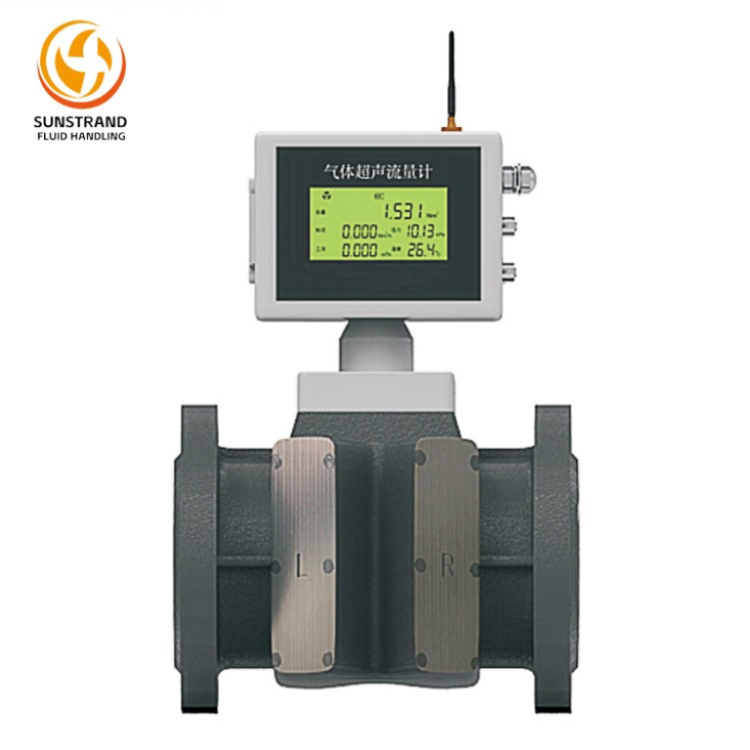
A gas flow meter is a precision instrument designed to measure the rate or volume of gas passing through a pipeline or system. Its core purpose is to provide accurate, real-time data on gas flow—nothing more, nothing less. Unlike liquid flow meters, gas flow meters must account for the compressibility of gases, meaning their volume changes with variations in pressure and temperature. This requires specialized designs that can adjust for these variables to deliver reliable measurements under diverse operating conditions. Whether you need a basic flow meter for gas or a high-performance model for industrial applications, understanding the fundamentals of gas flow metering is essential to selecting the right device.
Gas flow meters operate on various principles, including thermal mass, ultrasonic, turbine, and Coriolis technology—these are the most common gas flow meter types, each tailored to specific gas types, flow rates, and environments. For example, thermal mass flow meters excel at measuring low to medium flow rates of clean gases, while ultrasonic meters are ideal for corrosive or dirty gases. Regardless of the technology, all gas flow meters share a common goal: to quantify gas flow without altering or controlling it. Proper gas flow metering relies on selecting the right type of meter for your specific gas and operating conditions.
The main features of gas flow meters are high measurement accuracy, interchangeability with specific types of gases, and the ability to transmit consumption data in real time. This equipment is used in various fields ranging from the oil and gas industry to public health, and plays a core role in energy consumption monitoring, pollutant management, and engineering optimization. Some gas flow meters may have data storage or remote control functions, but they are basically for measurement rather than regulation.
A gas flow controller (GFC) is a more advanced device that builds on the measurement capabilities of a gas flow meter but adds a critical feature: active flow control. In other words, a GFC doesn’t just measure gas flow—it adjusts it to maintain a pre-set flow rate, ensuring consistency even when operating conditions change. This makes GFCs essential for applications where precise, stable gas flow is required to ensure product quality or process safety.
The general gas flow controller is mainly composed of three components: an internal gas flow meter, a regulating valve, and a feedback network. The feedback network is a key factor that distinguishes this regulator from other products. It can continuously control the flow rate and adjust the valve to correct the error between the pre-set value and the actual value. Despite changes in pressure or flow requirements of the gas flow, these closed-loop control systems can still ensure the stability of the gas flow.
There are various configurations for gas flow controllers, including mass flow controllers (MFC) – which directly measure and control the mass flow – and volume flow controllers (VFC) – which control the volume flow. Especially in semiconductor manufacturing, laboratory research, and the chemical industry, the latter type of regulator is often used in fields where even minor changes in gas flow can affect the results. Additionally, gas flow controllers usually have additional functions such as safety signal indication, data storage, and integration with industrial automation systems.
In order to fully understand the differences between gas flow meters and gas flow controllers, these two devices need to be compared based on 10 key dimensions. These differences range from simple measurement records to precise control, which helps to determine which device is more suitable for the specific needs of the users.
The most fundamental difference between the two devices lies in their core function:
Gas Flow Meter: The sole function of this device is to measure the flow or volume of gas. It provides data on the gas flow within the system but cannot alter or control the gas flow. It can be regarded as a gas speedometer, indicating the speed of the gas, but it cannot control it.
Gas Flow Controller: Its main function is to maintain the gas flow at a pre-set value. Inside the device, there is a flow meter for real-time measurement of the flow and a regulating valve for adjusting the flow rate to achieve the desired value. Even if external conditions change, the flow rate remains constant, from this perspective, it can be regarded as ‘gas cruise control.
The working principles and output signals of the two devices also differ significantly:
Gas Flow Meter: It follows a simple principle: measurement and output. Using sensors to measure the flow of gas and converting these signals into electrical signals, it is transmitted to visualization devices, data storage devices or control systems. It does not contain repetitive circuits, only providing data based on the current flow rate.
Gas Flow Controller: Operates according to the feedback principle of the closed-loop control network. In this case, a built-in flow meter is used to measure the speed of the current flow, and it is compared with the user-defined target value. If necessary, the valve can be adjusted to make up for the difference. The output signal includes the measured flow speed and the valve position. The device continuously adjusts the valve position to maintain the target value.
Application scenarios are a key differentiator, as each device is designed for specific use cases:
Gas Flow Meter: Suitable for applications that only require control or monitoring of gas flow. The main application areas include tracking of natural gas consumption in commercial or industrial buildings, tracking of emissions in compliance with environmental regulations, monitoring of fuel flow in boilers, and gas inventory management, etc. It is also used in laboratories, where you need to measure the flow of water as a basic requirement.
Gas Flow Controller: Ideal for applications that require precise and stable measurement of flow. General application areas include semiconductor manufacturing, laboratory experiments, chemical industries, and medical equipment, etc. All application areas that may cause irregular gas flow, product errors, safety hazards, or experimental failures require the use of GFC.
Gas flow meters and controllers differ in their ability to process signals and integrate with other systems:
Gas Flow Meter: It has basic signal processing capabilities. It converts the initial value of the sensor into standardized analog or digital signals, and then transmits them to the external system. Most basic models do not have built-in signal processing functions except for the conversion function, and the integration function is limited to data transmission.
Gas Flow Controller: Offers advanced signal processing capabilities. It processes measurement and control signals, calculates the appropriate adjustment value for the faucet through algorithms and applies it correctly. GFC can also be better integrated into industrial automation systems. It receives adjustment values through analog or digital signals, transmits status updates, and is remotely managed and tracked via the IoT platform.
Power requirements differ due to the additional components in gas flow controllers:
Gas Flow Meter: It has extremely low energy consumption and can operate simply by driving the sensor and signal converter. Most models can be equipped with low-current DC power supply or battery power to enable long-term use. Some economical models can even operate continuously for several years using batteries, without the need to replace the batteries.
Gas Flow Controller: It has higher energy consumption because it requires the sensor, signal processor and regulating valve to work together. Most gas flow controllers (GFC) need a 24-volt DC power supply, but some more powerful models may consume more power to achieve more complex functions. Battery-powered regulators are extremely rare because the energy consumption of the regulating valve may even exceed that of the basic instrument.
Safety features are more advanced in gas flow controllers, given their role in critical applications:
Gas Flow Meter: Basic Safety Function (depending on the situation). Most models only issue an alarm when the gas consumption exceeds the preset threshold. This function merely alerts the user to notice abnormal flow, and cannot directly control or regulate the gas consumption to eliminate safety hazards; its core lies in providing real-time warnings.
Gas Flow Controller: Advanced Protection Features. Besides measuring the flow rate, the gas flow regulator (GFC) can also have the following protective features: pressure fluctuation protection, flow interruption protection, and a safety mode with valves. For applications involving flammable, toxic, or corrosive gases, this functionality is particularly important because uncontrolled gas flow can lead to explosions, leaks, or exposure of personnel to hazardous substances.
Data recording and monitoring capabilities also differ between the two devices:
Gas Flow Meter: Basic Monitoring System. Most models can display real-time gas consumption on the local display screen and transmit the data to external recording devices. The basic model does not have an in-built data storage function. If long-term storage of consumption data is required, an external device must be used.
Gas Flow Controller: Equipped with data recording and advanced monitoring functions. Most gas flow control devices (GFC) have an in-built data storage function, which can save information such as flow rate, adjustment parameters, and valve status. In addition, this device also supports real-time monitoring through the local panel or remote interface. Some models can also generate usable reports for verifying compliance or analyzing process flows.
Installation and usage flexibility vary based on the device’s complexity:
Gas Flow Meter: Simple to install and use. Most models are compact, require minimal straight pipe length for accurate measurement, and can be installed in horizontal or vertical orientations. They are plug-and-play for the most part—once installed, they require little configuration beyond setting up the output signal.
Gas Flow Controller: More complex to install and configure. They require precise alignment with the pipeline, and the control valve may have specific orientation requirements. Additionally, GFCs require configuration of setpoints, alarm thresholds, and control parameters to ensure optimal performance. They are less flexible in terms of installation, as they need to integrate with the control system.
Maintenance and calibration needs are higher for gas flow controllers due to their moving parts and complex systems:
Gas Flow Meter: Low maintenance and calibration demand. Most models have no moving parts, so they require minimal maintenance beyond periodic cleaning of the sensor. Gas flow meter calibration is typically required every 1-2 years, depending on the application and regulatory requirements, to ensure consistent accuracy in gas flow metering. Regular calibration also extends the lifespan of the meter and ensures compliance with industry standards.
Gas Flow Controller: Higher maintenance and calibration demand. They have moving parts that can wear down over time, requiring periodic inspection and replacement. Calibration is more frequent—typically every 6-12 months—because both the flow meter and control valve need to be calibrated to ensure accurate control. Additionally, the feedback loop may need to be recalibrated to maintain setpoint accuracy.
Cost is a significant differentiator, with gas flow controllers being more expensive due to their additional features:
Gas Flow Meter: Lower upfront cost. Basic models start at a few hundred dollars, while high-performance models can cost several thousand dollars. The long-term cost is also lower, due to minimal maintenance and calibration needs.
Gas Flow Controller: Higher upfront cost. GFCs are typically 2-3 times more expensive than comparable gas flow meters, as they include a flow meter, control valve, and advanced electronics. The long-term cost is also higher, due to more frequent maintenance, calibration, and potential replacement of the control valve. However, the long-term value is higher for applications where precise control is critical—avoiding costly product defects or safety incidents.
To summarize the key differences between gas flow meters and gas flow controllers, we’ve compiled a concise comparison to help you quickly reference the critical distinctions:
|
Comparison Dimension |
Gas Flow Meter |
Gas Flow Controller |
|
Core Function |
Measures gas flow rate/volume (no control) |
Measures and controls gas flow to a setpoint |
|
Working Principle |
Open-loop (measure and output) |
Closed-loop (feedback and control) |
|
Key Components |
Flow sensor, signal converter |
Flow sensor, control valve, feedback loop |
|
Application Scenarios |
Monitoring, tracking, inventory, emissions |
Precision control, gas mixing, critical processes |
|
Signal Processing |
Basic (signal conversion only) |
Advanced (PID control, setpoint adjustment) |
|
Power Requirements |
Low (12-24 VDC, battery-powered options) |
Higher (24 VDC, rarely battery-powered) |
|
Safety Features |
Basic flow alarms (no control) |
Advanced (over/under flow, fail-safe valve) |
|
Data Recording |
Basic (relies on external devices) |
Advanced (built-in logging, remote monitoring) |
|
Installation |
Simple, plug-and-play |
Complex, requires configuration |
|
Maintenance/Calibration |
Low (1-2 years calibration) |
High (6-12 months calibration) |
|
Cost |
Lower upfront and long-term cost |
Higher upfront and long-term cost |
To illustrate how gas flow meters and controllers are used in real-world scenarios, we’ll explore two case studies from Sunstrand— a global leader in flow measurement and control solutions. These examples highlight the importance of choosing the right device for the application.
A large manufacturing plant in the U.S. was struggling to optimize the efficiency of its industrial boilers, which run on natural gas. The plant needed to monitor natural gas consumption accurately to identify waste, reduce energy costs, and comply with environmental regulations. Initially, the plant used basic pressure gauges to estimate gas flow, but this led to inaccurate data and missed opportunities for efficiency improvements.
Sunstrand recommended installing its thermal mass gas flow meters, which are ideal for natural gas measurement in boiler applications and are among the most reliable gas flow meter types for industrial use. The meters were installed in the gas lines leading to each boiler, providing real-time flow data that was integrated with the plant’s SCADA system—enhancing the plant’s gas flow metering capabilities. The meters featured pressure and temperature compensation, ensuring accurate measurement even as operating conditions changed, and regular gas flow meter calibration was scheduled to maintain long-term reliability.
Within six months, the plant was able to identify significant inefficiencies: some boilers were consuming more gas than necessary due to faulty burners, while others were operating at suboptimal flow rates. Using the data from the Sunstrand gas flow meters, the plant adjusted the burners and optimized boiler operation, reducing natural gas consumption by 12% and cutting energy costs by over $100,000 annually. The meters also simplified environmental compliance by providing accurate emissions data for reporting.
This case study demonstrates how gas flow meters are ideal for monitoring applications—providing the data needed to optimize operations and reduce costs without the need for flow control.
A semiconductor manufacturer in Asia needed to improve the precision of its gas mixing process for wafer fabrication. The process required mixing three specialty gases at exact ratios to ensure the quality of the semiconductor chips. Even small variations in gas flow could lead to defects, resulting in costly rework and wasted materials.
Sunstrand provided its precision mass flow controllers (MFCs) for each gas line, allowing the manufacturer to set exact flow rates for each gas and maintain consistent mixing ratios. The MFCs featured advanced PID control algorithms, ensuring that the flow rates remained stable even when there were fluctuations in upstream pressure. They also integrated with the manufacturer’s automation system, allowing for remote monitoring and adjustment of setpoints.
After installing the Sunstrand MFCs, the manufacturer saw a 90% reduction in chip defects related to gas mixing. The consistent flow rates improved the uniformity of the wafer coating, leading to higher product quality and yield. Additionally, the MFCs’ safety features—including over-flow alarms and fail-safe valves—ensured that the process remained safe, even when handling flammable and toxic gases.
This case study highlights the value of gas flow controllers in precision applications—where stable, accurate flow is critical to product quality and safety.
Choosing between a gas flow meter and a gas flow controller doesn’t have to be complicated. Follow these three simple steps to make the right decision for your application.
The first and most critical step is to clarify your core demand: do you need to measure gas flow, or do you need to control it? Ask yourself the following questions:
Do I only need to know how much gas is passing through the system? If yes, a gas flow meter is sufficient.
Do I need to maintain a specific flow rate to ensure product quality, process safety, or consistent results? If yes, a gas flow controller is required.
For example, if you’re monitoring natural gas consumption in a restaurant, a gas flow meter is all you need—specifically a compact, easy-to-install flow meter for gas that handles low to medium flow rates. If you’re mixing gases for a laboratory experiment, a gas flow controller is essential. When selecting a gas flow meter, consider gas flow meter types, gas flow metering requirements, and the frequency of gas flow meter calibration to ensure it meets your long-term needs.
Once you’ve clarified your core demand, evaluate the constraints of your application to narrow down your options. Key constraints include:
Gas Type: Is the gas clean, dirty, corrosive, or flammable? Corrosive gases may require specialized materials in both meters and controllers. Flammable gases require additional safety features, which are more common in GFCs.
Flow Rate & Pressure: What is the expected flow rate range and operating pressure? Some meters excel at low flow rates, while others are better for high flow rates. GFCs may have limitations on the flow rates they can control.
Operating Environment: Is the device installed in a remote location or a controlled facility? Gas flow meters are more likely to offer battery-powered options, while GFCs typically require grid power.
Integration Needs: Do you need to integrate the device with a PLC, SCADA system, or IoT platform? GFCs offer better integration capabilities for advanced control systems.
Finally, compare the cost and long-term value of each device. While gas flow meters are cheaper upfront, they may not meet your needs if you require control. Gas flow controllers are more expensive, but they can save you money in the long run by reducing defects, improving efficiency, and preventing safety incidents.
Consider the following:
Upfront Cost: Can your budget accommodate a GFC, or is a gas flow meter more feasible?
Long-Term Costs: Factor in maintenance, calibration, and potential replacement costs. GFCs have higher long-term costs, but they may be worth it for critical applications.
Value to Your Operation: How much would it cost if your flow is inaccurate or inconsistent? For semiconductor manufacturing or medical applications, the cost of defects far outweighs the cost of a GFC.
Gas flow meters and gas flow controllers are both critical tools for gas handling, but they serve distinct purposes. Gas flow meters are designed to measure gas flow accurately, making them ideal for monitoring, tracking, and compliance. Gas flow controllers build on this measurement capability to actively control flow rates, making them essential for precision applications where consistency is critical.
The key to choosing the right device is to clarify your core demand, evaluate your application constraints, and compare cost and long-term value. Real-world case studies from Sunstrand demonstrate how the right device can improve efficiency, reduce costs, and ensure product quality—whether you’re monitoring boiler fuel flow or mixing precision gases for semiconductors.
As technology advances, both gas flow meters and controllers are becoming more advanced, with better integration, energy efficiency, and safety features. By understanding the differences between these two devices and following the three-step selection process, you can make an informed decision that aligns with your operational goals, budget, and safety requirements.
Q1: Can a gas flow meter be used as a gas flow controller?
A1: No. A gas flow meter only measures flow and cannot control it. To control gas flow, you would need to pair a gas flow meter with an external control valve and feedback system—which essentially creates a basic gas flow controller. However, this is less efficient and accurate than a dedicated GFC, which is designed as an integrated system.
Q2: Do gas flow controllers require a separate gas flow meter?
A2: No. All gas flow controllers include a built-in gas flow meter to measure real-time flow. This integrated meter is calibrated to work with the control valve and feedback loop, ensuring accurate measurement and control. You do not need to purchase a separate meter for a GFC.
Q3: Which is more accurate: a gas flow meter or a gas flow controller?
A3: Both can be highly accurate, but their accuracy serves different purposes. Gas flow meters are designed for accurate measurement, with typical accuracy of ±0.5% to ±1% of full scale. Gas flow controllers have similar measurement accuracy but also offer control accuracy, which ensures the flow rate remains consistent.
Q4: Can I use a gas flow controller for monitoring only?
A4: Yes, you can use a gas flow controller for monitoring—since it includes a built-in flow meter. However, this is not cost-effective, as GFCs are more expensive than dedicated gas flow meters. If you only need to monitor flow, a gas flow meter is a better choice.
Q5: What maintenance is required for and controllers?
A5: Gas flow meters require minimal maintenance—periodic cleaning of the sensor and calibration every 1-2 years. Gas flow controllers require more maintenance: periodic inspection and replacement of the control valve, calibration every 6-12 months, and recalibration of the feedback loop to ensure control accuracy. Always follow the manufacturer’s maintenance recommendations.
Q6: Are and controllers compatible with all types of gases?
A6: No, compatibility depends on the device’s design and materials. Both meters and controllers are tailored to specific gas properties—for example, thermal mass meters work best with clean, dry gases, while ultrasonic and Coriolis devices are better for corrosive gases when made with Hastelloy or PTFE. Always check the manufacturer’s specifications to ensure compatibility with your gas type.
Q7: What is the difference between a mass flow controller (MFC) and a volume flow controller (VFC)?
A7: Both are types of gas flow controllers, but they measure and control flow differently. MFCs control mass flow directly, which is unaffected by pressure and temperature changes—ideal for precision applications like semiconductor manufacturing. VFCs control volume flow and require pressure and temperature compensation to maintain accuracy, making them suitable for less critical applications where volume is the key metric.
Q8: Can and controllers be used in high-pressure or high-temperature environments?
A8: Yes, but it depends on the device’s design. Many industrial-grade meters and controllers are engineered for high-pressure and high-temperature environments—common in oil and gas or chemical processing. However, standard models may not withstand extreme conditions, so you’ll need to select devices rated for your specific operating pressure and temperature ranges.
Q9: How do I integrate gas flow devices with my existing industrial automation system?
A9: Most modern devices offer standard integration options. Gas flow meters typically output analog signals (4-20 mA, 0-10 V) or digital signals (RS-485) that connect to PLCs or SCADA systems. Gas flow controllers offer more advanced integration, including Ethernet/IP, Profinet, or Modbus, allowing for remote setpoint adjustment and real-time data sharing. Always verify compatibility with your system’s communication protocol before purchasing.
Q10: Are there battery-powered gas flow controllers available?
A10: Rarely. Gas flow controllers require more power to operate their control valves and feedback loops, which makes battery power impractical for most models. Battery-powered options are primarily limited to small, low-power gas flow meters, while GFCs almost always require 24 VDC grid power to function reliably.
Q11: What happens if a gas flow controller’s setpoint is changed suddenly?
A11: A well-designed GFC will adjust smoothly to setpoint changes using its PID control algorithm. It will modulate the control valve gradually to reach the new setpoint, avoiding sudden surges or drops in flow that could disrupt processes. Some GFCs also allow users to adjust the response speed to match their needs.
Q12: How long do and controllers typically last?
A12: Lifespan depends on usage, environment, and maintenance. Gas flow meters can last 5-10 years with proper maintenance. Gas flow controllers have a shorter lifespan due to wear on their control valves and feedback components. Regular calibration and maintenance can extend the lifespan of both devices significantly.