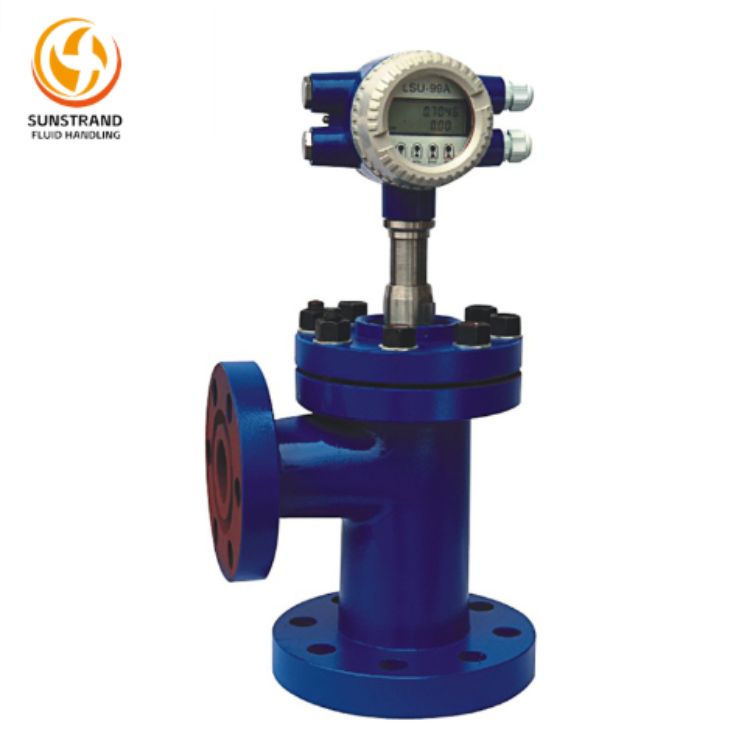


From laboratory research to pharmaceutical production and refrigeration storage, accurately measuring liquid flow in the industrial field is essential for improving efficiency, ensuring product quality, and guaranteeing product safety. When comparing the characteristics of gases and liquids, the two often overlap, allowing for more accurate measurement results. In fact, factors such as the inefficiencies of liquid properties, environmental conditions, inadequate or imperfect maintenance management, etc., may lead to uncertain results, high production costs, and even circumvention of regulations. Liquid measuring devices are not merely measuring equipment; they are fundamental tools that provide practical data for engineering optimization, waste prevention, and consistency assurance when used correctly. If there are specific requirements, deeper or more precise liquids may be needed.
The standardized operation procedures are insufficient, and many enterprises’ liquid flow meters fail to operate normally. Minor errors such as incorrect selection of measurement equipment, neglect in calibration, and improper installation can also cause considerable errors. This guide provides suggestions to ensure the reliability of liquid flow meter measurements, including installation plans, equipment assembly, calibration, and optimization processes. At the same time, by introducing practical application examples and problem solutions, it helps factory employees, engineering engineers, and maintenance and warranty personnel to use the equipment more effectively, ensure the accuracy of data, and continuously improve operational efficiency.

A liquid flowmeter is a device used to accurately measure the volume, mass or flow rate of a liquid within a pipeline or closed system. Its main function is to calculate the volume of fluid passing through a specific location within a certain period of time, ensuring high data accuracy and supporting industrial engineering management, inventory management, cost tracking and compliance with regulations. Just like gas meters, factors such as compressibility need to be considered, but flow rate meters can utilize the non-compressibility of fluids to obtain stable results, which does not mean that strict settings or careful operation are not necessary.
Understanding liquid flow meter types is essential for selecting the right instrument, as each is engineered to address specific liquid properties, flow ranges, and application requirements. A liquid flow meter is a device used to accurately measure the volume, mass or flow rate of a liquid within a pipeline or closed system. Its main function is to calculate the volume of fluid passing through a specific location within a certain period of time, ensuring high data accuracy and supporting industrial engineering management, inventory management, cost tracking and compliance with regulations. Just like gas meters, factors such as compressibility need to be considered, but flow rate meters can utilize the non-compressibility of fluids to obtain stable results, which does not mean that strict settings or careful operation are not necessary. For applications requiring precision, a high accuracy liquid flow meter is often the preferred choice, while cold storage and cryogenic applications benefit from a low temperature liquid flow meter.
The correct measurement of flow is not a one-time operation. It requires starting from the pre-set plan and conducting systematic operations throughout the entire periodic maintenance process. Best practices cover all stages of the entire life cycle of the liquid flow meter, ensuring stable and accurate measurement values while maximizing the lifespan of the equipment.
The initial planning for equipment installation forms the basis for reliable measurement. During this stage, any negligence or defect will not only lead to incorrect test results but also cause damage to the equipment in the early stage. The two key factors of the preparatory plan are the assessment of the interchangeability degree between the measurement device and the liquid properties, as well as the requirements for the surrounding temperature.
During the preparatory installation planning stage, the key element is to select the appropriate liquid flowmeter that suits the characteristics of the substance to be measured. Characteristics such as viscosity, conductivity, corrosive activity, and the presence of solid particles will directly affect the accuracy of the measurement. Choosing the wrong type of measurement equipment may result in incorrect measurement values, damage to the sensor, or an increase in equipment replacement costs. The following will introduce the method for selecting the type of liquid measurement equipment based on the general characteristics of the substance.:
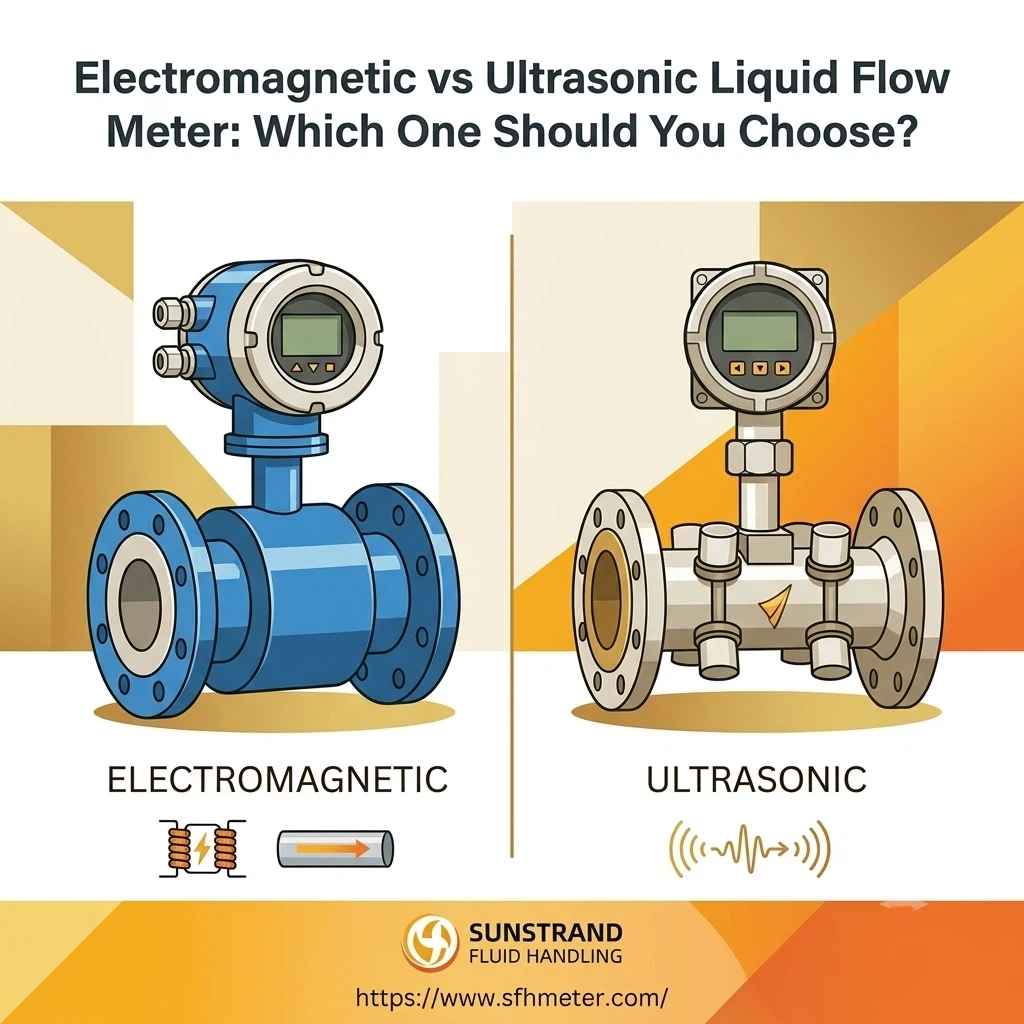
Conductive Liquids: Electromagnetic measuring instruments are the ideal choice because they do not contain components that are prone to clogging or wearing out, and their performance is not affected by suspended solid particles. In these application scenarios, non-conductive measuring instruments should be avoided.
High-Viscosity Liquids: Positive displacement or Coriolis flow meters are best. PD meters excel at measuring high-viscosity liquids with minimal flow disturbance, while Coriolis meters are unaffected by viscosity changes and provide direct mass flow measurement.
Clean, Low-Viscosity Liquids: Turbine or differential pressure meters are suitable. Turbine meters offer high accuracy and fast response, while DP meters are cost-effective for standard applications.
Corrosive Liquids: Choose meters with corrosion-resistant materials for wetted parts. Electromagnetic or Coriolis meters with compatible materials are often the best options.
Liquids with Suspended Solids: Electromagnetic or Doppler ultrasonic meters are preferred, as they have no moving parts that can become clogged or damaged by solids. Avoid turbine or PD meters, which are prone to wear and blockages.
In addition, the usage volume within the measurement range also needs to be taken into consideration. To ensure the best accuracy, the normal usage volume of the instrument should be 50% to 80% of the entire measurement range. In all cases, if the measuring device is either too large or too small, especially when the usage volume is low, serious malfunctions will occur.
Temperature is an important environmental factor that affects the properties of liquids and the performance of measurement equipment. Extreme cold and heat not only alter the viscosity, density and electrical conductivity of liquids, but also damage the components of measurement equipment. When formulating a pre-plan before installation, in order to select equipment that can withstand the corresponding conditions, it is recommended to conduct a detailed evaluation of the startup temperature range.
For high-temperature applications, choose meters rated for elevated temperatures. Coriolis and some electromagnetic meters are designed for high-temperature use, but ensure that wetted parts and seals are made of heat-resistant materials. Avoid meters with plastic components, which can melt or degrade at high temperatures.
For low-temperature applications, select meters rated for sub-zero temperatures. Ultrasonic and turbine meters with frost-resistant enclosures are suitable, but ensure that the liquid does not freeze within the meter—this can damage sensors and block flow. In some cases, heat tracing or insulation may be required to maintain liquid flow and meter functionality.
In addition, the influence of temperature changes must also be taken into account. Abrupt temperature fluctuations may cause the measuring elements to expand or contract, thereby leading to errors in the measurement values. To eliminate these effects, equipment with temperature calibration function must be selected to ensure the accuracy of the measurement results.
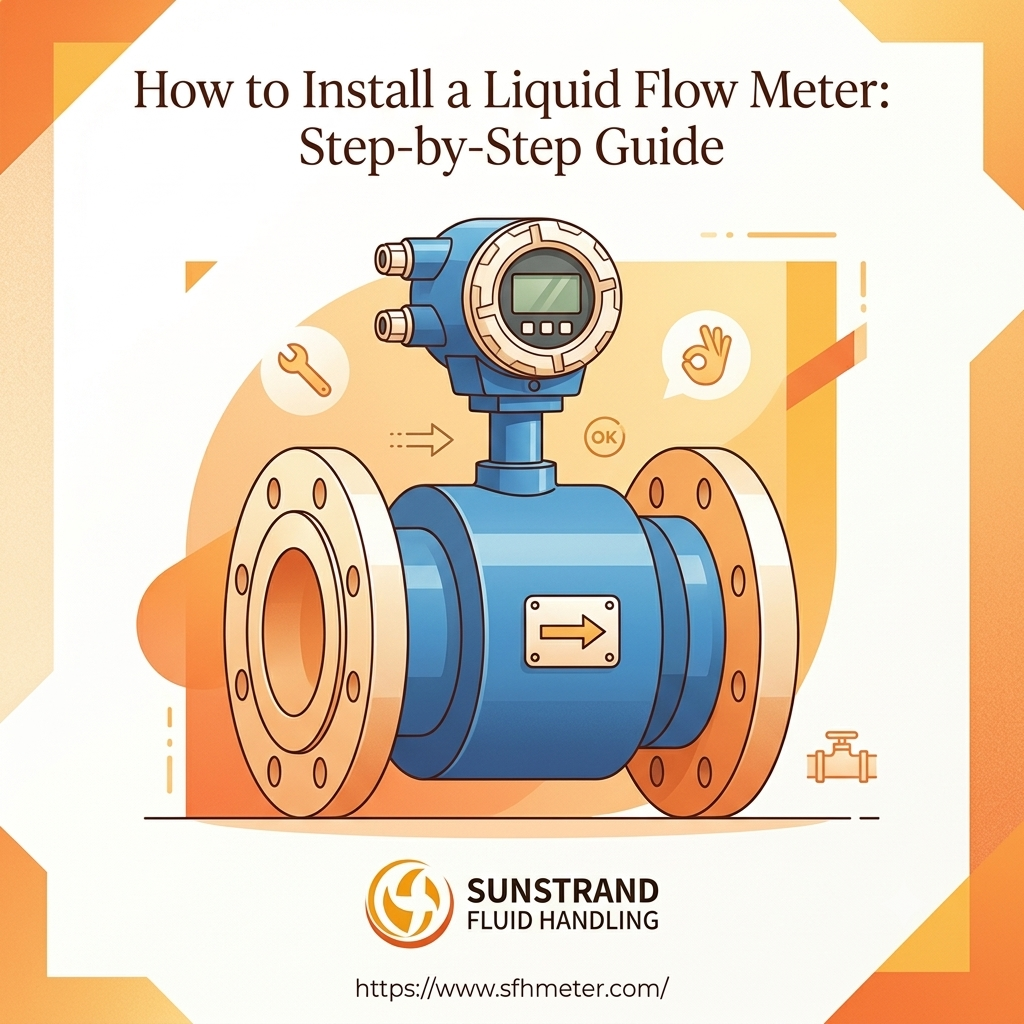
Even the most advanced liquid flow meters can yield incorrect results if installed improperly. Correct installation can keep the flow meter in a stable and quiet flow environment and maximize its integration with the system. The main recommendations are to meet the requirements for direct connection to the pipeline and the connection, and to take effective installation and vibration reduction measures.
The design of the pipeline and the length of the straight pipe section are crucial for maintaining a uniform and stable flow rate. Interference factors such as turbulence, vortices, and irregular flow can cause significant measurement errors. According to industry standards, most flow meters need to have at least one straight pipe section before and after the measurement location to eliminate these interference factors.
The exact straight run requirement varies by meter type:
Electromagnetic Meters: Typically require 5-10 pipe diameters of straight run upstream and 3-5 pipe diameters downstream from valves, elbows, or pumps.
Turbine & Differential Pressure Meters: Require 10-15 pipe diameters upstream and 5-10 downstream, as they are more sensitive to flow disturbances.
Ultrasonic Meters: Require 10-20 pipe diameters upstream and 5-10 downstream, especially for clamp-on models.
Coriolis Meters: Have minimal straight run requirements due to their design, which is less sensitive to flow disturbances.
Additional pipework best practices include:
Ensure the pipe is full of liquid at all times—avoid high points where air can accumulate, as trapped air creates measurement errors for most meter types.
Use pipes of the same diameter as the meter to avoid flow constriction or expansion, which can alter flow velocity.
Install a strainer or filter upstream of the meter to remove debris, which can clog sensors or damage moving parts.
Avoid installing the meter near pumps, valves, or elbows, which create turbulence. If this is unavoidable, use flow straighteners to stabilize flow.
Proper mounting and vibration mitigation are essential for protecting the meter and maintaining accuracy. Vibration—whether from pumps, compressors, or other equipment—can damage meter components and cause drift in readings. Here are key best practices:
Secure Mounting: Mount the meter firmly to a stable surface to minimize movement. Ensure that the meter is aligned with the pipeline—misalignment can cause stress on the meter and create flow disturbances.
Vibration Dampening: Use vibration dampeners between the meter and mounting surface to reduce the impact of vibration. For high-vibration environments, consider isolating the meter from the main pipeline using flexible connectors.
Orientation: Follow the manufacturer’s guidelines for meter orientation. For example, electromagnetic meters should be mounted horizontally with the electrodes at the 3 o’clock and 9 o’clock positions to avoid air pockets. Turbine meters should be mounted horizontally to ensure proper rotation of the turbine wheel.
Accessibility: Mount the meter in a location that is easily accessible for calibration, maintenance, and troubleshooting. Avoid tight spaces or hard-to-reach areas that require disassembly of the pipeline to service the meter.
System integration is also a key part of installation. Ensure that the meter is compatible with the system’s data acquisition, PLC, or SCADA system. Use shielded cables to prevent electromagnetic interference from nearby equipment, which can disrupt signal transmission and cause inaccurate readings. Test the integration before full operation to ensure that data is being transmitted correctly.
Even with proper selection and installation, liquid flow meters will experience drift over time due to wear, contamination, and environmental factors. Regular calibration and maintenance are essential to correct drift, ensure accuracy, and extend the meter’s lifespan. Two critical practices are scheduling regular calibration services and troubleshooting common drift issues.
Liquid flow meter calibration services involve comparing the meter’s readings to a known standard to identify and correct any deviations, ensuring the meter remains accurate and compliant with industry standards and regulatory requirements. According to calibration standards, the frequency of calibration depends on the meter type, application, and environmental conditions—this is especially critical for high accuracy liquid flow meters, which require strict calibration to maintain their precision.
High-Precision Applications: Calibrate every 6-12 months to maintain accuracy within ±0.1-0.5%.
Industrial Applications: Calibrate every 12-24 months.
Harsh Environments Calibrate every 6 months, as these conditions accelerate drift.
Key best practices for scheduling calibration include using a reputable calibration service provider that follows national or international standards and provides traceable calibration certificates, scheduling calibration during planned downtime, documenting all calibration results, and considering on-site calibration for large or hard-to-remove meters.
Use a reputable calibration service provider that follows national or international standards and provides traceable calibration certificates.
Schedule calibration during planned downtime to minimize operational disruption. For critical applications, consider having a backup meter to avoid downtime.
Document all calibration results, including the date, standard used, deviation, and any adjustments made. This documentation is critical for regulatory compliance and troubleshooting.
Consider on-site calibration for large or hard-to-remove meters to avoid the cost and risk of removing and reinstalling the meter.
| Application Type | Recommended Calibration Frequency | Calibration Standard Requirement | Key Notes |
| High-Precision (Pharmaceutical, Chemical Synthesis) | Every 6-12 months | ISO/IEC 17025, traceable to NIST/NPL | Ensure compliance with FDA/regulatory standards |
| Industrial (Water Treatment, Oil & Gas) | Every 12-24 months | ISO/IEC 17025 | Schedule during planned downtime |
| Harsh Environments (Corrosive Liquids, High Vibration) | Every 6 months | ISO/IEC 17025, corrosion-resistant standards | Inspect meter condition before calibration |
| Trade Custody Transfer (Oil, Chemicals) | Every 6-12 months | API MPMS, ISO/IEC 17025 | Mandatory compliance with industry standards |
Drift—gradual deviation from accurate readings—is a common issue with liquid flow meters, but it can often be resolved with proactive troubleshooting. Common causes of drift and their solutions include:
Contamination: Debris, sediment, or chemical buildup on sensors can cause drift. Solution: Regularly clean the meter’s wetted parts and install upstream filters to prevent contamination.
Wear and Tear: Moving parts can wear over time, leading to drift. Solution: Replace worn parts during maintenance and ensure proper lubrication.
Temperature/Pressure Changes: Fluctuations in temperature or pressure can alter liquid properties and meter performance. Solution: Use meters with temperature/pressure compensation features and recalibrate if conditions change significantly.
Electrical Interference: EMI from nearby equipment can disrupt signal transmission, causing drift. Solution: Use shielded cables, ground the meter properly, and move the meter away from sources of interference.
Pipe Leaks: Leaks upstream or downstream of the meter can cause inaccurate flow readings. Solution: Inspect the pipeline regularly for leaks and repair them promptly.
Proactive monitoring of meter performance—using data logs or real-time monitoring systems—can help identify drift early, before it leads to significant errors. Establish baseline readings and compare current readings to the baseline to detect drift quickly.
For applications where precision is critical, optimizing a high accuracy liquid flow meter is essential. These specialized liquid flow meters require rigorous care to maintain their performance, and two key optimization strategies are adhering to calibration standards and traceability, and implementing effective environmental controls. Regular liquid flow meter calibration services are non-negotiable for high accuracy models, as even minor drift can compromise their precision.
For applications where precision is critical, optimizing liquid flow meters for high accuracy is essential. Two key optimization strategies are adhering to calibration standards and traceability, and implementing effective environmental controls.
High accuracy requires calibration against recognized standards with full traceability to national or international measurement standards. Traceability ensures that the calibration standard used is accurate and can be traced back to a primary standard, providing confidence in the meter’s readings.
Key best practices for calibration standards and traceability include:
Use calibration standards that are appropriate for the meter type and flow range. For example, use a primary standard for high-precision calibration, or a secondary standard for routine calibration.
Ensure that the calibration standard has a valid calibration certificate with traceability information. The certificate should include the standard’s accuracy, calibration date, and traceability to a national standard.
Follow the manufacturer’s guidelines for calibration procedures. Different meter types require different calibration methods—for example, Coriolis meters require mass flow calibration, while electromagnetic meters require volume flow calibration.
Document the calibration process and results in detail, including the standard used, environmental conditions during calibration, and any adjustments made. This documentation is critical for regulatory compliance and quality control.
For trade custody transfer applications, compliance with industry-specific calibration standards is mandatory. Ensure that the calibration service provider is certified to perform these specialized calibrations.
Environmental factors—beyond temperature—can significantly impact the accuracy of high-precision liquid flow meters. Implementing environmental controls helps stabilize these factors and maintain consistent performance. Key environmental controls include:
Temperature Control: Maintain a stable ambient temperature around the meter, especially for high-precision models. Use insulation or heating/cooling systems to prevent temperature fluctuations.
Humidity Control: High humidity can damage electronic components and cause corrosion. Use dehumidifiers in humid environments to keep relative humidity below 80%.
Vibration Control: For high-precision meters, even minor vibration can cause drift. Use advanced vibration dampening systems and avoid mounting the meter near high-vibration equipment.
EMI/RFI Control: Electromagnetic and radio frequency interference can disrupt signal transmission in electronic meters. Use shielded enclosures and cables, and ground the meter properly to minimize interference.
Pressure Control: Maintain stable line pressure to avoid flow fluctuations. Use pressure regulators upstream of the meter to ensure consistent pressure, especially for meters sensitive to pressure changes.
In addition, regular monitoring of environmental conditions can help identify potential issues before they affect meter accuracy. Use data loggers to track these conditions and adjust controls as needed.

To illustrate how these best practices translate to real-world results, we’ve compiled two case studies from Sunstrand—an industry leader in flow measurement technology. These case studies highlight how proper pre-installation planning, installation, calibration, and optimization can solve common challenges and deliver reliable, accurate liquid flow measurement.
A global pharmaceutical manufacturer specializing in antibiotic and specialty drug production was struggling with inaccurate liquid flow measurement in its active pharmaceutical ingredient synthesis process. The company was using outdated turbine meters to measure the flow of high-viscosity solvents and reactants, leading to measurement errors of up to 5%. These errors resulted in inconsistent product quality, increased waste, and non-compliance with FDA regulations for process validation.
Sunstrand’s team conducted a thorough assessment of the application, focusing on pre-installation planning best practices. They identified that the existing turbine meters were incompatible with the high-viscosity liquids, leading to excessive wear and drift. Following the best practice of matching meter type to liquid properties, Sunstrand recommended replacing the turbine meters with Sunstrand’s PD-Series Positive Displacement Flow Meters—engineered for high-viscosity liquids and offering accuracy of ±0.1%.
During installation, Sunstrand’s technicians adhered to pipework and straight run requirements, ensuring 10 pipe diameters of straight run upstream and 5 downstream of each meter. They also implemented vibration mitigation measures, including isolation mounts and flexible connectors, to minimize the impact of nearby pumps. Post-installation, Sunstrand established a calibration schedule of every 6 months, using traceable standards to ensure compliance with FDA requirements.
The results were transformative: measurement accuracy improved to ±0.1%, eliminating product inconsistencies and reducing solvent waste by 12%. The company also achieved FDA process validation compliance, avoiding costly regulatory penalties. Additionally, the PD-Series meters required less maintenance than the outdated turbine meters, reducing downtime by 30%. This case study demonstrates how proper meter selection, installation, and calibration—core best practices—deliver tangible operational and regulatory benefits, similar to the gains seen in pharmaceutical measurement transformation projects.
A large cold storage facility specializing in frozen food distribution needed to measure the flow of liquid refrigerant (R-404A) in its cooling system. The facility was using standard ultrasonic meters, which were failing in the low-temperature environment (-30°C), leading to inaccurate readings, system inefficiencies, and increased energy costs. The meters were also prone to freezing, causing blockages and downtime—highlighting the need for a dedicated low temperature liquid flow meter.
Sunstrand’s team focused on pre-installation planning, assessing the low-temperature environment requirements. They recommended replacing the standard ultrasonic meters with Sunstrand’s UT-L Series low temperature liquid flow meter, which are rated for temperatures down to -40°C and feature frost-resistant enclosures. The team also advised on proper insulation of the meters and pipeline to prevent freezing, ensuring the low temperature liquid flow meter performed reliably in harsh cold conditions.
During installation, Sunstrand’s technicians followed mounting best practices, securing the meters to stable brackets with vibration dampeners to minimize the impact of cooling system compressors. They also ensured proper straight run to maintain flow stability. Post-installation, Sunstrand established a maintenance schedule that included regular cleaning of the meter’s transducers and calibration every 12 months.
The outcome was a 40% reduction in energy costs due to accurate refrigerant flow measurement, which allowed the facility to optimize its cooling system. The UT-L Series meters also eliminated freezing issues, reducing downtime by 75%. The facility now maintains consistent refrigerant flow, ensuring optimal cooling performance and reducing product spoilage. This case study highlights the importance of assessing environmental temperature requirements and selecting a meter tailored to the application’s unique conditions.
Even with strict adherence to best practices, liquid flow meters may experience issues from time to time. Understanding common pitfalls and how to troubleshoot them is essential to minimizing downtime and maintaining reliable measurement. This section covers the most common causes of accuracy degradation and proactive maintenance strategies to avoid them.
Accuracy degradation is the most common issue with liquid flow meters, and it can stem from a variety of causes. The most frequent causes include:
Improper Meter Selection: Choosing a meter that is incompatible with liquid properties or flow range is a common pitfall. This is particularly problematic for specialized models like a high accuracy liquid flow meter or a low temperature liquid flow meter, as their unique design requires precise matching to application needs. Understanding liquid flow meter types is key to avoiding this issue, as each type has distinct strengths and limitations.
Poor Installation: Inadequate straight run, misalignment, or improper mounting can cause flow disturbances and vibration, leading to drift and inaccurate readings. Trapped air in the pipeline is also a common installation-related cause of inaccuracy.
Neglected Calibration: Skipping or delaying liquid flow meter calibration services allows drift to accumulate, leading to significant inaccuracies over time—this is especially detrimental for a high accuracy liquid flow meter, which relies on regular calibration to maintain its precision. Using non-traceable calibration standards also compromises accuracy, regardless of the liquid flow meter type.
Contamination and Wear: Debris, sediment, or chemical buildup can damage sensors or moving parts, while wear and tear from extended use can alter the meter’s performance. This is especially common in harsh or high-use applications.
Environmental Factors: Extreme temperatures, humidity, vibration, or EMI can disrupt meter performance and cause drift. Fluctuations in line pressure or liquid properties also contribute to accuracy degradation.
System Leaks: Leaks upstream or downstream of the meter can cause the meter to measure less liquid than is actually flowing, leading to inaccurate readings and operational inefficiencies.
Proactive maintenance is the best way to avoid common pitfalls and minimize accuracy degradation. Implement these strategies to keep your liquid flow meters operating reliably:
Establish a Preventive Maintenance Schedule: Create a schedule that includes regular cleaning, inspection, and part replacement. The schedule should be tailored to the meter type, application, and environmental conditions.
Monitor Meter Performance in Real Time: Use data acquisition systems to track flow readings and identify anomalies. This allows you to detect issues early, before they lead to significant inaccuracies or downtime.
Train Personnel: Ensure that operators and maintenance technicians are trained on proper meter operation, installation, and troubleshooting. This reduces human error and ensures that best practices are followed.
Keep Detailed Records: Document all maintenance activities, calibration results, and troubleshooting steps. This helps identify patterns and provides a reference for future maintenance.
Replace Aging Meters: Even with proper maintenance, liquid flow meters have a finite lifespan. Replace aging meters before they become unreliable, as the cost of replacement is often less than the cost of downtime or inaccurate readings.
Partner with a Trusted Service Provider: Work with a reputable flow measurement service provider for calibration, maintenance, and troubleshooting. This ensures that your meters are serviced by experts and that best practices are followed.
Reliable liquid flow measurement is critical for operational efficiency, product quality, and regulatory compliance across a wide range of industries. While liquid flow meters are powerful tools, their performance depends on strict adherence to best practices throughout their lifecycle—from pre-installation planning to regular maintenance and optimization. By matching the meter type to liquid properties, assessing environmental requirements, ensuring proper installation, scheduling regular calibration, and implementing proactive maintenance, organizations can maximize the accuracy and lifespan of their liquid flow meters.
The case studies from Sunstrand demonstrate that following these best practices delivers tangible results: improved accuracy, reduced waste, lower energy costs, and minimized downtime. Whether you’re measuring high-viscosity solvents in pharmaceutical processes, low-temperature refrigerants in cold storage, or clean water in industrial applications, the best practices outlined in this guide will help you achieve reliable, consistent results.
Remember, reliable liquid flow measurement is not a one-time task—it requires ongoing attention and commitment to best practices. By prioritizing proper selection, installation, calibration, and maintenance, you can ensure that your liquid flow meters provide the accurate, actionable data you need to optimize your processes and achieve long-term operational success.
Q1: What is the most common cause of inaccurate liquid flow meter readings?
A1: The most common cause is improper installation, particularly inadequate straight run length. Flow disturbances from valves, elbows, or pumps can create turbulence, leading to significant inaccuracies. Other common causes include incorrect meter selection and neglected calibration.
Q2: How often should I use liquid flow meter calibration services for my liquid flow meter?
A2: Calibration frequency depends on the application and meter type. For a high accuracy liquid flow meter used in high-precision applications, liquid flow meter calibration services should be scheduled every 6-12 months. For standard liquid flow meters in industrial applications, calibration every 12-24 months is sufficient. A low temperature liquid flow meter used in harsh cold environments requires more frequent calibration, as extreme temperatures accelerate drift. All liquid flow meter types benefit from regular calibration to maintain accuracy.
Calibration frequency depends on the application and meter type. For high-precision applications, calibrate every 6-12 months. For standard industrial applications, calibrate every 12-24 months. Harsh environments require more frequent calibration.
Q3: Can I use the same liquid flow meter for different types of liquids?
A3: It depends on the liquid properties and meter type. For example, electromagnetic meters only work with conductive liquids, so they cannot be used for non-conductive liquids. Positive displacement meters are suitable for high-viscosity liquids but may not work well with clean, low-viscosity liquids. Always match the meter to the specific liquid properties.
Q4: How do I maintain a low temperature liquid flow meter to prevent freezing and ensure accuracy?
A4: To maintain a low temperature liquid flow meter, use models rated for low temperatures and insulate the meter and pipeline to maintain liquid flow. In some cases, heat tracing can be used to prevent freezing. Additionally, schedule regular liquid flow meter calibration services to account for drift caused by extreme cold, and avoid installing the low temperature liquid flow meter in areas where ambient temperatures drop below the liquid’s freezing point without proper insulation. This ensures the low temperature liquid flow meter performs reliably alongside other liquid flow meter types.
Use meters rated for low temperatures and insulate the meter and pipeline to maintain liquid flow. In some cases, heat tracing can be used to prevent freezing. Avoid installing meters in areas where ambient temperatures drop below the liquid’s freezing point without proper insulation.
Q5: What is the difference between a high accuracy liquid flow meter and standard liquid flow meter types, and which is better for my application?
A5: A high accuracy liquid flow meter is a specialized type of liquid flow meter designed to deliver precision readings, while standard liquid flow meter types offer accuracy ranges of ±0.5-2.0%. Volume flow meters measure the volume of liquid, while mass flow meters measure the mass. Volume flow is affected by temperature and pressure, so it requires compensation for accuracy, while mass flow is unaffected by these factors. A low temperature liquid flow meter is another specialized type, ideal for cold storage applications. Choose a high accuracy liquid flow meter for critical applications, a low temperature liquid flow meter for cold environments, and standard liquid flow meter types for general industrial use.
Volume flow meters measure the volume of liquid, while mass flow meters measure the mass . Volume flow is affected by temperature and pressure, so it requires compensation for accuracy. Mass flow is unaffected by these factors, making it ideal for high-precision applications. Choose mass flow meters for critical applications, and volume flow meters for standard applications.
Q6: How do I troubleshoot a liquid flow meter that is reading too high or too low?
A6: Start by checking for common issues: (1) Trapped air in the pipeline; (2) Contamination or wear; (3) Improper installation; (4) Calibration drift; (5) System leaks. If the issue persists, contact a professional service provider.
Q7: Are non-intrusive liquid flow meters as accurate as intrusive meters?
A7: Non-intrusive meters can be nearly as accurate as intrusive meters but are more sensitive to pipe conditions and flow disturbances. They are ideal for applications where intrusive installation is not possible but may not be suitable for high-precision applications.
Q8: What maintenance is required for liquid flow meters with no moving parts?
A8: Even meters with no moving parts require maintenance. For electromagnetic meters, clean the electrodes regularly to remove contamination. For ultrasonic meters, clean the transducers and check for pipe wall buildup. Both types require regular calibration and inspection of cables and connections to prevent EMI or signal loss.
Q9: How does liquid viscosity affect flow meter performance?
A9: Viscosity affects meter performance differently based on type. High viscosity can cause increased pressure loss in differential pressure and turbine meters, leading to inaccurate readings. Positive displacement and Coriolis meters are less affected by viscosity, making them ideal for high-viscosity liquids. Always check the meter’s viscosity range before selection.
Q10: Can liquid flow meters be integrated with PLC or SCADA systems?
A10: Yes, most modern liquid flow meters can be integrated with PLC, SCADA, or DAS systems. They typically output standard signals or digital signals for seamless integration. Use shielded cables to prevent EMI and ensure proper configuration for data transmission.
Q11: What is traceability in liquid flow meter calibration, and why is it important?
A11: Traceability is the ability to link calibration results to a national or international measurement standard. It ensures that the calibration standard used is accurate and reliable, providing confidence in the meter’s readings. Traceability is critical for regulatory compliance and quality control, especially in high-precision applications.
Q12: How long do liquid flow meters typically last?
A12: Lifespan varies by meter type and application. Meters with no moving parts typically last 7-10 years. Meters with moving parts last 5-7 years, as moving parts wear over time. Proper maintenance and calibration can extend the lifespan by 2-3 years. Replace aging meters before they become unreliable to avoid downtime.