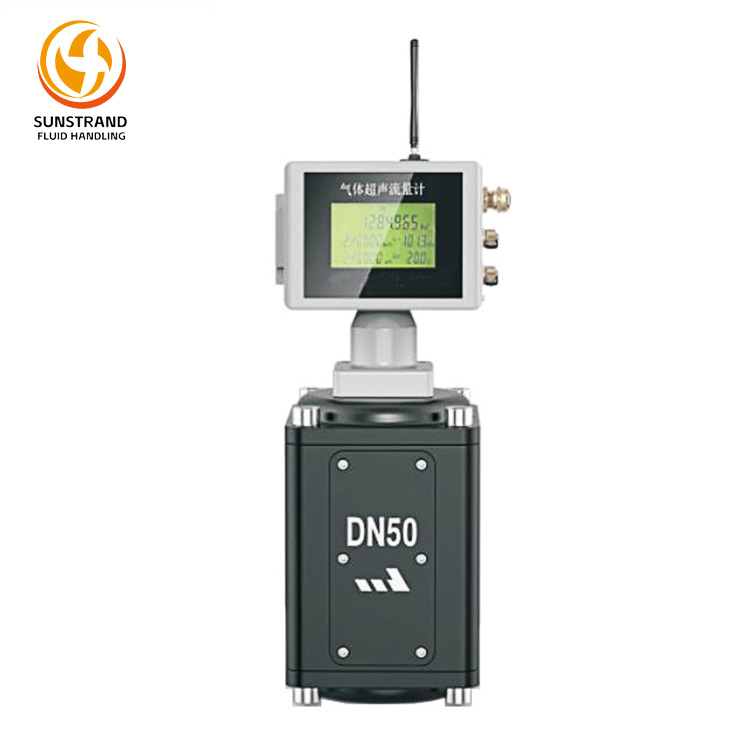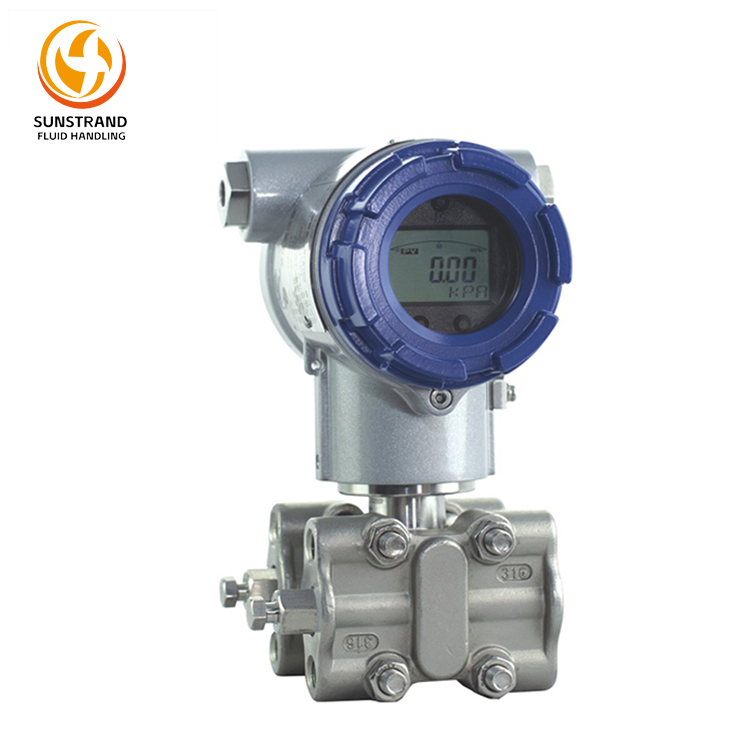

In the era of industrial intelligence and automated production, pressure transmitters have become indispensable core components across various industries. But first, many professionals and purchasers often ask: what is a pressure transmitter? What are the types of pressure transmitter? How pressure transmitter works? This article will explain these issues for you. They convert physical stress signals into standardized electronic signals that allow real-time control, manipulation, and analysis of flight data. In oil plants, production facilities and plants, a critical line of defense will be established to ensure safety, improve efficiency and reduce energy consumption.
As mentioned earlier, what is a pressure transmitter? It is an industrial measuring instrument used to measure the pressure of gases, liquids, or vapors and convert the measured pressure value into a 4-20mA current signal, 0-10V voltage signal, or digital signal output. And how pressure transmitter works? Its core lies in the sensor’s response: The metal can change when testing the sensor. Sensors convert mechanical changes into electrical signals, process them and expose them to the device or screen.
Compared to the traditional pressure sensor, the pressure transmitter has obvious average advantages of high measurement accuracy, good stability, long signal transmission distance and easy integration into the automation system. They are not only used for pressure monitoring, but also as key components of a seamless control system for fine production management, which is exactly the main use of pressure transmitters in the industrial scenario.
The classification of pressure transmitters is closely tied to their core components, and pressure transmitter sensor types are a primary categorization basis, mainly including the following:
Strain Gauge Transmitters: Most common type, using bonded or thin-film strain gauges that change resistance when deformed by pressure
Capacitive Transmitters: Utilize diaphragm deflection between capacitor plates, offering high accuracy and stability.
Piezoelectric Transmitters: Employ crystals that generate electrical charge when mechanically stressed, ideal for dynamic pressure measurements
Resonant Wire Transmitters: Use vibrating wire technology where tension changes with pressure, providing exceptional precision
Optical Transmitters: Fiber-optic based sensors ideal for extreme environments with electromagnetic interference
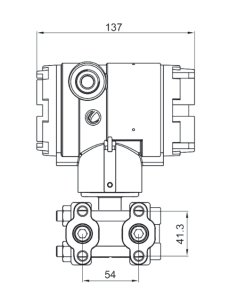
Industrial-grade pressure transmitters meet the standard requirements for protection, temperature resistance, and corrosion resistance in general industrial environments. They are widely used in hydraulic/pneumatic systems, fluid control, and on-site process monitoring, with a flexible pressure transmitter range to adapt to different working conditions.
General Purpose: Standard industrial transmitters for non-aggressive media
High-Temperature/Pressure: Designed for extreme process conditions.
Sanitary/Hygienic: Featuring smooth surfaces and clean-in-place compatibility
Submersible/Waterproof: For underwater or high-humidity environments
Explosion-Proof: Certified for hazardous areas with flammable gases or dust
Common Measurement Range
Pressure transmitters offer a wide range of measurement ranges to meet different application needs:
| Measurement Range | Application Scenarios |
| Micro-pressure (0-10kPa) | Environmental monitoring, air conditioning systems |
| Low pressure (10kPa-1MPa) | Water treatment, HVAC systems |
| Medium pressure (1-10MPa) | Industrial process control, hydraulic systems |
| High pressure (10-100MPa) | Oil and gas pipelines, boiler pressure monitoring |
| Ultra-high pressure (>100MPa) | Special industrial fields such as aerospace and hydraulic machinery |
Level of accuracy: normally expressed as a percentage of the total scale (fs). Common grades include 0.1% fs, 0.25% fs, and 0.5% fs. Precision control scenarios require greater accuracy.
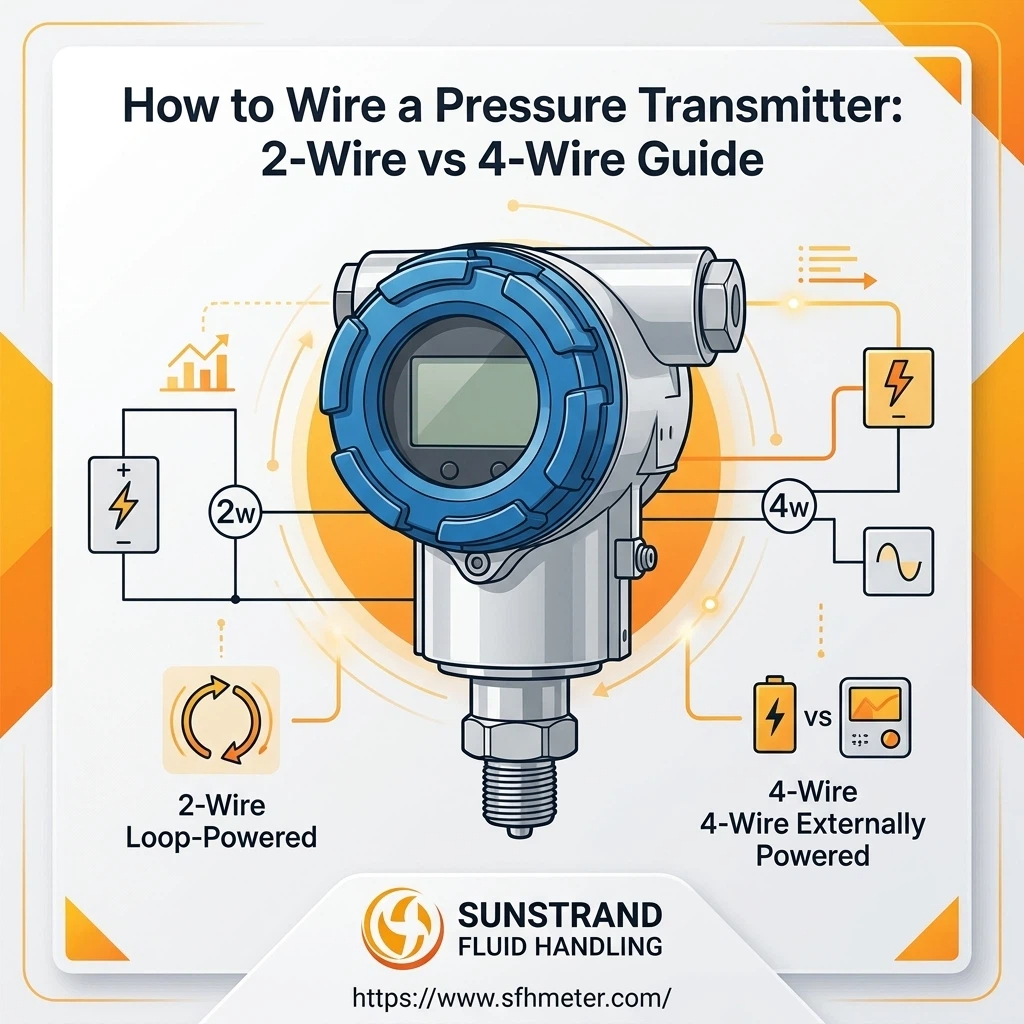
Output signal: currently, the most widely used signal is 4-20ma(double cable system), with a strong anti-interference capability and a long transmission distance; Other signals include 0-10v voltage signal and rs485 digital signal.
Working temperature range: generally -40℃~85℃ for industrial grade products; High temperature models can reach more than 150℃, low temperature models can reach less than -60℃.
Protection level: the commonly used protection level is ip65, ip67. Ip67 means completely dust – and short-term waterproof when used in outdoor or wet environments.
Media compatibility: the sensor material must be compatible with the test medium to prevent corrosion. Common materials include 316l stainless steel, hastelloy and ptfe.
The global challenges faced by global sensors include international brands such as Rosemount, Endress + Hauser and yokawa. These brands are all centrally positioned, possessing strong technical capabilities and a wide range of brands. Meanwhile, just like in Sunstrand, the growth of Chinese producers in the domestic market is accelerating, and the growth is very strong. The company’s headquarters is located in Wenzhou, China. It has a professional R&D team of over 20 people and covers an area of nearly 20,000 square meters. We attach great importance to technological innovation and allocate 5% to 7% of our annual revenue to research and development. It holds 27 national patents and multiple international certifications such as CE, SIL, and EAC. Its reliable and adaptable products have been widely recognized in the petroleum, chemical and environmental protection industries.
The pressure transmitter price varies significantly depending on factors such as brand, accuracy, type (related to pressure transmitter sensor types), pressure transmitter range, and application scenario:
Entry-level Industrial Grade: 200, suitable for general pressure monitoring with low accuracy requirements.
Mid-range Industrial Grade: 800, with higher accuracy and better stability, widely used in mainstream industrial processes.
Special Grade (Sanitary/Explosion-Proof): 3,000 and above, with strict material and structural requirements, suitable for special environments such as food processing and explosion-proof areas.
Sunstrand provides cost-effective pressure transmitters that balance product quality and price, and can offer customized solutions according to customer needs (such as specific pressure transmitter range or pressure transmitter sensor types) to improve procurement cost-effectiveness.
Understanding the use of pressure transmitter across industries is crucial for selecting the right product. Here are the key application scenarios:
In industrial processes like automotive manufacturing and plastic injection molding, hydraulic and pneumatic systems are the core power sources. Pressure transmitters provide real-time monitoring to ensure these systems operate within safe limits while maintaining the precise pressure required for consistent product quality. A failure in monitoring can lead to catastrophic equipment damage or safety incidents. Therefore, high reliability, vibration resistance, and fast response times are critical selection criteria for these demanding applications.
In continuous manufacturing—whether for chemicals, food, or consumer goods—pressure control directly impacts reaction rates, material flow, and final product characteristics. Pressure transmitters enable closed-loop control systems that automatically adjust valves and pumps to maintain optimal pressure conditions 24/7. This not only enhances production efficiency but also ensures consistency between batches, making them indispensable in high-precision processes where pressure stability is paramount for quality and yield.
The renewable energy sector, including hydrogen fuel cells, wind turbines, and solar thermal plants, relies heavily on pressure monitoring. Transmitters ensure stable gas pressure in fuel cells for efficient conversion, control blade pitch mechanisms in wind turbine hydraulics, and monitor steam pressure in solar thermal heat exchangers. These applications often require devices that can endure harsh outdoor conditions, wide temperature fluctuations, and maintain high accuracy, posing unique challenges for durability and performance.
Vast cross-continental oil and gas pipeline networks depend on thousands of pressure transmitters for real-time monitoring. These devices detect leaks by analyzing pressure drops and ensure the safe transport of volatile hydrocarbons. The data also helps optimize pumping station efficiency, reducing energy consumption. Such applications typically require explosion-proof certifications, wide operational temperature ranges, and robust communication capabilities to withstand remote and challenging field environments over long distances.
In thermal power generation, boiler pressure monitoring isn’t just about efficiency—it’s about preventing catastrophic explosions. Pressure transmitters provide the primary safety interlock data that can trigger shutdown procedures before pressures reach dangerous levels, protecting both personnel and multi-million dollar equipment.
Chemical manufacturing frequently involves exothermic reactions where pressure can escalate rapidly. Precise pressure control is therefore vital. Pressure transmitters provide real-time feedback on reactor conditions, enabling control systems to adjust feedstocks and cooling to maintain safe and efficient reactions. In pharmaceutical production, they are further essential for maintaining sterile conditions and batch-to-batch consistency, adhering to stringent regulatory and quality management standards.
Sanitary pressure transmitters with polished surfaces and crevice-free designs prevent bacterial growth in food and drug processing. They monitor filtration systems, fermentation vessels, and filling operations, ensuring products meet health standards while optimizing production throughput.
From water treatment plants to wastewater management facilities, pressure transmitters play a key role in urban water systems. They monitor pipeline pressure, aid in pump station control, and help optimize water usage. By analyzing pressure data, they can also enable early leak detection, significantly reducing water loss. Devices for these applications need high ingress protection (e.g., IP68), resistance to water hammer shock, and long-term stability to perform reliably in buried, humid, and otherwise challenging installation environments.
In aerospace, pressure transmitters must withstand extreme conditions: cryogenic temperatures in rocket propellant systems, supersonic aerodynamic pressures on aircraft surfaces, and high-vibration environments in engines. Military applications range from submarine depth sensing to weapon system control and combat vehicle hydraulics, where device reliability can be mission-critical. These scenarios often necessitate transmitters built with special materials, ruggedized designs, and compliance with stringent military or aerospace standards.
As a core component in the field of industrial automation, the pressure transmitter plays an irreplaceable role in improving production efficiency, ensuring operational safety, and promoting energy conservation and emission reduction. To fully leverage its value, it is essential to clarify what is a pressure transmitter, understand how pressure transmitter works, master types of pressure transmitter (especially pressure transmitter sensor types), determine the appropriate pressure transmitter range, and consider factors such as pressure transmitter price and pressure transmitter manufacturers.
With the development of the industrial version, the market demands comfortable, adaptable and intelligent stretchers. When choosing a product, factors such as range, accuracy, working environment and brand performance must be taken into account.
Relying on more than 20 years of profound industry experience, professional R&D capabilities, and comprehensive after-sales service, Sunstrand Fluid Handling Co., Ltd. provides high-quality pressure transmitter products and customized solutions (covering various pressure transmitter sensor types and pressure transmitter range) for customers worldwide. If you wish to learn more about pressure transmitters, including detailed information on pressure transmitter price and application cases, you can visit Sunstrand’s official website: https://www.sfhmeter.com/.
Q1: What factors should be considered when selecting a pressure transmitter?
A1: Key factors include the measured medium (corrosiveness, temperature, state), pressure transmitter range and accuracy requirements, working environment (temperature, humidity, explosion-proof requirements), output signal type, installation method, pressure transmitter sensor types, as well as pressure transmitter manufacturers’ reliability and after-sales service.
Q2: How to calibrate a pressure transmitter?
A2: Common calibration methods include applying a known pressure to the transmitter using a standard pressure source, such as a pressure calibrator, comparing the output signal with a standard pressure value, and adjusting the zero and range of the transmitter. Calibration should be done regularly, usually every 6-12 months, depending on the usage environment and accuracy requirements.
Q3: Can pressure transmitters be used for corrosive media?
A3: Yes, but the sensor material should be selected according to the corrosiveness of the medium. For example, 316L stainless steel is suitable for general corrosive media, Hastelloy for strong corrosive media such as acids and alkalis, and PTFE for highly corrosive media. It is recommended to consult pressure transmitter manufacturers to select the appropriate material to avoid sensor damage.
Q4: What is the difference between a pressure transmitter and a pressure gauge?
A4: A pressure gauge is mainly used to display pressure values on-site, with low accuracy and no ability to transmit signals over long distances. Pressure transmitters convert pressure into electrical signals that can be transmitted remotely and integrated into automation systems for real-time monitoring and closed-loop control. They offer higher accuracy and more powerful functions, which is the core difference in their use of pressure transmitter. Additionally, pressure transmitters have diverse pressure transmitter sensor types and flexible pressure transmitter range, making them suitable for automated production scenarios.