
In the fields of industrial automation, engineering management, and modern engineering, pressure measurement plays a central role in operational efficiency, product quality, safety, and compliance with regulations. It is commonly believed that the functions of pressure sensor, pressure transducer, and pressure transmitter are the same, but in fact, their functions are different. The sensor detects pressure changes, the transducer converts the data into appropriate signals, and the transmitter amplifies the signals and transmits them to remote monitoring. Understanding these differences is necessary for correctly selecting equipment, avoiding costly compatibility issues, and ensuring optimal performance.
This blog provides a detailed explanation of the definitions, main functions, significant differences, operating principles, application fields, technical characteristics, and cost factors of these three devices, and specifically illustrates their usage methods through practical examples. This guide offers clear guidance for you to select pressure equipment suitable for industrial, original equipment manufacturers, or hydraulic applications.
A pressure sensor is the most basic component in pressure measurement systems, designed to detect and respond to pressure changes in a fluid or solid. Its core function is to convert physical pressure into a measurable electrical or mechanical signal—though this signal is often raw, unprocessed, and not suitable for direct use in control systems.
In simple terms, a pressure sensor consists of sensing elements that change in response to pressure. This deformation can be measured by altering the electrical properties of the sensor, but additional processing is required before use. Unlike transducers or transmitters, pressure converters typically do not have signal regulation and data transmission capabilities.
The main characteristics of pressure sensors are their small size, low cost, and simple design. Due to these features, the basic purpose of pressure measurement is limited to application areas such as low-precision monitoring, simple alarm systems, or compact original equipment manufacturers (OEM) devices where space and cost are key limiting factors. Common types of pressure sensors include piezoresistive, capacitive, and piezoelectric sensors, which are designed to be suitable for specific pressure ranges and environmental conditions.
A pressure transducer builds on the functionality of a pressure sensor by converting raw pressure signals into a standardized, usable electrical signal. In other words, it combines a pressure sensor with signal conditioning circuitry to process the raw signal, eliminate noise, and convert it into a consistent output—typically a voltage or current signal that can be read by meters, controllers, or data loggers.
The main difference between a pressure sensor and a transducer lies in the way they process signals. A sensor provides the raw signal and cannot be preset or corrected during this process, but a transducer can process these signals and make them reliable and compatible with subsequent devices. For example, a piezoresistive pressure sensor will generate small voltage fluctuations under the influence of pressure, and a pressure transducer will amplify this signal to a standardized 0-5 volt range, so that it can be integrated into industrial control systems.
Pressure transducers are widely used in fields where higher accuracy than a simple sensor is required, and they are suitable for situations where signal transmission over a distance is not necessary. They are typically used in mobile hydraulic systems, automotive applications, and medium-scale industrial processes that require control. They usually require a power supply to drive the signal regulation circuit, which is different from passive pressure sensors.
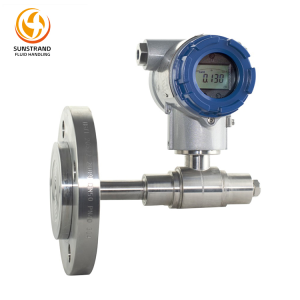
A pressure transmitter is the most advanced of the three devices, designed to detect pressure, convert it into a standardized signal, and transmit that signal over long distances to remote monitoring or control systems. It integrates a pressure sensor, signal conditioning circuitry, and a transmission module to ensure the signal remains accurate and reliable even over extended wiring runs.
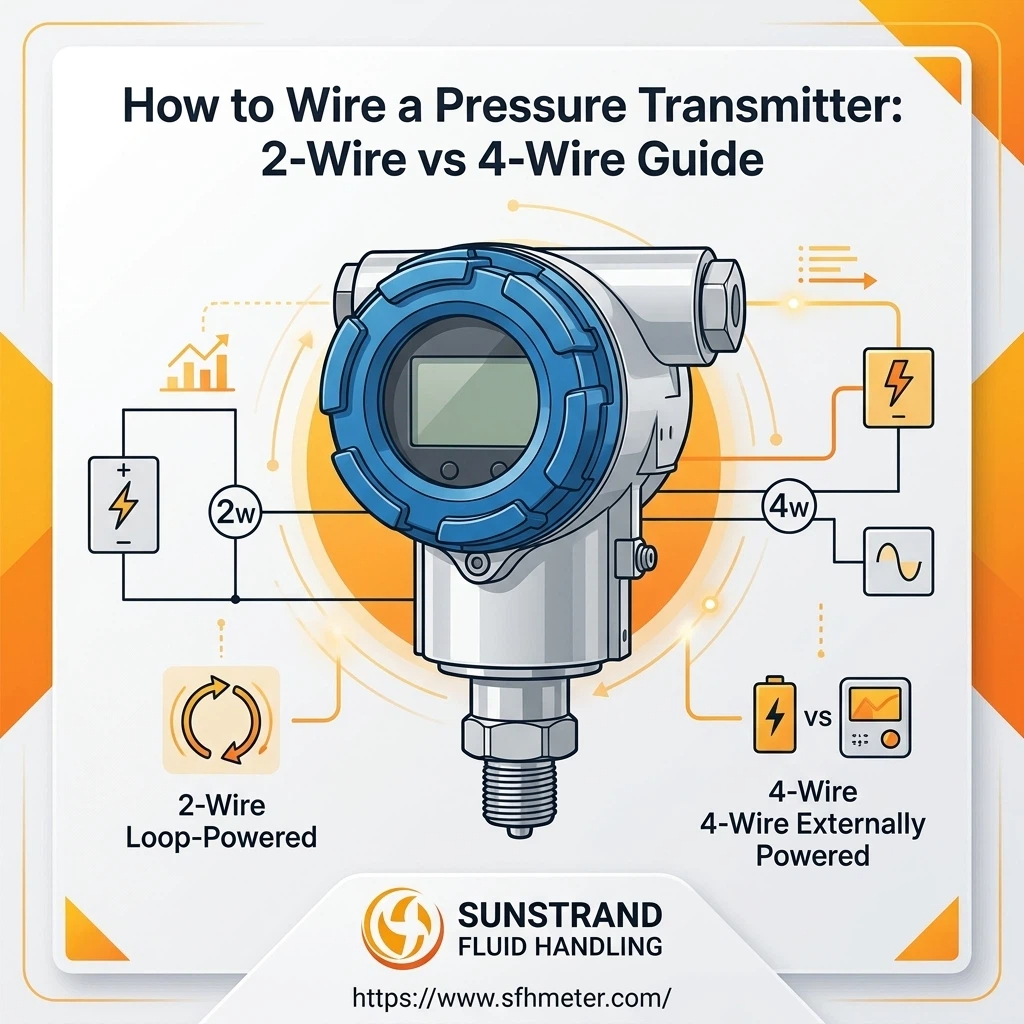
Pressure transducers usually emit low-pressure signals and suffer signal loss over long distances, while pressure transmitters use standard voltages, resisting electrical interference and signal loss. The 4 – 20 mA signal is very common as it provides a continuous power supply. That is to say, a single cable using the same line to transmit signals can provide the power for the converter, saving the cost of cable setup and simplifying the setup process.
In addition, pressure transmitters generally have additional functions such as built-in calibration, temperature compensation, safety alarms, and Internet of Things connections for remote monitoring, allowing for remote monitoring. These devices are specially designed for important applications such as industrial process automation, pipelines, and even mass production that require high precision, high reliability, and remote management. The sturdy structure can also work stably under complex usage conditions such as high temperatures, high pressures, and corrosive environments.
A Pressure Transmitter is the most advanced of the three devices, designed to detect pressure, convert it into a standardized signal, and transmit that signal over long distances to remote monitoring or control systems. It integrates a pressure sensor, signal conditioning circuitry, and a transmission module to ensure the signal remains accurate and reliable even over extended wiring runs. There are various pressure transmitter types, including differential, absolute, and gauge transmitters, each tailored to specific measurement needs.
In order to fully understand the differences between pressure sensors, transducers, and transmitters, we have analyzed these differences in 10 aspects ranging from basic functions and costs to long-term value. This analysis will help determine the type of equipment that best suits your specific requirements.
Pressure Sensor: Its main function is to sense pressure changes and transmit the original analog signal. It plays the role of a “detector” in the measurement chain and does not undergo signal processing and transmission procedures.
Pressure Transducer: Its main function is to convert the sensor’s initial pressure into standardized electrical signals. For this purpose, further signal processing is carried out, which can be used for on-site monitoring or control.
Pressure Transmitter: Its main function is to set and process pressure signals and then transmit them through a remote system. This enables the transmitter to have data transmission capabilities, allowing for remote monitoring and control.
Pressure Sensors: Outputs a raw, uncalibrated signa. Working principle relies on the deformation of a sensing element in response to pressure. Common pressure transmitter sensor types—such as piezoresistive, capacitive, and piezoelectric sensors—are also widely used as standalone pressure sensors, forming the foundation of pressure measurement systems.
Pressure Sensor: Releases the uncorrected initial signal. The sensing element deforms under pressure.
Pressure Transducer: Processes the sensor’s initial signal to generate a standardized electrical signal. The working principle includes sensing, signal amplification, noise filtering, and correction.
Pressure Transmitter: Transmits signals over long distances with high tolerance to interference. The working principle includes sensing, signal processing, and data transmission to remote devices.
Pressure Sensor: Low in accuracy, but a small, original device, suitable for application areas where price and size are more important than signal quality.
Pressure Transducer: Used in mobile hydraulic systems, automotive systems and local industrial processes. In these fields, short signal transmission is sufficient.
Pressure Transmitter: Used in engineering industry management, pipelines, water treatment plants and large-scale production projects. It requires remote monitoring and control systems.
Pressure Sensor: Does not have signal processing function. The original signal must be processed externally before use. Limited integration capability: Usually directly connected to simple devices or switches.
Transducers: Internal adaptation of signals. Easy to integrate with local controllers, data recording equipment, and visualization panels, but not suitable for long-distance integration. Understanding the difference between pressure transducers and sensors is very important. The purpose of sensors is to convert signals for local use, while the ability of sensors is to transmit data over long distances.
Pressure Transmitter: Advanced signal processing technology. Developed for perfect integration with PLC, SCADA systems, and IoT platforms, supporting remote access to data and control support.
Pressure Sensor: The mechanical or piezoresistive models are usually passive. Some active sensors act as the power source for the output signal and require a lower voltage.
Pressure Transducer: An external power supply is needed to activate the signal balance circuit. The power consumption is appropriate, generally higher than that of the sensor but lower than that of the converter.
Pressure Transmitter: It is usually activated by receiving power through the circuit. That is to say, the signal wires can ensure the supply of power. In the wireless model, some products require batteries or external power sources, but in the industrial application field, the circuit power supply method is preferred.
Pressure Sensor: No built-in safety features or alarms. Relies on external devices (e.g., relays) to trigger alarms if pressure exceeds thresholds.
Pressure Transducer: Basic safety features in some models, but no built-in alarm functionality. Alarms require integration with external controllers.
Pressure Transmitter: Advanced safety protection and built-in alarm functions that trigger alerts for critical conditions.
Pressure Sensor: No data recording capabilities; outputs real-time raw data only. Monitoring requires external data loggers or meters.
Pressure Transducer: Limited data recording, but primarily designed for real-time local monitoring. Data must be manually collected or integrated with local systems.
Pressure Transmitter: Advanced data recording and real-time monitoring capabilities, including integration with IoT platforms for remote access to historical and live data. Some models include cloud connectivity for centralized monitoring.
Pressure Sensor: Highly flexible—compact size allows installation in tight spaces. Simple installation, often requiring only basic mounting and wiring.
Pressure Transducer: Moderate flexibility—slightly larger than sensors but still suitable for mobile and compact applications. Installation requires power and signal wiring to local controllers.
Pressure Transmitter: Less flexible in terms of size but designed for harsh and remote environments. Installation may require specialized wiring or wireless setup.
Pressure Sensor: Low maintenance—no calibration required for basic models. Replacement is often more cost-effective than calibration.
Pressure Transducer: Moderate maintenance—requires periodic calibration (every 6–12 months) to ensure signal accuracy. Minimal upkeep beyond calibration.
Pressure Transmitter: High maintenance—requires regular calibration (every 3–6 months) for critical applications. May also require maintenance of transmission components.
Pressure Sensor: Lowest upfront cost. Long-term value is limited by lack of signal processing and integration, making it suitable for low-stakes applications.
Pressure Transducer: Moderate upfront cost. Long-term value is higher than sensors due to standardized signals and easier integration, ideal for mid-range applications.
Pressure Transmitter: Highest upfront cost. Long-term value is highest for critical applications, as it reduces downtime, enables remote control, and ensures compliance with safety standards.
To simplify comparison, below is a side-by-side table summarizing the key differences between pressure sensors, transducers, and transmitters, making it easy to reference and compare core specifications.
|
Comparison Dimension |
Pressure Sensor |
Pressure Transducer |
|
|
Core Function |
Detect pressure, output raw signal |
Detect + condition signal to standardized output |
Detect + condition + transmit signal remotely |
|
Output Signal |
Raw (mV, resistance, mechanical) |
Standardized (0–10V, 4–20mA) |
Long-distance (4–20mA loop, wireless) |
|
Power Requirement |
Passive or low-voltage (3.3V) |
External power (12V/24V DC) |
Loop-powered (24V DC) or wireless |
|
Application Focus |
Compact OEM, low-precision monitoring |
Mobile hydraulics, local process control |
Industrial process control, remote monitoring |
|
Signal Processing |
None |
Basic (amplification, calibration) |
Advanced (temperature compensation, error correction) |
|
Safety Features |
None |
Basic overpressure protection |
Advanced protection + built-in alarms |
|
Maintenance |
Low (no calibration) |
Moderate (6–12 month calibration) |
High (3–6 month calibration) |
|
Upfront Cost |
Low ($10–$100) |
Moderate ($50–$500) |
High ($200–$2,000+) |
To illustrate how pressure sensors, transducers, and transmitters are used in real-world scenarios, we’ll explore three case studies from Sunstrand—a leading manufacturer of pressure measurement solutions—showcasing each device’s unique role in different industrial applications.
A large chemical plant specializing in pharmaceutical ingredients needed to monitor pressure differences across a filtration system to ensure product purity and process efficiency. The plant required remote monitoring of pressure differentials to detect clogging in the filtration membranes, which would compromise product quality and cause downtime.
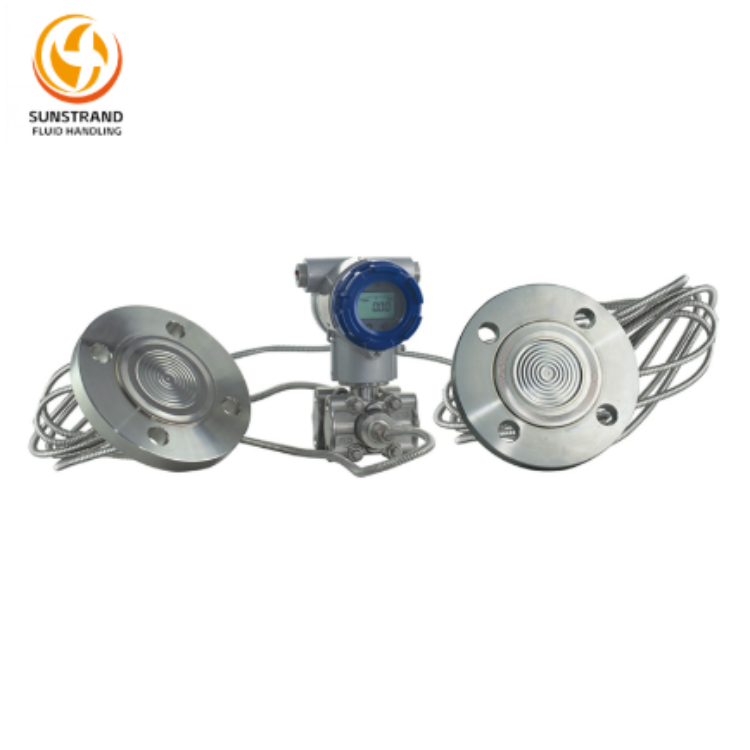
Sunstrand recommended its differential pressure transmitters, which are designed for industrial process control applications. These transmitters detect pressure differences across the filtration membranes, convert the signal to a 4–20mA loop-powered output, and transmit it to the plant’s SCADA system. The transmitters include built-in temperature compensation and high-pressure protection, ensuring accuracy even in the plant’s harsh, corrosive environment.
The result: The plant was able to remotely monitor pressure differentials in real time, receive alerts when membranes were clogging, and schedule maintenance proactively. This reduced downtime by 30%, improved product purity by 15%, and lowered maintenance costs by eliminating unplanned shutdowns.
A manufacturer of construction equipment needed to monitor hydraulic pressure in its excavators to prevent equipment damage and ensure operator safety. The hydraulic system operates under variable pressure conditions, requiring a device that could provide accurate, standardized signals for local control.
Sunstrand recommended its differential pressure transmitter, which is designed for industrial process control applications. This type of Pressure Transmitter detects pressure differences across the filtration membranes, converts the signal to a 4–20mA loop-powered output, and transmits it to the plant’s SCADA system. The differential pressure transmitter includes built-in temperature compensation and high-pressure protection, ensuring accuracy even in the plant’s harsh, corrosive environment.
The result: The excavators were able to monitor hydraulic pressure in real time, triggering alerts if pressure exceeded safe levels. This reduced equipment damage by 25%, improved operator safety, and extended the lifespan of hydraulic components by ensuring optimal pressure levels.
A medical device manufacturer needed a small, low-cost pressure sensor to monitor air pressure in its portable oxygen concentrators. The sensor needed to be compact enough to fit in the device’s limited space, while providing reliable pressure detection to ensure the concentrator delivers the correct oxygen flow rate.
Sunstrand provided its miniature piezoresistive pressure sensors, which are designed for compact OEM applications. These sensors are small (less than 10mm in diameter), low-power, and cost-effective, outputting a raw millivolt signal that is processed by the concentrator’s on-board electronics. The sensors are calibrated to meet medical device standards, ensuring accuracy and reliability.
The result: The oxygen concentrators were able to accurately monitor air pressure, ensuring consistent oxygen delivery. The compact size of the sensor allowed the manufacturer to maintain the device’s portability, while the low cost helped keep production costs down.
Selecting the right pressure device depends on your specific application needs, environment, and budget. Follow these three steps to make an informed decision:
Start by defining your core requirement: Do you need to simply detect pressure, convert the signal into a usable format, or transmit the signal remotely?
Choose a pressure sensor if you only need basic pressure detection and can process the raw signal externally.
Choose a pressure transducer if you need a standardized signal for local monitoring or control and do not require long-distance transmission.
Choose a pressure transmitter if you need to transmit the signal over long distances and require advanced features like safety alarms or IoT connectivity.
Next, assess the constraints of your application environment and performance requirements:
Environment: Harsh environments (high temperature, pressure, corrosion) require rugged devices—transmitters are typically more robust than sensors or transducers.
Precision: High-precision applications require transmitters or high-end transducers with advanced signal processing and calibration.
IoT Needs: If you need remote monitoring or data logging, choose a transmitter with wireless connectivity.
Space: Compact OEM equipment requires small, low-profile sensors or transducers.
Finally, balance upfront cost with long-term value. While sensors are the cheapest option, they may not meet your long-term needs if you require signal processing or remote monitoring. Transmitters have the highest upfront cost but offer the greatest long-term value for critical applications, as they reduce downtime, improve efficiency, and ensure compliance.
Consider total cost of ownership, including maintenance, calibration, and replacement costs. For example, a transmitter’s higher upfront cost may be offset by lower maintenance costs and longer lifespan compared to a sensor that requires frequent replacement.
Pressure sensors, transducers, and transmitters are critical components in pressure measurement systems, but they serve distinct roles that are often misunderstood. A pressure sensor detects pressure changes, a transducer converts those changes into a usable signal, and a transmitter amplifies and transmits that signal for remote monitoring and control.
Understanding the key differences—from core function and output signal to application scenarios and cost— is essential for selecting the right device for your needs. Whether you’re designing compact OEM equipment, optimizing mobile hydraulic systems, or managing industrial process control, choosing the right pressure device ensures optimal performance, efficiency, and safety.
Sunstrand’s case studies demonstrate how each device can be tailored to specific applications, highlighting the importance of matching device capabilities to your operational requirements. By following the three-step selection guide, you can confidently choose the right pressure sensor, transducer, or transmitter for your application, maximizing long-term value and minimizing costly mistakes.
Q1: Are pressure sensors, transducers, and transmitters interchangeable?
A1: No, they are not interchangeable. Each has a distinct function: sensors detect pressure, transducers convert signals, and transmitters transmit signals remotely. Using the wrong device will lead to inaccurate measurements or system failure.
Q2: What is the difference between a 4–20mA signal (transmitters) and a 0–10V signal (transducers)?
A2: A 4–20mA signal is loop-powered, immune to interference, and suitable for long distances. A 0–10V signal is easier to integrate with local controllers but degrades over long wiring runs.
Q3: Do pressure sensors require power?
A3: Most basic pressure sensors are passive, while active sensors may require low-voltage power (3.3V–5V) to output a signal.
Q4: How often do pressure transducers and transmitters need calibration?
A4: Transducers typically require calibration every 6–12 months, while transmitters (used in critical applications) need calibration every 3–6 months to ensure accuracy.
Q5: Which device is best for mobile hydraulic systems?
A5: Pressure transducers are ideal for mobile hydraulics—they are compact, rugged, and output standardized signals that integrate with on-board controllers.
Q6: Can pressure transmitters be used wirelessly?
A6: Yes, many modern pressure transmitters offer wireless connectivity for remote monitoring, eliminating the need for wired connections in hard-to-reach areas.
Q7: What is the advantage of a loop-powered pressure transmitter?
A7: Loop-powered transmitters use the same wire for power and signal transmission, reducing wiring costs and complexity, and are ideal for industrial applications where power access is limited.
Q8: Are pressure sensors suitable for medical devices?
A8: Yes, miniature pressure sensors are commonly used in medical devices due to their small size, low power, and high accuracy.
Q9: How do I know if I need a differential pressure transmitter?
A9: Differential pressure transmitters are needed when you need to measure the pressure difference between two points for process control or monitoring.
Q10: Which device offers the best long-term value for industrial process control?
A10: Pressure transmitters offer the best long-term value—they reduce downtime, enable remote control, ensure compliance, and have a longer lifespan than sensors or transducers, offsetting their higher upfront cost.
Q11: Can a pressure transducer be used as a pressure sensor?
A11: Yes, technically a pressure transducer includes a pressure sensor (sensing element) and can function as a sensor by outputting a raw signal. However, it is not efficient to use a transducer solely as a sensor, as it adds unnecessary signal conditioning components and cost.
Q12: What environmental factors affect the performance of pressure sensors, transducers, and transmitters?
A12: Key environmental factors include temperature, humidity, corrosion, and vibration. Transmitters are typically designed to resist these factors better than sensors or transducers.