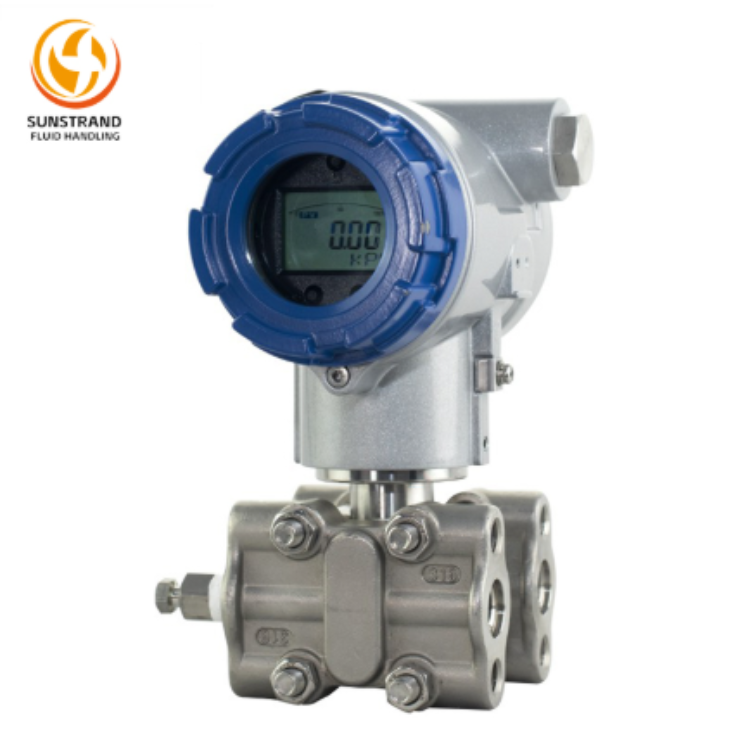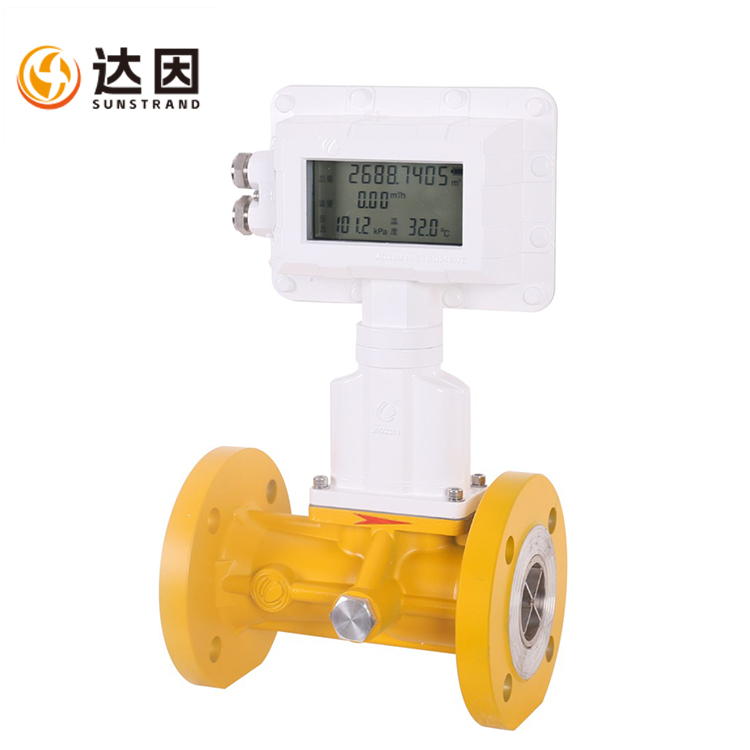
Gas flow meters are essential for industries like natural gas, petrochemicals, and industrial automation. Even small measurement errors can cause safety risks or process inefficiency. This guide explains gas flow meter accuracy, how to measure gas flow rate, and calibration methods, helping you choose the right solution. Whether using a gas mass flow meter, gas flow controller, or Sunstrand Gas Flow Meter, you can ensure reliable and precise performance.
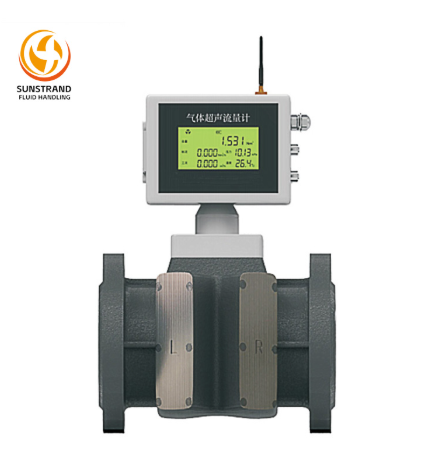
A Gas Flow Meter is an instrument used to measure the flow rate or consumption of gases such as natural gas, nitrogen, air, hydrogen, oxygen, and specialty industrial gases. It may measure:
Mass flow
Volumetric flow
Standardized flow (STP)
Energy flow
These devices are widely used in:
Petrochemical operations
Pipeline transmission systems
Industrial boilers
Environmental monitoring
Semiconductor production
HVAC and combustion control
Laboratory R&D
Sunstrand’s gas flow meter series covers multiple technologies, allowing accurate measurement across different gas densities, pressures, and flow ranges.
Gas flow meter accuracy depends on several variables:
Gas temperature and pressure stability
Pipe diameter and installation conditions
Sensor response time
Calibration quality
Flow profile (laminar vs. turbulent)
Gas composition changes
Additionally, different flow meter technologies inherently offer different accuracy levels.
Understanding flow meter accuracy standard terminology helps ensure correct product comparison.
Example: ±1% of reading
The error grows as the reading increases—best for dynamic ranges.
Example: ±1% of full scale
Accuracy is constant regardless of actual flow—less ideal for low flow.
Measures how consistently the meter reads the same value.
Shows how closely the output follows the ideal relationship.
International standards include:
AGA (American Gas Association)
ISO 5167
OIML R137
API standards
| Flow Meter Type | Typical Accuracy | Best Used For | Notes |
|---|---|---|---|
| Coriolis Gas Mass Flow Meter | ±0.1–0.2% | High-precision processes | Most accurate; high cost |
| Thermal Gas Mass Flow Meter | ±1–2% | Industrial gases, air systems | Direct mass flow; no pressure compensation needed |
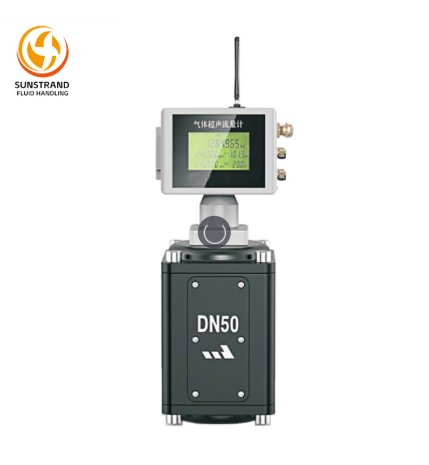
| Ultrasonic Gas Flow Meter | ±0.5–1% | Large pipelines, clean gases | Non-intrusive; ideal for natural gas |
| Differential Pressure Flow Meter | ±1–3% | High-temperature or dirty gas | Needs pressure/temperature compensation |
| Vortex Gas Flow Meter | ±1% | Steam, air, general gas | Reliable for medium accuracy |
| MEMS Gas Flow Sensor | ±3–5% | Medical and small flow devices | Compact; low power |
Why it matters: Flow profile (velocity distribution) must be stable and fully developed for most meters to read correctly. Distortions caused by elbows, valves, reducers, or tees create asymmetric flow and swirl.
Impact: Errors range from a few percent to >10%, depending on meter type and severity. Ultrasonic and differential pressure meters are particularly sensitive.
Mitigation:
Follow manufacturer-recommended straight-run lengths (e.g., 10–20× pipe diameter upstream, 5–10× downstream as a general rule).
Use flow conditioners where space is limited.
For compact meters (thermal, Coriolis), confirm orientation requirements in the manual.
Tip: If you must install near fittings, perform a field validation and tighter calibration.
Why it matters: Vibration can mechanically disturb sensors (especially MEMS gas flow sensors and some thermal elements) or create electrical noise.
Impact: Causes noisy readings, intermittent spikes, or gradual drift.
Mitigation:
Mechanically isolate the meter using flexible connectors or vibration dampers.
Secure piping to reduce resonance.
Choose a rugged model (Coriolis or industrial-grade ultrasonic) for high-vibration areas.
Why it matters: Pulsation changes instantaneous flow rapidly; some meters average well, others do not. Gas mass flow controllers with PID loops may react poorly if input is highly pulsatile.
Impact: Large transient errors and poor repeatability.
Mitigation:
Add pulsation dampeners, accumulators, or inlet surge tanks.
Use meters with fast response or inherent damping (Coriolis handles pulsation better than DP/orifice).
Apply appropriate signal filtering, but avoid excessive filtering that hides real dynamics.
Why it matters: Condensed liquids, aerosols, or particulates can coat or erode sensing elements (thermal sensors, ultrasonic transducers, orifices).
Impact: Bias drift, clogging, reduced sensitivity, or permanent damage.
Mitigation:
Install separators, coalescing filters, or traps upstream.
Use flush or flush-diaphragm designs for dirty gases.
Select ceramic or Hastelloy wetted materials if abrasive particles are expected.
Why it matters: Many meters (especially volumetric and thermal types) assume a stable gas composition or density. Variations alter mass-to-volume relationships and heat-transfer properties.
Impact: Systematic bias in both volumetric and mass flow readings—critical for flow meter accuracy calculation and custody/energy accounting.
Mitigation:
Use gas mass flow meters (Coriolis or thermal mass) for direct mass readings when composition varies.
Implement real-time gas composition or density compensation (via inline analyzers or PT/temperature compensation).
Re-calibrate or re-range meters if gas mix changes permanently.
Why it matters: Temperature and pressure affect gas density; volumetric meters must be corrected to standard conditions. Thermal meters can be affected by ambient temperature drifts.
Impact: Large errors if not corrected—especially at high elevation or variable process conditions.
Mitigation:
Provide pressure/temperature compensation (transducer inputs or calculation in the transmitter).
Use meters that report mass flow directly (reduces need for compensation).
Ensure how are flow meters calibrated includes tests across the expected T/P range.
Why it matters: Electromagnetic interference (EMI) can corrupt analog/digital signals from transmitters or controllers.
Impact: Spurious readings, communication errors, and unstable control (in the case of a gas flow controller).
Mitigation:
Use shielded cables, proper grounding, and surge protection.
Keep signal cables separated from power or motor cables.
Use digital communication (HART/Modbus) for noise-resistant data where possible.
Why it matters: Even a perfect installation will drift over time; calibration anchors meter readings to known standards. Poor or infrequent calibration undermines accuracy.
Impact: Gradual drift, unrecognized bias, potential non-compliance with flow meter accuracy standard requirements.
Mitigation:
Establish a calibration schedule based on criticality (annually, or 3–6 months for custody transfer).
Calibrate with traceable references (gravimetric, piston prover, or calibrated transfer standards).
Record calibration data and apply correction curves in the transmitter.
Note: Confirm your calibration approach follows recognized standards—this answers “how are flow meters calibrated” in practical terms.
Why it matters: A meter sized too large will read poorly at low flows; a meter too small will overload at peak flow. Rangeability (turndown ratio) is critical.
Impact: Low-flow inaccuracies or full-scale saturation.
Mitigation:
Perform accurate flow profiling and choose meters with adequate turndown (e.g., 10:1, 100:1 for thermal/Coriolis models).
Consider multiple meters or bypass arrangements for very wide dynamic ranges.
Why it matters: Over time, sensors can drift due to aging, contamination, or thermal stress—this appears as a zero offset.
Impact: Systematic offset that affects low-flow readings most.
Mitigation:
Implement routine zero checks and on-site calibration.
Use transmitters with auto-zero or diagnostic features.
Replace or service sensing elements proactively per manufacturer guidelines.
Gas flow meter accuracy depends on the measurement principle, calibration quality, installation conditions, and gas properties. Understanding these factors—and choosing the right technology—helps ensure safety, efficiency, and cost-effective operations. If you need high-accuracy devices for industrial automation, petrochemical systems, or environmental applications, Sunstrand Gas Flow Meters.