Liquid flow meters are of vital importance in process control in various industrial fields. Even a minor measurement error can lead to significant losses, such as inaccurate dosage of nutrients or calculation errors in raw material usage.
Advanced sensors using single-crystal silicon technology can enhance the stability and accuracy of measurements, but external environmental factors, improper use, or inadequate maintenance can still affect their accuracy. This guide elaborates on these main risks and introduces the customized solutions developed by Sunstrand Company to minimize these risks to the greatest extent.
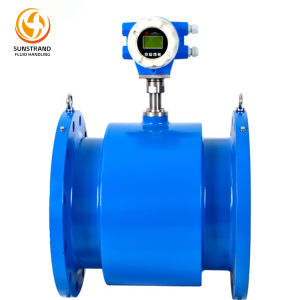
The accuracy of the liquid flow meter is not constant but is influenced by a complex interaction of various factors, including equipment selection, installation conditions, medium characteristics, maintenance methods, and external disturbances. The following lists some of the main factors that cause the accuracy to decrease, along with technical explanations and their actual impacts.
Choosing the right liquid flow meter types is foundational to accuracy. Different flow meter for liquid technologies have unique strengths, and mismatching the type to the application—whether it’s a liquid mass flow meter for chemical dosing or a clamp on liquid flow meter for water distribution—is a top cause of accuracy loss.
There may be incompatibilities between different types of instruments, which can lead to unstable readings. For instance, standard electromagnetic instruments fail when measuring low conductivity liquids, while traditional differential pressure instruments are prone to clogging when dealing with viscous fluids. Single-crystal silicon differential pressure and Coriolis instruments can significantly enhance adaptability, but even so, if the instrument does not match the flow range or does not meet the specific application requirements, problems may still arise.
Fortunately, single-crystal silicon differential pressure and Coriolis instruments have excellent adaptability to liquid properties. Their uniform atomic structure ensures stable resistance response and effectively reduces nonlinear errors in complex conditions. However, even these high-performance instruments may have problems if they are not calibrated according to the flow range or specific application requirements.
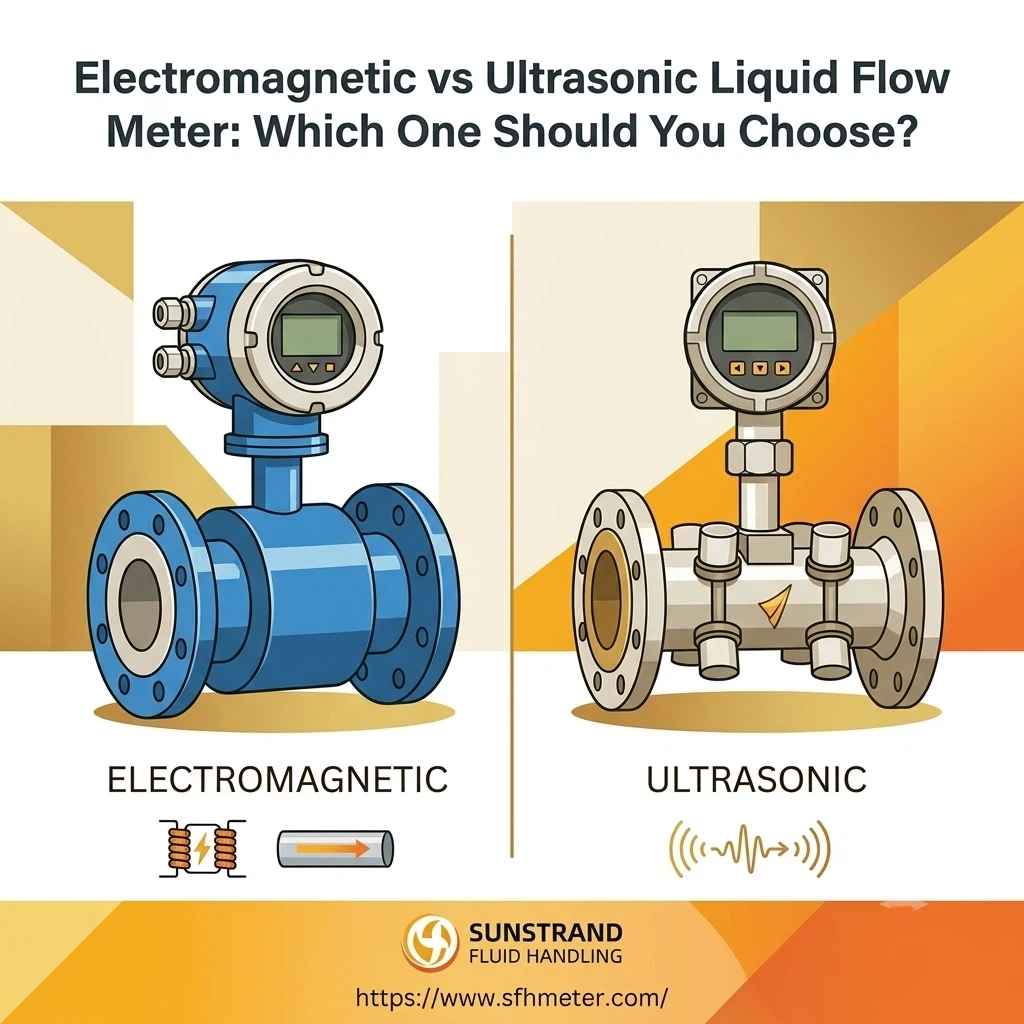
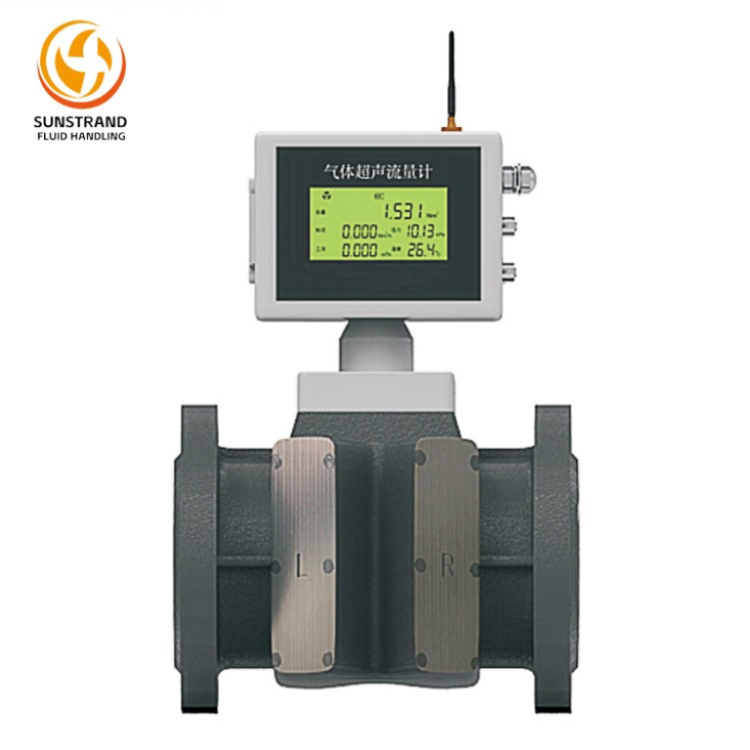
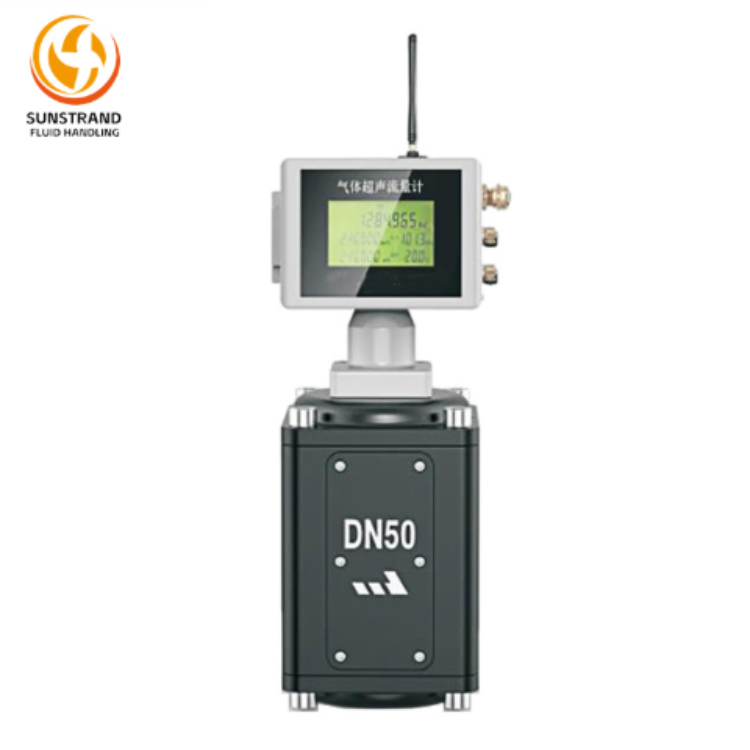
Ultrasonic: Ideal for clean liquids; a clamp on liquid flow meter of this type suits retrofits. Sunstrand’s wireless models work for remote agri-applications like liquid fertilizer flow meter systems.
Electromagnetic: For conductive/corrosive liquids; avoid low-conductivity or abrasive media.
Coriolis: High-precision liquid mass flow meter with monocrystalline silicon sensors, perfect for chemicals and liquid fertilizer blending.
DP: Versatile with monocrystalline silicon sensors; needs proper maintenance to avoid clogging.
Even the most advanced flow sensors (including those with single-crystal silicon components) cannot provide accurate data if installed improperly. In industrial settings, incorrect installation can lead to a 35% reduction in accuracy, usually due to insufficient pipeline installation conditions or mechanical issues during assembly.
The flow meter requires a stable and uniform flow velocity curve to achieve accurate measurement. Common problems during pipeline operation include: insufficient pipe sections, bends or valves near the flow meter, and mismatched pipe diameters. For example, ultrasonic and electromagnetic flow meters usually need 5 to 10 straight pipe sections above the flow meter, with diameters similar to those of the flow meter; below the flow meter, 3 to 5 straight pipe sections are required, with diameters also similar, to eliminate interference caused by bends or valves.
If the straight pipe sections are too short, it may lead to the formation of eddies or turbulence, which can damage the detection elements of the flow meter. For pressure-type flow meters equipped with single-crystal silicon sensors, turbulence can cause irregular deviations in pressure readings, thereby resulting in measurement errors. In addition, changes in the pipe diameter near the flow meter due to expansion or contraction can alter the flow velocity, thereby introducing measurement errors.
Mechanical mounting errors further compromise accuracy. Improper alignment between the flow meter and pipe (e.g., angular or axial misalignment) creates friction and flow obstructions. For clamp-on ultrasonic meters, poor coupling between the transducer and pipe—due to dirt, air gaps, or uneven surfaces—weakens signal transmission, leading to inaccurate readings.
Leakage at pipe connections or meter flanges is another critical issue. Even small leaks alter flow rates, while vibration from nearby equipment disrupts the performance of sensitive monocrystalline silicon sensors. Mounting the meter directly on vibrating pipes can cause sensor drift, as the monocrystalline silicon’s piezoresistive response is sensitive to mechanical stress.
The properties and contamination of the liquid will directly affect the operation of the flowmeter, especially for equipment equipped with precise sensors (such as single-crystal silicon components). When the medium characteristics change or there are contaminants present, it may damage the sensor, clog the connection points, or alter the flow characteristics of the fluid.
Changes in viscosity, density, temperature and pressure can affect the measurement accuracy of the flow meter. For instance, high-viscosity liquids (such as engine oil) generate greater friction, thereby reducing the flow rate and causing measurement deviations in equipment specifically designed for high-viscosity liquids. Temperature changes alter the density and viscosity of the liquid; for Coriolis flow meters equipped with single-crystal silicon sensors, these fluctuations must be compensated in real time to maintain their measurement accuracy.
Similarly, pressure changes also have an impact on accuracy, especially for differential pressure flow meters. A decrease in system pressure may cause the liquid to vaporize, generating bubbles that interfere with the detection of pressure differences. Although single-crystal silicon sensors can detect minute pressure changes with high sensitivity, appropriate compensation is still necessary to avoid mistaking the vapor-induced fluctuations for actual flow changes.
Corrosive liquids (acids, alkalis, saltwater) damage flow meter components, including sensors, electrodes, and pipe walls. For meters with monocrystalline silicon sensors, corrosion can degrade the sensor’s surface, altering its piezoresistive properties and leading to permanent accuracy loss. Scaling—caused by mineral deposits in hard water or chemical reactions—clogs pressure ports, blocks transducer signals, and reduces flow area, resulting in under-measurement.
Abrasive contaminants (sand, sediment, metal particles) further exacerbate damage, wearing down sensors and internal components. In agricultural irrigation systems, sediment-laden water can scratch ultrasonic transducers or clog DP meter ports, while in chemical plants, abrasive media can erode monocrystalline silicon sensors over time.
Like all precision instruments, liquid flow meters also require regular calibration and maintenance to maintain their measurement accuracy. Over time, components will gradually wear out, sensors will drift, and contaminants will accumulate; even with advanced manufacturing techniques such as single-crystal silicon, this situation is still inevitable. Ignoring these operations is the main reason for the gradual decline in measurement accuracy.
The calibration process involves comparing the reading of the flow meter with standardized reference values and adjusting the equipment to reduce the error. If calibration is not performed regularly, the accuracy of the flow meter may exceed the allowable tolerance range within 6 to 12 months. For instance, a Coriolis flow meter equipped with a single-crystal silicon sensor may have an error of 0.3% after one year of use, which is far beyond the ±0.1% accuracy standard required for chemical manufacturing.
Professional liquid flow meter calibration services are critical, as they use precision equipment (e.g., master flow meters, calibration rigs) to ensure accuracy. On-site calibration is ideal for large or hard-to-move meters like clamp on liquid flow meters, while lab calibration is recommended for high-precision devices such as liquid mass flow meters, requiring traceability to international standards (e.g., ISO 9001). Sunstrand offers tailored liquid flow meter calibration services for its entire product line, including liquid fertilizer flow meters, ensuring minimal downtime and reliable performance.
Inadequate maintenance accelerates accuracy loss and shortens service life. Common oversights include: failing to clean pressure ports and sensors, ignoring worn gaskets or seals, and neglecting software updates for smart meters. For meters with monocrystalline silicon sensors, regular cleaning removes contaminants that alter the sensor’s response, while replacing worn seals prevents leaks that distort flow rates.
Smart flow meters require additional maintenance, such as checking wireless connectivity, updating firmware, and verifying data logging accuracy. Neglecting these tasks can lead to data loss or incorrect readings, compromising process control.
Environmental conditions and external interference disrupt flow meter operation, particularly for meters with sensitive electronic components and monocrystalline silicon sensors. Temperature fluctuations, electromagnetic interference (EMI), and mechanical vibration are the primary culprits.
Extreme ambient temperatures affect both the flow meter’s electronic components and the liquid’s physical properties. High temperatures can damage circuit boards, while low temperatures cause condensation, short-circuiting internal components. For monocrystalline silicon sensors, temperature changes alter the sensor’s resistance, leading to thermal drift. Advanced flow meters incorporate temperature compensation circuits to mitigate this, but extreme fluctuations (e.g., -40℃ to 85℃) can still impact accuracy.
System pressure fluctuations, unrelated to flow rate changes, also cause accuracy issues. For example, pressure spikes from pump startup or valve closure can damage monocrystalline silicon sensors, while pressure drops can induce vaporization, as noted earlier.
Industrial environments are filled with EMI sources, such as motors, inverters, high-voltage cables, and radio frequency (RF) devices. EMI disrupts the electronic signals of flow meters, particularly ultrasonic and electromagnetic models. For meters with monocrystalline silicon sensors, EMI can interfere with the sensor’s output signal, causing noise and unstable readings.
Mechanical vibration—from pumps, compressors, or rotating machinery—disrupts the flow profile and damages sensitive components. Vibration-induced stress on monocrystalline silicon sensors alters their piezoresistive response, leading to measurement errors. In extreme cases, prolonged vibration can crack the sensor, resulting in permanent failure.
|
Key Influencing Factors |
Core Hazards to Accuracy |
Targeted Countermeasures |
|
Inappropriate Flow Meter Type Selection |
Unstable readings, poor adaptability to medium properties, range mismatch; fails to leverage monocrystalline silicon advantages. |
Match meter type to liquid conductivity/viscosity; prioritize monocrystalline silicon-equipped Coriolis/DP meters for high precision. |
|
Installation and Mounting Errors |
Turbulent flow, signal weakness, sensor drift; mechanical stress damages monocrystalline silicon components. |
Ensure standard straight pipe runs; align meters properly, use vibration dampeners, and optimize transducer coupling for clamp-on models. For clamp on liquid flow meter installations, clean pipe surfaces thoroughly to avoid signal interference. |
|
Medium Properties and Contamination |
Sensor corrosion/scaling, altered flow behavior, monocrystalline silicon surface degradation. |
Install filters; use anti-corrosion materials (PTFE/Hastelloy); implement real-time temperature/pressure compensation. |
|
Lack of Regular Calibration and Maintenance |
Gradual accuracy drift, contaminant buildup, component wear; negates monocrystalline silicon stability. |
Annual/semi-annual professional calibration; monthly sensor cleaning; quarterly seal/gasket inspection. |
|
Environmental and External Interference |
Thermal drift, EMI signal disruption, vibration-induced errors on monocrystalline silicon sensors. |
Choose EMC-compliant meters; use shielded wiring; install temperature-controlled enclosures; isolate from high-vibration equipment. |
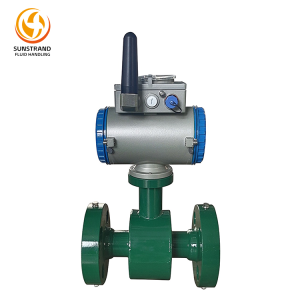
Sunstrand leverages advanced monocrystalline silicon technology and application-specific design to address the key factors causing flow meter accuracy loss. Its product lineup—including wireless ultrasonic, anti-corrosion, and clamp-on flow meters—delivers reliable performance in diverse scenarios, backed by comprehensive calibration services and technical support.
Sunstrand’s competitive advantages stem from its integration of monocrystalline silicon sensing technology and customer-centric design:
Precision Monocrystalline Silicon Sensors: Sunstrand’s Coriolis and DP flow meters feature high-purity monocrystalline silicon sensors, offering superior linearity (≤0.01% FS), long-term stability (10,000-hour drift ≤0.1% FS), and resistance to temperature and vibration.
Application-Specific Design: Tailored solutions for agricultural, chemical, and water supply applications—including anti-corrosion materials (Hastelloy, PTFE) for harsh media, and wireless connectivity for remote monitoring.
Robust Installation and Calibration Support: Sunstrand provides on-site installation guidance to ensure proper pipe run and mounting, along with professional calibration services to maintain accuracy over time.
Comprehensive After-Sales Service: 24/7 technical support, 3-year warranty on monocrystalline silicon sensors, and readily available spare parts minimize downtime and maximize ROI.
Sunstrand’s flow meters have been validated in thousands of industrial and commercial applications, delivering consistent accuracy despite challenging conditions. Below are three representative case studies.
A large-scale agricultural cooperative in the Midwest faced accuracy issues with its existing flow meters, which struggled with sediment-laden water and remote installation sites. The meters frequently clogged, leading to over- or under-irrigation of crops, and lacked remote monitoring capabilities, requiring manual readings that were time-consuming and error-prone.
Sunstrand deployed wireless ultrasonic flow meter for liquid with monocrystalline silicon-based signal processing units—including models compatible with liquid fertilizer flow meter applications. The meters featured clamp-on transducers (a popular clamp on liquid flow meter design) to avoid pipe modification and sediment exposure, while the monocrystalline silicon components enhanced signal stability and resistance to vibration from irrigation pumps. The wireless design allowed real-time data monitoring via a cloud platform, enabling the cooperative to adjust flow rates for water and liquid fertilizer remotely.
After installation, the Sunstrand meters maintained an accuracy of ±0.5% FS, reducing water waste by 12% and improving crop yield by 8%. The wireless functionality eliminated manual readings, saving 15 hours of labor per week. The meters’ resistance to sediment and vibration ensured reliable performance throughout the irrigation season, with no clogging or accuracy drift.
A chemical plant in Texas needed to measure the flow rate of corrosive acids (sulfuric acid, hydrochloric acid) for batch processing. Its existing electromagnetic flow meters suffered from electrode corrosion, leading to frequent accuracy loss and replacement costs. The plant required a solution that could withstand corrosive media while delivering high accuracy (±0.1% FS) for regulatory compliance.
Sunstrand provided anti-corrosion Coriolis liquid mass flow meter equipped with monocrystalline silicon sensors and PTFE-lined housings—an ideal flow meter for liquid in corrosive environments. The monocrystalline silicon sensors offered superior chemical resistance, while the Coriolis technology eliminated the need for electrodes, avoiding corrosion issues. The meters included real-time temperature and pressure compensation to account for changes in acid viscosity and density, outperforming standard liquid flow meter types in harsh chemical conditions.
The Sunstrand meters maintained consistent accuracy of ±0.08% FS over 18 months of operation, exceeding the plant’s requirements. Corrosion-related failures were eliminated, reducing replacement costs by 70% and unplanned downtime by 25%. The meters’ data logging capabilities also simplified regulatory reporting, ensuring compliance with EPA standards.
A municipal water utility in California needed to upgrade its water supply network to improve leak detection and flow monitoring. The existing in-line flow meters required pipe excavation for installation, causing traffic disruptions and high labor costs. Additionally, the meters struggled with accuracy in large-diameter pipes (≥12 inches) and were prone to EMI interference from nearby power lines.
Sunstrand installed clamp-on ultrasonic flow meters with monocrystalline silicon transducers. The clamp-on design eliminated the need for pipe excavation, reducing installation time by 60% and labor costs by 50%. The monocrystalline silicon transducers delivered strong signal penetration for large-diameter pipes, while EMC-compliant electronics mitigated EMI interference. The meters integrated with the utility’s existing SCADA system, enabling real-time leak detection and flow optimization.
The Sunstrand meters maintained an accuracy of ±0.3% FS, enabling the utility to detect small leaks (≥0.5 GPM) and reduce water loss by 10%. The EMI resistance ensured stable readings despite proximity to power lines, while the clamp-on design minimized operational disruptions. The utility reported annual cost savings of $300,000 from reduced water loss and installation expenses.
To minimize liquid flow meter accuracy loss and maximize performance, implement the following best practices, tailored to address the key factors outlined above:
Select the Right Meter Type: Conduct a thorough analysis of your application—liquid properties (conductivity, viscosity, corrosiveness), flow rate range, pipe diameter, and environmental conditions. Prioritize meters with monocrystalline silicon sensors for high-precision or harsh environments. Consult with Sunstrand’s technical team to ensure optimal type selection.
Ensure Proper Installation: Follow manufacturer guidelines for pipe run requirements (straight pipe lengths, avoiding obstructions) and mechanical mounting (alignment, vibration dampening). For clamp-on meters, ensure proper transducer coupling and pipe surface preparation. Use vibration dampeners for meters near high-vibration equipment, and verify no leaks at connections.
Manage Medium Properties: Install filters to remove abrasive contaminants and prevent scaling. Use anti-corrosion materials (e.g., PTFE, Hastelloy) for corrosive media. Implement temperature and pressure compensation for applications with fluctuating medium properties. Regularly monitor liquid conductivity, viscosity, and density to detect changes that may impact accuracy.
Establish Regular Calibration and Maintenance: Calibrate flow meters annually for general applications, semi-annually for critical processes (e.g., chemical manufacturing, liquid fertilizer blending). Use professional liquid flow meter calibration services with traceable standards. Clean sensors and pressure ports monthly, inspect seals and gaskets quarterly, and update firmware for smart meters. Document all activities for compliance.
Mitigate External Interference: Select EMC-compliant meters to resist EMI. Route cables away from high-voltage equipment and use shielded wiring. Install temperature-controlled enclosures for meters in extreme environments. Use vibration dampeners and mount meters away from rotating machinery to reduce mechanical stress on monocrystalline silicon sensors.
Liquid flow meter accuracy is critical to operational efficiency, cost control, and regulatory compliance across industries. The top factors causing accuracy loss— inappropriate meter selection, installation errors, medium contamination, inadequate maintenance, and external interference—are largely preventable with proactive measures and the right technology.
Monocrystalline silicon sensing technology plays a pivotal role in enhancing flow meter accuracy and stability, offering superior linearity, resistance to harsh conditions, and long-term performance. Sunstrand’s flow meters, integrated with monocrystalline silicon components and application-specific design, address these key factors, delivering reliable accuracy in agricultural, chemical, and water supply applications.
By following best practices—selecting the right meter type, ensuring proper installation, managing medium properties, conducting regular calibration and maintenance, and mitigating external interference—you can minimize accuracy loss and maximize the value of your flow meter investment. Partnering with a trusted manufacturer like Sunstrand, with expertise in monocrystalline silicon technology and comprehensive support services, further ensures optimal performance and peace of mind.
As industries evolve and demand for precision increases, leveraging advanced technologies like monocrystalline silicon and implementing proactive best practices will remain essential to maintaining accurate liquid flow measurement.
Q1: How does monocrystalline silicon technology improve flow meter accuracy?
A:Monocrystalline silicon’s uniform atomic structure ensures consistent piezoresistive response, minimizing non-linear errors and thermal drift. It offers superior stability (low long-term drift), high sensitivity to flow-induced pressure changes, and resistance to temperature and vibration—all critical for maintaining accuracy in harsh industrial environments.
Q2: What is the recommended calibration frequency for liquid flow meters?
A:Calibrate annually for general applications (e.g., agricultural irrigation, urban water supply). For critical processes (e.g., chemical manufacturing, pharmaceutical production), semi-annual calibration is recommended. High-precision meters with monocrystalline silicon sensors may require less frequent calibration due to their stability, but regular verification is still essential.
Q3: Can clamp-on flow meters match the accuracy of in-line meters?
A:Yes. Advanced clamp-on ultrasonic flow meters, like Sunstrand’s models with monocrystalline silicon transducers, deliver accuracy of ±0.3% FS to ±0.5% FS—comparable to in-line meters for many applications. They are ideal for large-diameter pipes or applications where pipe excavation is not feasible, with no disruption to flow.
Q4: How do I prevent scaling and corrosion in flow meters?
A:Use anti-corrosion materials for meter housings and sensors. Install filters to remove sediment and abrasive contaminants. For scaling-prone applications, use chemical treatments or periodic cleaning with descaling agents. Sunstrand’s anti-corrosion flow meters, with monocrystalline silicon sensors and protective coatings, offer enhanced resistance to these issues.
Q5: Do wireless flow meters sacrifice accuracy for connectivity?
A:No. Modern wireless flow meters, such as Sunstrand’s wireless ultrasonic models, use LoRa spread spectrum technology for stable data transmission without compromising accuracy. They deliver the same precision as wired models and are ideal for remote monitoring, with no loss of data integrity.
Q6: How do temperature and pressure fluctuations affect flow meter accuracy?
A:Temperature changes alter liquid viscosity and density, while pressure fluctuations can induce vaporization or change flow velocity. Meters with monocrystalline silicon sensors often include real-time temperature and pressure compensation to adjust for these changes, maintaining accuracy across varying conditions.
Q7: What flow meter type is best for corrosive chemical liquids?
A:Coriolis flow meters with monocrystalline silicon sensors and anti-corrosion linings are optimal. They have no moving parts or electrodes, eliminating corrosion points, and deliver high accuracy for viscous or corrosive media. Sunstrand’s anti-corrosion Coriolis meters are designed specifically for this application.
Q8: Can installation errors be fixed after the meter is installed?
A:Yes. Common installation errors—such as insufficient straight pipe lengths—can be addressed by adding flow conditioners or repositioning the meter. Poor transducer coupling in clamp-on meters can be fixed by cleaning the pipe surface and ensuring proper alignment. Sunstrand offers on-site technical support to identify and resolve installation issues.
Q9: How long do monocrystalline silicon sensors last in flow meters?
A:Monocrystalline silicon sensors have a service life of 5-8 years under normal operating conditions, significantly longer than traditional sensing elements. Sunstrand offers a 3-year warranty on its monocrystalline silicon sensors, and regular maintenance (cleaning, calibration) can extend their lifespan further.
Q10: What is the difference between monocrystalline and polycrystalline silicon in flow meters?
A:Monocrystalline silicon has a single, uniform crystal structure, offering superior linearity, stability, and sensitivity. Polycrystalline silicon has multiple crystal grains (with grain boundaries), leading to higher drift, lower linearity, and reduced resistance to stress. Monocrystalline silicon is preferred for high-precision flow meters, while polycrystalline is used in low-cost, non-critical applications.
Q11: How do I mitigate EMI interference in flow meters?
A:Select EMC-compliant meters (e.g., Sunstrand’s models with reinforced shielding). Use shielded wiring and route cables away from high-voltage equipment (minimum 1-meter distance). Ground the meter and cables properly to avoid ground loops, and install EMI filters if necessary. Wireless meters with LoRa technology are less susceptible to EMI than traditional wired models.
Q12: Are Sunstrand flow meters suitable for agricultural irrigation with sediment-laden water?
A:Yes. Sunstrand’s wireless ultrasonic flow meters feature clamp-on transducers that avoid contact with sediment-laden water, preventing clogging. The monocrystalline silicon transducers deliver stable signals even with minor sediment, and the meters are designed to withstand outdoor conditions (temperature fluctuations, vibration from pumps) common in agricultural settings.